


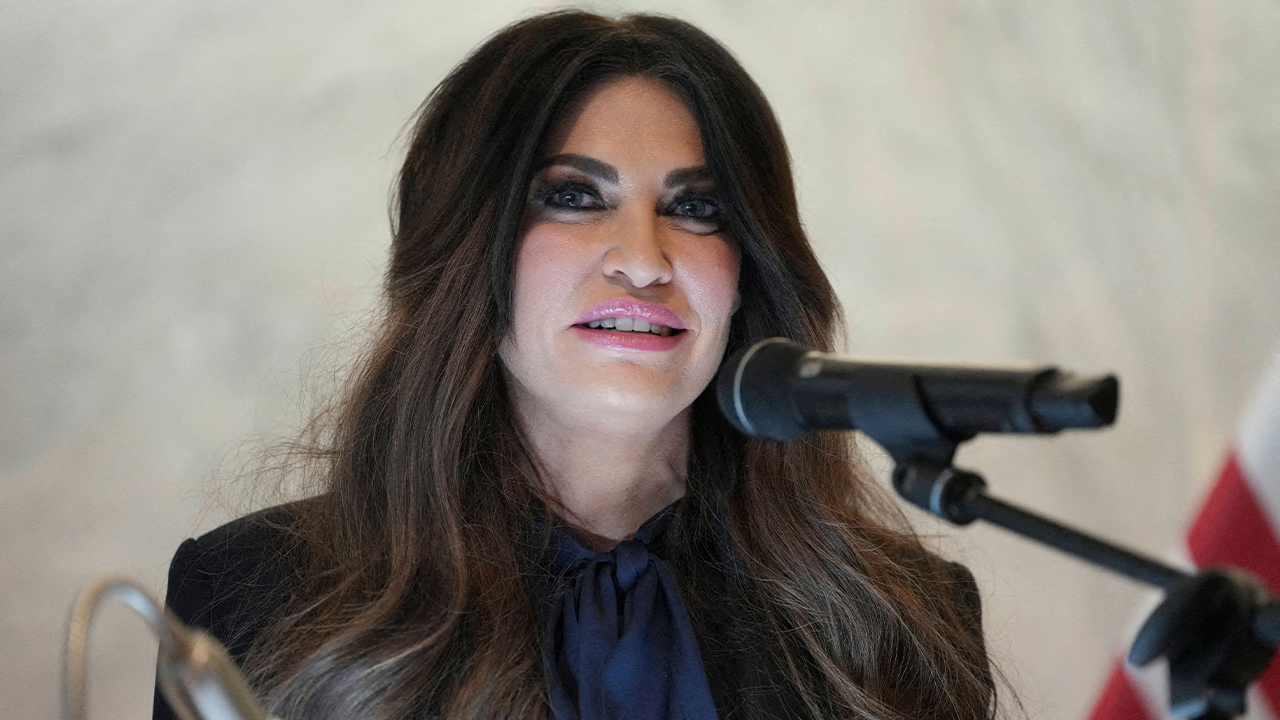
Kimberly Guilfoyle’s diplomatic future is suddenly hanging by a thread. The U.S. ambassador to Greece, once a familiar face on Fox News and in Trump family circles, may soon be removed from her post in Athens amid a swirl of accusations that have left top administration officials furious. According to The Associated Press, President Donald Trump and Secretary of State Marco Rubio are “extremely pissed off” by Guilfoyle’s reported conduct and are actively weighing whether to fire her. The report, which cited a senior U.S. official, suggested that a decision would likely come this week, after Monday’s Columbus Day holiday. No departure has been confirmed, and it’s possible that the situation could still resolve itself quietly, but the fact that such a decision is even on the table marks a stunning fall for someone who was once considered a loyal and powerful surrogate for the president. The official quoted by the AP did not go into detail about which specific allegations had pushed Trump and Rubio to the breaking point, but it’s clear that the accumulating stories about Guilfoyle’s behavior in Greece and her personal finances have created an untenable situation. For now, the ambassador remains in her post, but the political clock appears to be ticking.
At the center of the latest controversy is a financial request that has raised serious ethical questions. The Wall Street Journal reported that Guilfoyle asked Eric Deters, a wealthy Trump donor, to pay off a $100,000 American Express bill shortly before her Senate confirmation hearing. According to messages reviewed by the Journal, Guilfoyle urged Deters to wire the money directly to American Express, suggesting that such a transaction would not leave a paper trail. In exchange, she reportedly offered to help Deters gain access to senior Trump administration officials. It’s a stunning allegation, combining money, access, and secrecy in a way that would make any political appointee’s confirmation team wince. Deters, for his part, said he never made the payment, and Guilfoyle’s attorney, Jesse Binnall, has disputed the authenticity of the messages, calling the claims unsupported. But even if the messages are fabricated or misinterpreted, the fact that such a story is out there has already done damage. The timing of the request, just before her confirmation, makes it particularly awkward, because it suggests that an ambassador nominee may have been seeking personal financial relief from someone with an interest in administration access. There’s no suggestion that Deters received anything in return, and no evidence that any actual influence was traded, but in Washington, appearances can be just as dangerous as reality. For a diplomat representing the United States abroad, the optics are especially bad.
But the credit card story is only the latest chapter in a growing catalog of concerns. Earlier, The Wall Street Journal had already investigated Guilfoyle’s conduct in Greece and found a pattern of behavior that raised alarms. She reportedly promoted the interests of Aktor Group, a Greek construction and energy company, and allowed the company’s registered lobbyist, Christos Marafatsos, to accompany her to private diplomatic meetings with senior officials. That kind of access is highly unusual for a lobbyist, and it immediately raised questions about whose interests Guilfoyle was actually serving. There were also reports that she suggested at a dinner with Greek officials that the United States would undermine their government, citing political developments in Romania as an example. It’s a bizarre thing to say, especially for an ambassador whose job is to build trust and cooperation with the host country. Greece’s foreign minister later said there was no need to summon Guilfoyle for an explanation because the country’s energy minister denied that any threat had been made, but the mere fact that such a conversation reportedly took place is enough to make diplomats uneasy. On top of all that, the State Department’s Office of Inspector General has reportedly opened an investigation into allegations involving Guilfoyle’s treatment of embassy employees, private travel, acceptance of gifts, and relationships with business interests. Sources described a hostile workplace in which Guilfoyle allegedly threatened to fire employees and demoted members of her security detail over minor incidents. One particularly striking claim involves an officer who reportedly failed to answer a 4 a.m. request for ice while she was vacationing in Mykonos. Whether or not every detail is accurate, the picture that emerges is of a high-maintenance official who may have blurred the lines between personal benefit and public service.
Back in Washington, the reaction has been cautious but pointed. Congressional Democrats, including Senator Jeanne Shaheen of New Hampshire and Representative Gregory Meeks of New York, have called for a review of Guilfoyle’s conduct. Meeks went further, urging her removal if the allegations are substantiated. Vice President JD Vance, who is typically careful with his words, addressed the controversy on Friday and urged people not to rush to judgment while also acknowledging that misconduct should carry consequences. “Let’s actually see what the facts are. Let’s see what the truth is,” Vance told reporters in Ohio. “And obviously, if there was something bad that happened, then people have to suffer consequences for it.” It’s the kind of measured response that suggests the administration is trying to manage a delicate situation without inflaming the news cycle further. Secretary of State Marco Rubio, who visited Greece this week and delivered remarks with the Acropolis in the background, declined to address the allegations directly. When pressed by reporters, he pushed back on the media’s reliance on anonymous sources, saying, “You guys walk around thinking that because some source told you something and you reported it, it’s the gospel. It’s not the gospel.” Yet just a day earlier, Rubio had defended Guilfoyle’s performance, calling her “a strong ambassador.” That mixed message from the State Department reflects the awkward position everyone seems to be in. The inspector general’s office has declined to confirm or deny the existence of an investigation, and Guilfoyle’s attorney has continued to insist that any implication of wrongdoing is unsupported. Still, the pile of allegations, combined with the reported anger at the White House, means that this story is far from over.
Guilfoyle’s path to Athens was never ordinary, and her personal story has always made her a compelling figure in American politics. A former California prosecutor and Fox News Channel personality, she became a prominent surrogate and fundraiser for Donald Trump, using her media polish and combative speaking style to energize crowds and defend the president on television. In December 2024, Trump nominated her to be ambassador to Greece, a post that is historically important but not typically at the center of major controversy. What made her nomination even more notable was her relationship with Donald Trump Jr., the president’s eldest son. Guilfoyle had been engaged to Don Jr. for four years, and the two were a high-profile couple on the conservative circuit. But they publicly split in December 2024, the same month the president nominated her for the diplomatic post. That timing was remarkable enough on its own, but it also meant that Guilfoyle was heading to Athens just as her personal connection to the Trump family was changing. Don Jr. has since moved on and married Palm Beach socialite Bettina Anderson this past May, a story that drew plenty of tabloid attention. Guilfoyle’s romantic history also includes a marriage to California Governor Gavin Newsom, a Democrat, from 2001 to 2006, when he was serving as mayor of San Francisco. The fact that she has been linked romantically to both a prominent Democratic governor and the son of a Republican president only adds to her larger-than-life image. But now, that image may be working against her, as her personal history and political relationships are being examined under a much harsher light.
For now, no one can say with certainty what will happen next. The decision rests with Trump and Rubio, and if the AP report is accurate, it could come down within days. Guilfoyle may survive this moment if the administration decides that the allegations are too thin or too politically complicated to act on. But even if she keeps her job, the damage to her reputation may already be irreversible. She came to Athens as a political loyalist, someone who had earned her position through years of public support for the president and her close ties to his family. Now she finds herself at the center of a messy scandal involving money, access, workplace complaints, and diplomatic missteps. It’s a reminder that serving as an ambassador is not just about showing up at receptions and making speeches; it’s about representing the United States with professionalism, judgment, and integrity. And when those qualities are called into question, the consequences can be swift and severe. The coming days will reveal whether Guilfoyle can weather the storm or whether she becomes yet another casualty of a Washington environment where one bad story can undo years of careful positioning. Either way, her time in Greece is likely to be remembered not for any diplomatic achievements, but for the controversy that surrounded it. And for a woman who once seemed destined to remain at the center of American political life, that would be a strikingly undignified end to a chapter that began with so much promise.