



For an entire day, the rumor mill churned with the frantic energy of a fan base clinging to hope. Names like the Kansas City Chiefs, Pittsburgh Steelers, and Indianapolis Colts swirled through social media, each a tantalizing possibility for a fresh start, yet each one felt like a half-truth whispered in the dark. The Arizona Cardinals had been listening to offers for their once-heralded star wide receiver, Marvin Harrison Jr., and every NFL fan with a pulse had a theory. Some imagined him catching passes from Patrick Mahomes, others saw him alongside a resurgent offense in Pittsburgh. But the silence from official channels only fueled the speculation, turning the ordinary Saturday morning into a tense waiting game. Then, like a thunderclap on a clear sky, ESPN’s Adam Schefter delivered the news that shattered all conjecture: the Cardinals were “finalizing” a deal, and the mystery team was not one of the usual suspects. The collective gasp of the football world echoed through living rooms and sports bars as the words settled in—Harrison Jr. was heading to Houston. The wait was over, but the story had only just begun.
When the final details emerged, they were as shocking as they were swift. The Arizona Cardinals agreed to ship the second-year receiver to the Houston Texans, but the return package was surprisingly modest: a 2027 second-round pick and a 2027 sixth-round pick, in exchange for Harrison Jr. and a 2027 seventh-rounder. To the casual fan, it seemed like a fire sale—a desperate unloading of a young player who was supposed to be the franchise cornerstone. But to those who had watched the Cardinals’ offense sputter all season, the trade felt inevitable. Harrison Jr., who had been selected fourth overall in 2024, had become a phantom in the desert—five catches for 85 yards and a single touchdown through four games. His sophomore season had been marred by injuries, miscommunication, and a quarterback situation that never found its rhythm. Meanwhile, the Texans were getting a distressed asset, but one with undeniable talent and a familiar face calling the shots. For Houston, this wasn’t just a trade; it was a gamble on redemption, a bet that the magic of college football could be rekindled in the pros. And for Harrison Jr., it was an escape hatch from a situation that had grown toxic, a chance to rewrite a story that had turned sour.
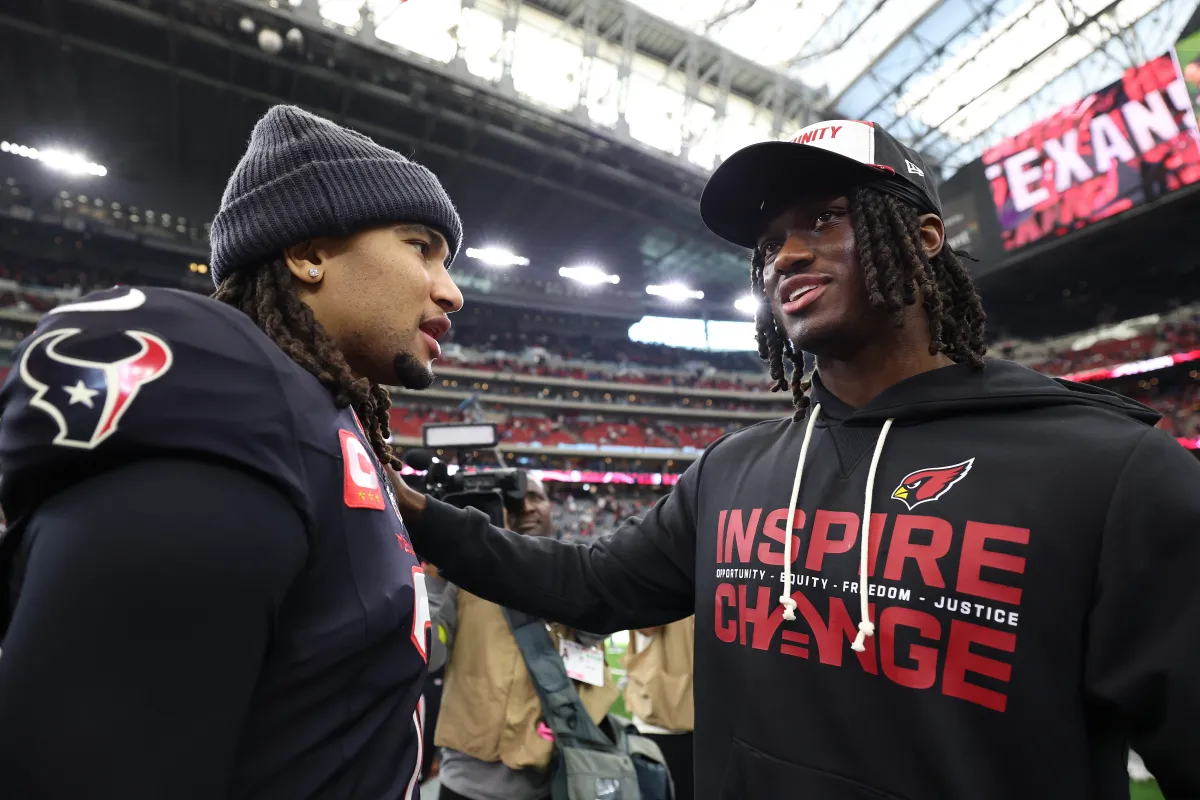
The reunion with C.J. Stroud is the heart of this trade, the narrative thread that ties the past to the present like a forgotten love letter rediscovered. At Ohio State, the duo was the stuff of legend—a quarterback and receiver so in sync that they seemed to share a single mind. Over two seasons, they combined for 88 receptions, 1,402 yards, and 17 touchdowns, carving up Big Ten defenses with the precision of a surgical team. Stroud’s deep ball found Harrison Jr. like a homing pigeon; Harrison Jr.’s route running created space where none existed. Their chemistry was palpable, the kind of unspoken understanding that can’t be coached. When Stroud left for the NFL in 2023, many assumed their partnership was a college-only memory. But now, fate has intervened. Harrison Jr. will step into a Texans offense that thrives on vertical threats, with Stroud already established as one of the league’s rising star quarterbacks. The comfort of their shared history could be the antidote to the young receiver’s stalled development. It’s a human story as much as a football one: two friends who lost touch are being given a second chance to trust the instinct that made them great.
For Harrison Jr., the past two seasons in Arizona were a masterclass in unmet expectations. He arrived as a Heisman finalist, the son of a Hall of Famer, carrying the weight of a franchise that hadn’t had a true number-one receiver since Larry Fitzgerald’s prime. The Cardinals gave him the keys to the offense, but the engine never started. A nagging hamstring injury early in his rookie year limited his explosiveness, and the offense, anchored by a rotating cast of quarterbacks, never developed a consistent identity. By 2025, the frustration was visible—in his body language on the sideline, in the terse answers to reporters, in the way he dropped balls that used to stick to his hands. The trade to Houston feels like a release valve for a pressure cooker that was about to burst. In his new home, he won’t be the sole focus of the pass game; Nico Collins has already established himself as a reliable target, which could actually free Harrison Jr. from the constant double-teams and defensive attention. There’s a weight lifted when you stop being the only hope; sometimes, sharing the load is what allows a star to finally shine.
The Texans’ side of the deal is equally fascinating, because it reveals a front office that believes it’s in a win-now window. With a franchise quarterback on a rookie contract, Houston has the cap space to make aggressive moves, and this trade is their clearest statement of intent. Their receiving corps was already solid—Nico Collins has been a revelation, a two-time Pro Bowler with 14 catches, 193 yards, and three touchdowns this season—but it lacked a truly dynamic secondary threat. Kayshon Boutte, Jaylin Noel, and Xavier Hutchinson are serviceable, but they’re not game-changers. And with Tank Dell sidelined by a significant knee injury, the depth charts had become alarmingly thin. Harrison Jr. walks into a role that perfectly suits his skill set: a boundary receiver who can stretch the field and create mismatches underneath. Stroud’s ability to extend plays with his legs will give Harrison Jr. more time to separate, and their prior connection should allow the offense to hit the ground running. The Texans are betting that a change of scenery plus a reunion with his quarterback will resurrect the player who torched college defenses—and that the 2027 draft capital they surrendered is a small price for a championship run.
Ultimately, this trade is more than just a transaction; it’s a story about second chances, about the fragile nature of talent, and about the human desire to find the place where you belong. For Arizona, it’s a painful acknowledgment that their rebuild has taken another step back, but also a pragmatic move to recoup valuable draft capital for a player who seemed unhappy. For Houston, it’s a bold declaration that they are all-in on the present, willing to bet that the past can be recreated. And for Marvin Harrison Jr., it’s a chance to silence the critics, to prove that the flashes of brilliance we saw in college weren’t a fluke, but the foundation of a great NFL career. As he packs his bags and heads to Texas, he carries with him the hopes of a fan base that has seen too many false dawns. The game on Sunday will be watched a little differently now—not just for the score, but for a glimpse of that old magic between a quarterback and his receiver. In the end, we don’t remember trades for the picks exchanged; we remember them for the stories they begin. And this one, with all its twists and turns, has just written its most compelling chapter. The next page, as always, will be written with sweat, tears, and the unshakeable belief that somewhere out there, a star can still find its sky.