


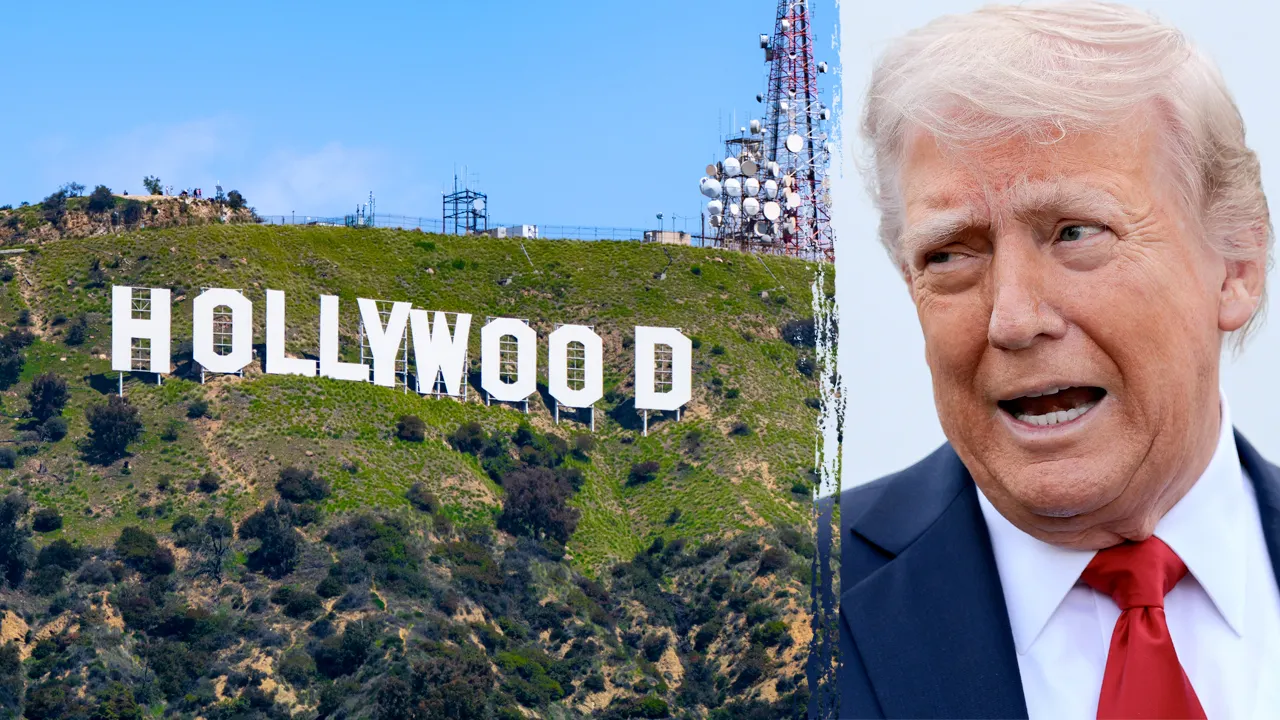
Lawmakers in Washington are scrambling to stop an exodus that has quietly reshaped one of America’s most iconic industries. For years, film and television production has been slipping away from the United States, lured overseas by friendlier tax regimes, cheaper labor, and lavish government incentives. Studios that once built Hollywood’s legend now shoot on London soundstages, on Toronto streets doubling for New York, and in Budapest backlots standing in for anywhere. The result is not simply a loss of cinematic authenticity; it is a steady drain of middle-class jobs, from gaffers and electricians to set dressers, drivers, and craft-service workers. The pandemic setback, the streaming boom, labor strikes, and unpredictable economic conditions have only made matters worse. And while studio executives point to bottom lines, workers and local communities watch production trucks roll away and take thousands of jobs with them. The alarm has now reached the White House. President Donald Trump, after meeting with actor Jon Voight, publicly ripped into the situation, calling Hollywood a “total disaster” and pushing for federal tax incentives to lure production back home. That message carries no small irony from a president with his own Hollywood history, but it put Washington on notice: unless something changes, more productions—and more paychecks—will keep flying overseas. It also created a rare moment of urgency in a divided Congress. Lawmakers who rarely agree on anything suddenly face a clear question: Should America’s most influential cultural export be made abroad? The answer, according to an emerging bipartisan coalition, is no. They are working to translate that answer into legislation before the clock runs out. For decades, the idea of American cinema meant more than flashing marquees; it meant movies and television shows that reflected American landscapes, American accents, and American dreams. When those productions leave, something more than money slips away—a piece of the national story disappears with them, and the people left behind feel it in their wallets and in their sense of identity.
At the center of this effort is a piece of legislation with a name as grand as its ambition: the Motion Picture, Television, and Entertainment Revitalization Act. The bill would create a federal tax credit for domestic productions, giving studios a concrete reason to bring work back to American soil. But it does not stop there. To spread the benefits beyond the coastal hubs of California and New York, the legislation would add extra financial sweeteners for productions that choose to film in rural communities, particularly areas designated as federal opportunity zones. The idea is simple: lift not just Hollywood but also small-town America, where a single film shoot can pour millions into a struggling Main Street. Rep. Nathaniel Moran, a Texas Republican whose East Texas district is a long way from the Sunset Strip, is one of the House members leading the charge. His district is the kind of place where American storytelling used to begin and end—wide-open spaces, tight-knit towns, and a deep pride in homegrown values. That geography matters. “Since I was a child, I was moved and inspired by the stories of America’s greatness, by living out the American dream, and by the notion that I could do and achieve anything in this world, if I set my mind to it,” Moran told Fox News Digital. “I want this next generation to be inspired the same way, and I do not want American storytelling to go overseas, to be diluted by values from overseas.” For Moran, the bill is not about rescuing celebrity culture. It is about making sure the next generation can still see themselves, their hometowns, and their ideals on screen. The legislation is deliberately designed to make rural locations more competitive, connecting the magic of cinema with economic development in places often left behind. It is a bet that the motion picture industry can once again become a source of opportunity from the Rio Grande to the Great Lakes, not just along the Pacific Coast. The bill would also create a powerful message: filmmaking is not an exclusive club isolated in a couple of wealthy cities, but an American industry that belongs to everyone, from a rancher in West Texas to a farmer in Ohio. And by anchoring the incentives to opportunity zones, supporters hope to spark new production hubs in the very communities that have been ignored for too long.
The politics of the bill are as surprising as the policy is straightforward. In the Senate, the measure is being led by Adam Schiff, the California Democrat who became one of President Trump’s most vocal antagonists during his years in Washington, and Tim Scott, the South Carolina Republican who has been one of the president’s strongest champions in the chamber. If that pairing alone does not make you look twice, consider the House side: Reps. Mike Carey, R-Ohio, Brian Jack, R-Ga., Linda Sanchez, D-Calif., and Tom Suozzi, D-N.Y., are all helping to steer the bill. It is an unlikely coalition in an era of relentless partisan warfare—a reminder that sometimes, economic self-interest and shared cultural instincts can cut across the aisle. Suozzi, whose New York district has watched production move away for years, told Fox News Digital that his home state was “watching good-paying jobs and production move overseas,” adding, “We can’t let that happen. Democrats and Republicans agree we need to keep these jobs here.” That bipartisan agreement is more than political spin. California and New York, the traditional heartlands of American entertainment, are losing work to Georgia, New Mexico, and other states with aggressive incentives—and to countries like Canada and the U.K. at the same time. The federal bill would not replace state incentives, but it would provide a competitive national framework, potentially making the United States as a whole more attractive. For the unlikely alliance, the goal is not to pick winners and losers in the culture wars, but to make the country’s economic climate for storytelling compelling enough that leaving does not make financial sense. It is the kind of pragmatic, pro-American production argument that can bring together a liberal from California and a conservative from South Carolina—especially when jobs are on the line. In a Washington defined by gridlock and grievance, this odd couple is betting on the one thing that can still force cooperation: the realization that the American dream cannot be exported without consequences.
Of course, any proposal to hand tax breaks to the entertainment industry is bound to create skepticism, especially among conservatives who have long viewed Hollywood as a bastion of liberal groupthink. Why should the federal government reward an industry that often produces content at odds with the values of many Americans? It is a fair question, and Moran does not dodge it. He points to his own part of Texas, where there is a thriving ecosystem of conservative, faith-based, and patriotic productions. These movies and television programs may not grab headlines at the Oscars, but they generate real jobs and real economic activity in places that usually never see a film crew. “So I would say to those that are challenging this, I would say, well, do you want to see the stories and the movies and the TV productions that we watch go overseas, and be influenced by the culture and the values of other countries, somewhere else that do not love freedom like we do in America?” he posed. That rhetorical question gets to the heart of the cultural argument. American movies are not just entertainment; they are exports of American values, dreams, and ideals. If production moves to countries with different sensibilities, the stories themselves may change. By keeping production at home, the bill would at least preserve the possibility of authentically American storytelling. It also recognizes that the industry is far more diverse than the one-dimensional caricature of Hollywood. From the soundstages of Georgia to the backlots of New Mexico, production already happens far from the liberal coastal bubble. Supporters argue that tax policy should not punish an entire industry because of the politics of its most famous figures. Instead, the bill tries to create incentives that reward all kinds of storytellers—big-budget blockbusters, independent films, and faith-based family dramas alike. In that sense, it is a bet on the marketplace of American ideas, not on a political party, not on a wing, and not on a donor list. And, rather than forcing anyone to make a certain kind of movie, it simply says: make it here, and America will stand behind you.
The practical stakes of the legislation are enormous, and they go far beyond red carpets and celebrity gossip. When a production leaves the United States, it takes along a vast working ecosystem: location scouts, accountants, stunt teams, camera operators, editors, composers, caterers, and lumber suppliers. A single television series can sustain hundreds of local businesses during its run. The loss is felt not just in California and New York, but in states that had begun to build their own production industries. Alabama, Ohio, and South Carolina have all courted film work with state-level incentives, only to see projects still jump overseas for bigger subsidies. The article notes that “American Idol” recently ditched Hollywood for Georgia after two decades, another sign that California’s grip is slipping. Film producers who advocate for a “Made in America” approach argue that the industry can stage a revival if the federal government shows real intent. Tax credits will not solve every problem—industry insiders also worry about runaway budgets, global streaming competition, and the changing habits of audiences who may no longer go to theaters. But without federal action, supporters say, the drain will only accelerate. Many foreign governments have made themselves extremely attractive through generous refundable tax credits that nearly eliminate a studio’s tax bill. The United States has no coordinated national response. Instead, individual states compete against one another and against entire countries, a patchwork approach that leaves American workers outgunned. A federal tax credit would level the playing field and, if tied to rural opportunity zones, might spread the wealth to communities that have never seen a film set. For a farmer in East Texas or a shopkeeper in rural Georgia, a film crew in town for six weeks can be an economic lifeline, filling hotels, restaurants, and hardware stores with unexpected business. The bill is thus as much about rural development as it is about entertainment. It is a chance for the industry to rediscover the America that so many films claim to celebrate but so few actually visit.
Now comes the hard part: getting it passed before the clock runs out. The end of the congressional term is fast approaching, and after the November election, attention in Washington will shift to a lame-duck session where everything becomes harder. But Moran remains optimistic. “I feel confident that there will be some kind of bipartisan tax package during the lame-duck session, and my hope would be that this, or a version of this bill, makes it into the final text,” he said. Lawmakers are already looking for vehicles—perhaps a broader tax bill that can attract votes from both parties. If the bill makes it into that package, it would be a rare bipartisan achievement in a bitterly divided era. It would also send a powerful signal: America is open for business when it comes to making movies. The deeper significance is not just in tax policy, but in national identity. For generations, American films told the world what it meant to be American—ambitious, pioneering, optimistic, free. Those stories were shot on American streets, highways, and prairies. They were made by American crews and brought American values to every continent. If the industry continues to migrate abroad, something fundamental is lost. The push to bring production home is not anti-global or isolationist; it is a recognition that stories matter, and the place where they are told matters too. The unlikely allies behind this bill believe that the next generation should be inspired the same way Moran was when he was a child. They believe the American dream should still be visible on screen, not replaced by a film shot in a foreign city that is pretending to be middle America. With the clock ticking, Washington has a chance to do something that was unthinkable just a few years ago: make Hollywood, and all its jobs, a cause that both parties can embrace. If they succeed, the lights could come back on in studios from Burbank to rural Texas—and the stories America tells itself might be home again.