

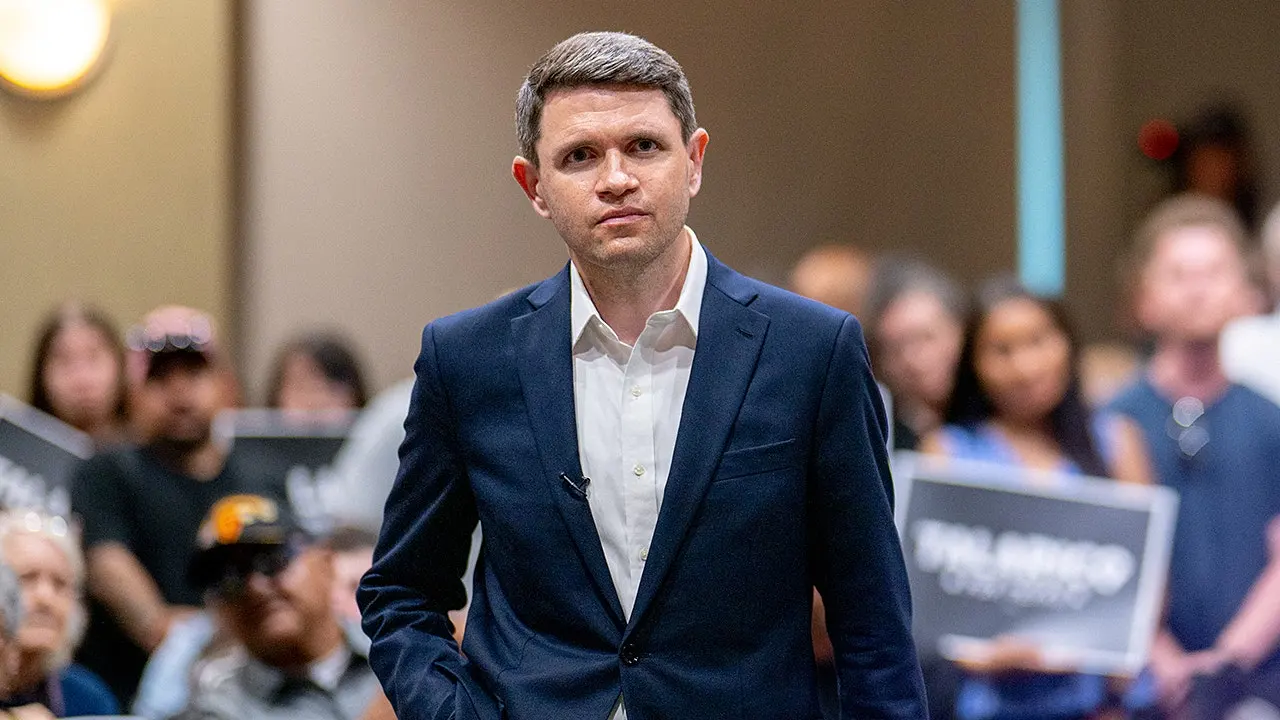
The quest to flip a statewide seat in Texas has long been the ultimate, elusive dream for Democrats, and this November, Senate nominee James Talarico is attempting to scale that incredibly steep mountain by pitching himself as a unifying figure capable of winning over moderate Republicans. In a massive, fiercely competitive state where political identities are deeply entrenched, Talarico’s campaign has adopted an aggressive, ground-level strategy to “go everywhere and talk to everyone,” hoping to piece together a rare crossover coalition. However, this strategy has immediately run into a brick wall of fierce opposition from the Republican establishment, who accuse the Democratic nominee of running an inauthentic campaign built on manufactured bipartisan support. Republican National Committee Chairman Joe Gruters flatly dismissed Talarico’s outreach efforts as a “pipe dream,” arguing that the nominee is fundamentally out of touch with the vast majority of everyday Texans. According to Gruters, the idea that mainstream conservative voters are willing to abandon their party for Talarico’s platform is not just highly improbable, but a complete political fantasy designed to generate cheap media buzz rather than genuine electoral momentum.
The battle over Talarico’s bipartisan credentials exploded into the national spotlight following a segment on MSNBC’s Morning Joe, where several women presented as Republican mothers voiced their enthusiastic support for the Democratic challenger over the Republican nominee, Ken Paxton. The segment was intended to showcase a growing wave of conservative defection, but Republican researchers quickly dug into the women’s political histories, revealing deep, long-standing connections to progressive organizations and anti-Trump activist groups. For instance, subsequent reporting identified one of the featured mothers as Mindy McClure, whose Federal Election Commission records revealed a consistent history of financial contributions to ActBlue, progressive candidates, and the Lincoln Project dating back to 2018. Another showcased voter’s primary history revealed far more active participation in Democratic primaries than Republican ones. While the Talarico campaign quickly clarified that these women had no official ties to his campaign staff, they defended the crossover narrative by pointing out that the women had previously voted for Republican Governor Greg Abbott. Nevertheless, the revelations gave Republicans a powerful talking point, allowing them to argue that Talarico’s supposed conservative coalition is actually made up of long-time liberal activists posing as disaffected Republicans.
Beyond the dispute over individual endorsements, the race has rapidly devolved into a high-stakes clash over cultural values and ideological purity, with Republicans painting Talarico as a radical progressive masquerading as a moderate. Gruters has led the charge with aggressive, highly personalized rhetoric, mockingly referring to the Democratic nominee as “Tala-freako” and arguing that his progressive policy stances on gender identity and social issues make him far more liberal than former Democratic star Beto O’Rourke. In the eyes of the Republican leadership, Talarico’s platform represents a “liberal clown show” that stands in direct opposition to the traditional, deeply conservative pillars of Texas culture. Gruters emphasized that Texas remains a state defined by what Donald Trump famously described as “God, guns, and oil,” and insisted that voters will easily see through Talarico’s moderate branding once they examine his actual legislative record and progressive social views. By framing the election as a clear choice between traditional Texas values and a progressive cultural shift, the GOP aims to neutralize Talarico’s appeal to suburban families and moderate swing voters who might otherwise be tired of partisan gridlock.
To secure victory and maintain their grip on the Senate seat, Texas Republicans are rallying behind Ken Paxton, a battle-tested and controversial political figure who has successfully branded himself as a resilient “MAGA warrior.” Paxton’s political survival is nothing short of remarkable; just three years ago, he survived a highly publicized state impeachment effort led by members of his own party in the Texas House. In a striking display of party unity and pragmatic reconciliation, some of the very Republican state representatives who once voted to impeach Paxton—such as Jeff Leach and Briscoe Cain—are now actively campaigning for him, introducing him at major rallies in Allen and Houston. This closing of ranks demonstrates the immense gravitational pull of the modern Republican party machine when faced with a common Democratic threat. Paxton’s rise to the nomination came after he successfully ousted the deeply respected, four-term incumbent Senator John Cornyn in a fiercely contested primary, signaling a decisive shift within the Texas GOP toward a more populist, combative style of conservatism. While some moderate Republicans initially worried that Paxton’s controversial legal battles might make him vulnerable in a general election, the party apparatus has fully united around him, betting that his strong alignment with Donald Trump’s agenda will mobilize the conservative base to turn out in massive numbers.
Despite the bravado of the state’s Republican leadership, the sheer geographic vastness and astronomical advertising costs of Texas have created a grueling financial struggle behind the scenes. Paxton recently acknowledged the immense challenge of funding a statewide campaign during the scorching Texas summer, urging national conservative powerhouses—including the Senate Leadership Fund, Donald Trump’s MAGA Inc., and high-profile conservative billionaires like Elon Musk—to immediately inject cash into his campaign coffers. This urgent plea for financial reinforcement stems from Paxton’s concern that Talarico’s early summer advertising blitz has allowed the Democrat to define himself to voters as a sensible, common-sense moderate before the Republican campaign has the resources to counter that narrative. Paxton warned his supporters that without a massive influx of capital to fund aggressive counter-programming in September and October, Talarico’s well-funded campaign will continue to paint an inaccurate picture of the race. The Republican strategy relies on raising enough capital to launch a massive autumn offensive that will aggressively brand Talarico as a far-left socialist, stripping away any moderate appeal he may have built during the summer months.
Ultimately, the outcome of this high-profile Senate race will serve as a definitive litmus test for whether the political landscape of Texas is truly shifting or if the state remains an impregnable stronghold for the Republican Party. While national Democrats continue to pour tens of millions of dollars into the state—often fueled by wealthy progressive donors from California—history suggests that flipping Texas remains one of the most difficult challenges in American politics. RNC Chair Joe Gruters remains highly confident that the state’s natural conservative gravity will prevail, predicting that the race will not even be the most expensive or closest contest of the election cycle because Paxton’s proven track record as a statewide winner will ultimately carry him across the finish line. As the campaign heads into its final, chaotic stretch, the central question remains whether Talarico’s message of bipartisan collaboration can break through the noise, or if the disciplined, unified Republican message of cultural defense and economic conservatism will once again keep Texas firmly, unyieldingly red.