


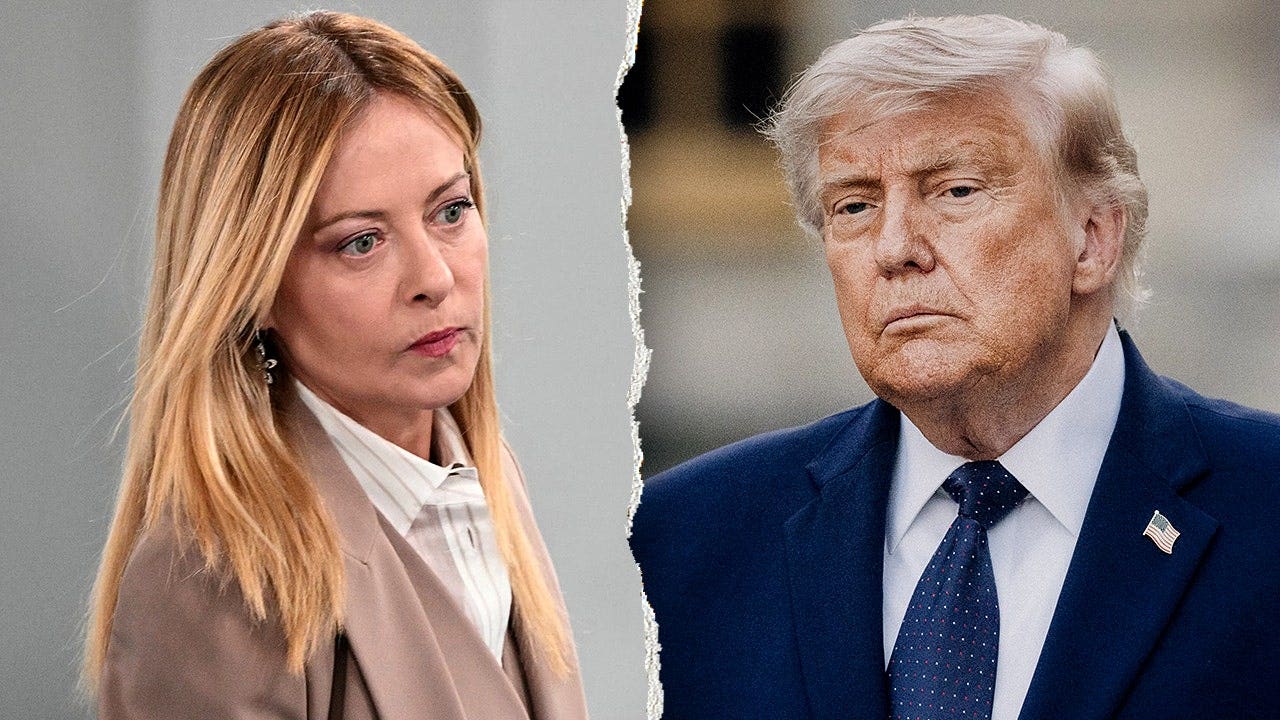
In the theater of modern global politics, personal relationships between world leaders often shift with the prevailing winds of domestic necessity, transforming yesterday’s close allies into today’s fierce public rivals. This dynamic has rarely been more vividly illustrated than in the rapidly escalating public feud between Italian Prime Minister Giorgia Meloni and United States President Donald Trump. What once appeared to be a promising ideological alliance between two powerful nationalist figures has deteriorated into a high-stakes, highly publicized war of words. The ripples of this confrontation were felt at the highest levels of international diplomacy when Italian Foreign Minister Antonio Tajani abruptly canceled a highly anticipated trip to Washington, D.C., where he had been scheduled to meat with U.S. Secretary of State Marco Rubio. While public observers might view this fallout as a sudden and unfortunate collapse of diplomatic decorum, seasoned political analysts suggest a much more strategic reality is at play. Behind the fiery rhetoric lies a calculated political gamble by Meloni. As she faces a crucial period in her premiership, standing up to a polarizing American president may be the exact catalyst she needs to bolster her domestic authority and elevate her standing on the European stage, proving that in the game of political survival, even the most prominent international friendships are entirely negotiable.
At the heart of this personal clash is a deeply human battle over pride, dignity, and national sovereignty, triggered by an unexpectedly petty dispute over a photograph. During an interview broadcast on Italy’s La7 television network, President Trump claimed that Meloni had desperately pleaded with him for a photo opportunity during a recent Group of Seven (G7) summit, asserting that he only agreed to the request out of sheer pity. This public characterization struck a raw nerve for the Italian Prime Minister, who quicky realized that allowing such a narrative to stand unchallenged would severely damage her image as a strong, independent leader. Meloni chose to bypass traditional diplomatic backchannels, instead releasing a highly charged video statement on the social media platform X to address the American president directly. Visibly stunned and indignant, Meloni delivered a firm defense of her country’s honor, stating that neither she nor Italy would ever beg for anyone’s favor or attention. By framing the dispute not merely as a personal insult but as an affront to the dignity of the Italian nation itself, Meloni successfully tapped into a deep well of patriotic pride among her constituents, transforming a minor social media spat into a powerful assertion of Italy’s independence on the global stage.
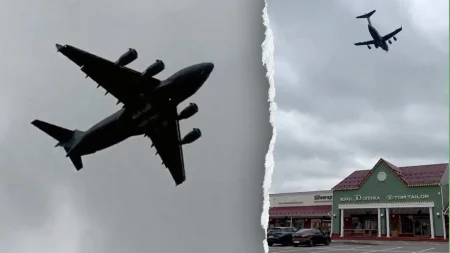
However, the friction between the two administrations extends far deeper than mere social media squabbles, rooted in significant geopolitical disagreements over military strategy and international alliances. Trump quickly escalated the conflict by taking to Truth Social, where he linked Meloni’s personal conduct directly to her legislative and military decisions, particularly regarding the United States’ recent confrontation with Iran. Trump accused Italy of failing to support American efforts to curb Iran’s nuclear ambitions, alleging that the Mediterranean nation had refused to grant the U.S. military permission to use Italian landing strips and runways during critical operations. This logistical refusal, according to Trump, was a major inconvenience that strained the foundational defense pacts of the NATO alliance. Furthermore, the rift had been growing since the spring, when Trump sharply criticized Meloni for aligning herself with Pope Leo XIV’s public condemnation of American military actions in the Middle East. By highlighting these military disagreements, Trump sought to portray Meloni as an unreliable ally who shrank from international responsibility, while Meloni’s defenders argued that her decisions were a necessary defense of Italian sovereignty and a reflection of her commitment to a balanced, independent foreign policy.
Meloni’s counter-offensive to these accusations was swift, sharp, and intensely personal, signaling a complete departure from her previous efforts to maintain any semblance of amicability with the American president. Responding directly to Trump’s assertions about her dipping popularity and his claim that she was trying to rebuild their friendship to improve her standing back home, Meloni pointedly remarked that being associated with Trump had certainly done nothing to help her political numbers. She asserted that her standing among Italian voters depends entirely on her proven ability to defend the national interests of Italy, rather than her submissiveness to foreign leaders. In a final, dismissive gesture, Meloni declared that her popularity was absolutely none of the American president’s business and suggested that Trump would be far better off focused on his own domestic political challenges. This sharp rhetorical counter-punch served a dual purpose: it directly challenged Trump’s narrative of dominance and repositioned Meloni as a fiercely independent leader who would not be bullied by Washington, a stance that resonates deeply with an Italian electorate historically wary of excessive American influence in their domestic affairs.
This public display of defiance comes at a highly critical juncture for the Italian Prime Minister, as she navigates the first sustained decline in her approval ratings since ascending to power. With Italy’s next general election looming in 2027, political scientists and commentators observe that Meloni is operating under intense domestic pressure to revitalize her political brand and re-energize her base of support. Analysts point out that in the current European political climate, standing up to a highly controversial American figure like Donald Trump carries very little domestic political risk and offers immense potential upside. By publicly confronting Trump, Meloni is able to cultivate a strong “silver lining” out of a diplomatic crisis she might have otherwise preferred to avoid. This strategic assertiveness allows her to present herself to the Italian public as a courageous defender of national sovereignty, while simultaneously building crucial political capital and solidarity with fellow European Union leaders who share a deep skepticism of Trump’s unilateral approach to foreign policy. What appears to be an impulsive war of words is, in reality, a carefully weighed political maneuver designed to consolidate her power at home and secure her legacy as a formidable European statesman.
The current hostility represents a dramatic and ironical reversal for two leaders who just a few years ago seemed poised to spearhead a united, global nationalist movement. When Meloni first rose to prominence, she was widely viewed as a potential ideological bridge between the conservative populist movement in the United States and the established political structures of Brussels. Her previous efforts to court Trump were highly visible, highlighted by her high-profile visit to his Mar-a-Lago estate in Florida in 2025 and her status as the only European Union leader to attend his second presidential inauguration. Yet, the rapid unraveling of this political alignment underscores the inherent instability of alliances built purely on shared populist rhetoric. When national interests, personal egos, and the immediate demands of domestic survival inevitably collide, even the strongest ideological bonds can quickly dissolve. As Meloni and Trump continue their public sparring, the international community is left to contemplate a new era of transatlantic relations—one where traditional alliances are increasingly subjected to the volatile demands of social media theater, and where the line between global statesmanship and domestic political survival has never been more thoroughly blurred.