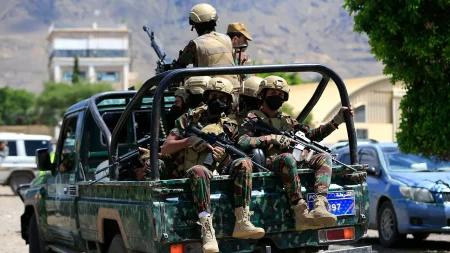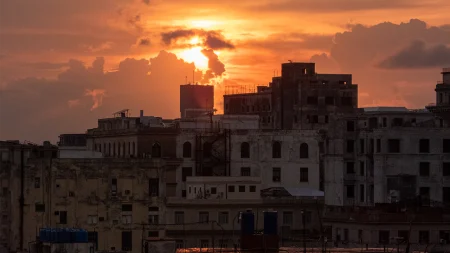







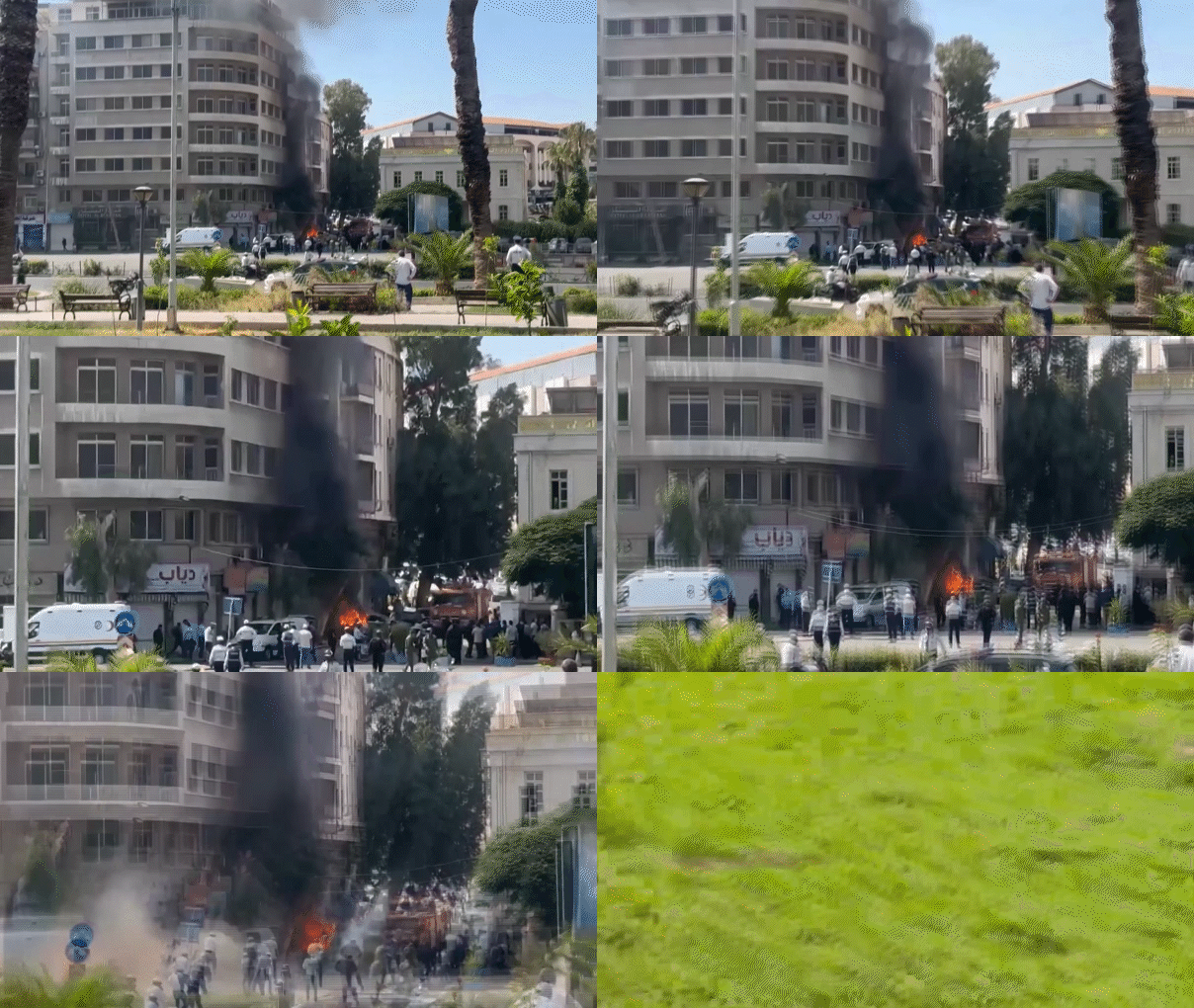
A sense of uneasy peace was shattered in Damascus on Tuesday when two improvised explosive devices detonated near the upscale Four Seasons hotel. The explosions occurred in the heart of the Syrian capital, a high-profile area hosting French President Emmanuel Macron during his historic state visit. According to Syria’s interior ministry, the blasts injured eighteen people, including four police officers. State media outlet SANA reported that security forces had actually discovered the bombs—one hidden inside a car and another inside a nearby garbage can—and were preparing to safely dispose of them when both devices prematurely detonated, turning a tense disposal operation into a chaotic scene of smoke and sirens.
Despite the proximity of the blast to his accommodation, President Macron was never in direct danger. An Élysée Palace spokesperson confirmed that the French leader was away from the hotel when the explosions occurred and did not even hear the blasts. He proceeded with his scheduled itinerary uninterrupted, meeting with Syria’s new president, Ahmed al-Sharaa. Seeking to project calm, Syria’s Ministry of the Interior issued a statement reassuring the public that the explosion site lay completely outside the security perimeter designated for the French delegation, posing no threat to Macron’s safety or the progression of his diplomatic mission.
The incident did not deter Macron from sharing his vision for the war-torn nation. Shortly after the blasts, he took to social media to express his resolve and admiration for the local population. “Nothing can smother the aspiration of Syrian women and men to live in a fully sovereign, safe, pluralistic, and united Syria,” Macron wrote on X. He added that he had spent the morning meeting with a diverse cross-section of Syrian society, noting their dignity, courage, and determination, and firmly stated that his historic visit would continue as planned.
This high-stakes diplomatic visit carries immense political weight, as Macron is the first Western leader to travel to Damascus to meet with al-Sharaa since the former rebel assumed power in 2025 following the ousting of Bashar al-Assad. The transition has been highly controversial. While leaders like U.S. President Donald Trump have hosted al-Sharaa in Washington, critics have vehemently condemned the normalization of diplomatic relations with the new government, pointing to al-Sharaa’s past ties as a fighter for an al-Qaeda-affiliated group. Macron’s presence in the capital represents a delicate geopolitical gamble, balancing France’s democratic ideals with the pragmatic reality of a newly reshaped Middle East.
The twin bombings also underscore a deeply worrying security trend, as they mark the second and third major blasts to rock the capital in less than a week. Just a day prior, the French government had officially condemned a separate “terrorist attack” that occurred on July 2, when an explosive device detonated inside a crowded Damascus cafe, claiming the lives of at least nine people. This sudden spike in urban violence has cast a long shadow over the al-Sharaa administration’s ability to maintain basic security and law and order in the aftermath of a decades-long civil war.
As of Tuesday afternoon, Syrian authorities were still aggressively investigating the latest incidents. No group has yet claimed responsibility for any of the recent bombings, leaving residents and international observers alike on high alert. The motive behind the attacks remains unclear, though many speculate they were timed specifically to embarrass the new government on the international stage during a milestone diplomatic visit. As Damascus cleans up the debris, the fragile path toward Syrian stability remains perilous, marked by the lingering presence of hidden explosives and deep political fractures.