

Here’s a humanized summary of the article, split into six tight paragraphs as requested:
—
The USS George Washington, a Nimitz-class aircraft carrier, has arrived in the Arabian Sea near the strategic Strait of Hormuz, right off the coast of Iran. The ship and its 5,000 sailors are stepping into a critical role, replacing the USS Abraham Lincoln. Morale, according to the captain and crew, is sky-high. The ship’s commanding officer, Capt. Nicholas DeLeo, says he sees pride and dedication everywhere he walks, whether sailors are running flight operations, fixing equipment, or just supporting each other. For him, that teamwork is what keeps the ship resilient and ready for whatever comes next.
This isn’t just one ship sailing alone—it’s the flagship of Carrier Strike Group 5, accompanied by guided-missile destroyers and a cruiser. The admiral in charge, Rear Adm. Jeff Heames, stressed that his team is “ready, determined, and resourced” for the long haul. Operating under U.S. Central Command, the group’s presence sends a clear message about American military commitment to the Middle East. Retired Gen. Joseph Votel noted that having credible force in the region matters now more than ever, but warned that patience and preparation are key for the long game.
Up in the air, the carrier is a floating airport of cutting-edge firepower. F/A-18 Super Hornets, F-35C stealth fighters, electronic warfare planes, and early warning aircraft launch day and night. The crew also flies Seahawk helicopters for rescue and anti-submarine missions. A proud recent moment came when Lt. Steven Frazier, an F-35C pilot, made history with the 200,000th arrested landing on the ship. With a classic pilot’s humility, he joked that it’s nice to know he can always come back and trap aboard when he needs to.
The bridge is just as focused. Assistant Navigator Elizabeth Wayne explained that whenever they navigate or conduct flight ops, everyone is locked in, watching for hazards and staying in sync with the air boss and captain. It takes total coordination to keep things running safely. Meanwhile, Russian state media tried to stir the pot by posting fake, AI-generated images of terrible food aboard the carrier. In reality, the crew enjoys variety and plenty of it—cooks prepare around 15,000 meals a day, and sailors have 24/7 access to snacks and drinks, whether it’s three square meals or midnight chow.
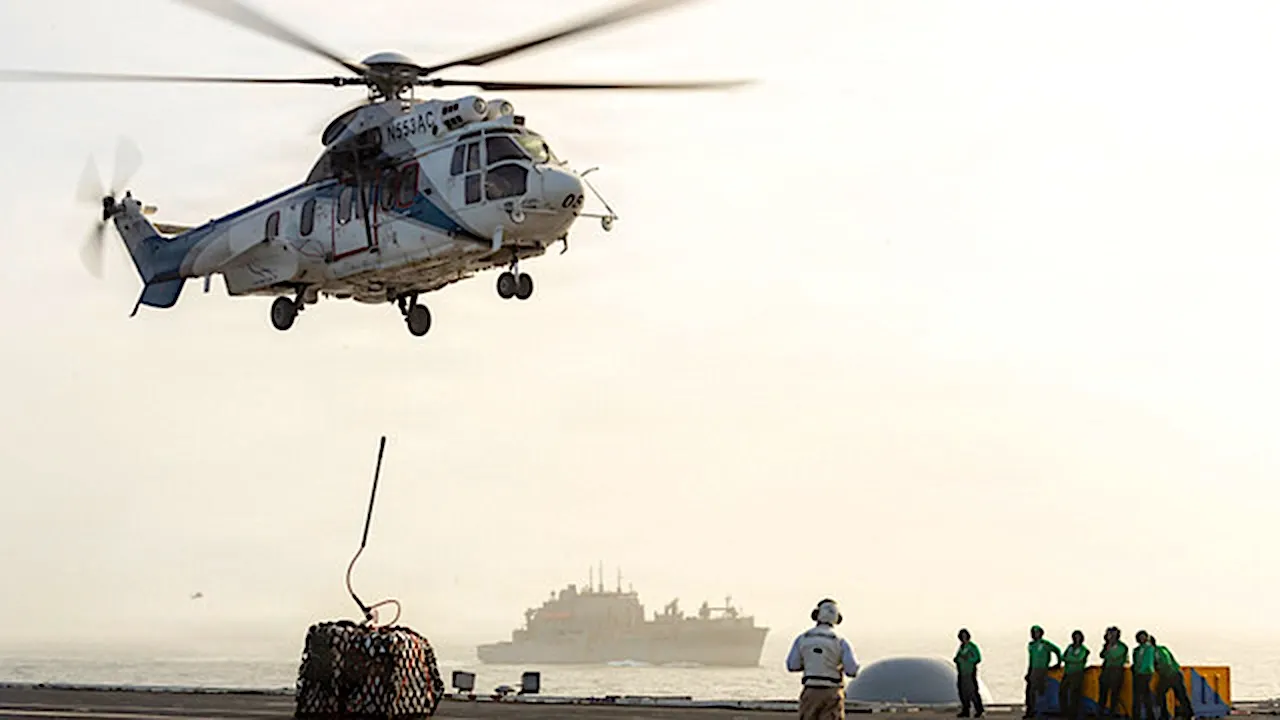
Keeping 5,000 sailors fed and armed is a relentless logistics mission of its own. Just this past week, the carrier was resupplied twice in four days, receiving about 2,000 pallets of fresh food, ammunition, and other essentials via helicopter and ship-to-ship transfers. While the carrier itself is nuclear-powered and won’t need fuel, its aircraft do, so fuel is also transferred at sea. This careful choreography ensures that the crew stays well-provisioned and the flight deck keeps buzzing no matter how far from home port.
In a nod to its long history, the crew celebrated the 39th anniversary of the keel being laid back in 1986—a ship that’s been sailing for nearly four decades. Now, floating in the Arabian Sea at the edge of a volatile region, the George Washington stands as a symbol of readiness and resolve. With a mix of pride, professionalism, and a bit of humor, the men and women aboard are sticking to their mission: standing tall, staying vigilant, and ready to respond to whatever challenges come their way.