





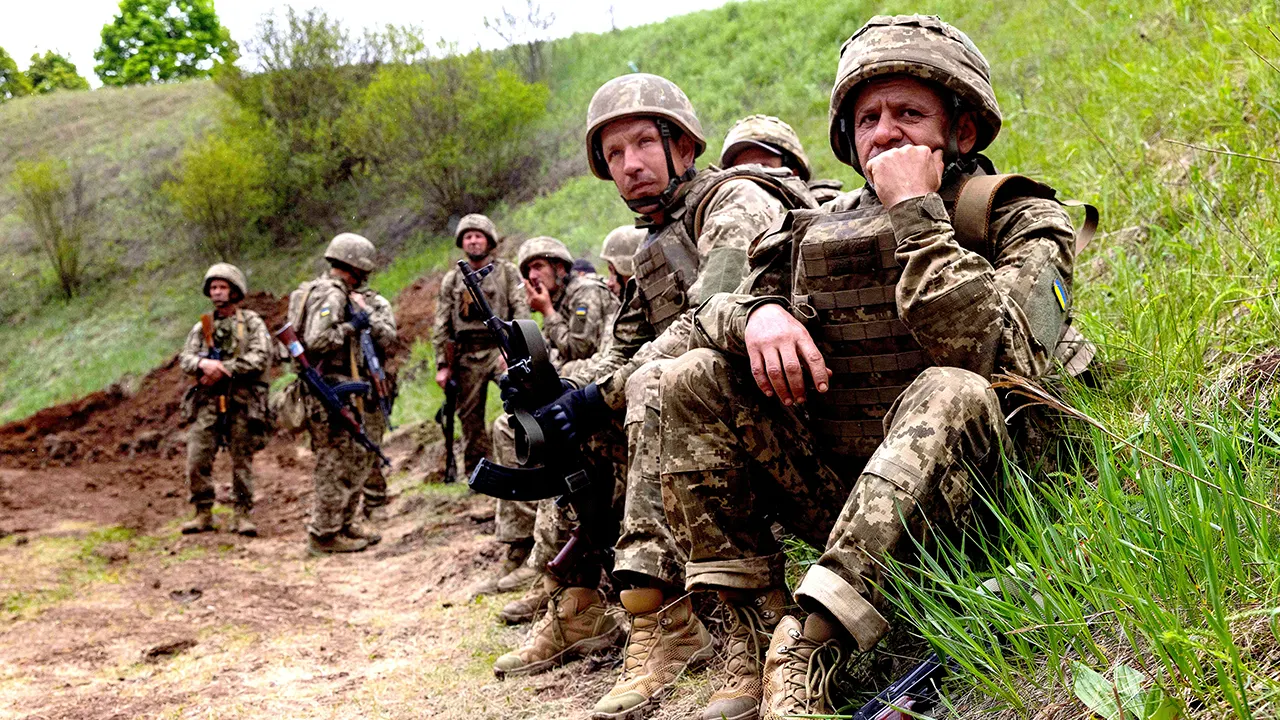
For four grueling years, the battlefields of Ukraine have served as both a profound human tragedy and a relentless crucible, rewriting the rules of global security in real-time. In cities like Lviv and Kyiv, where historic European architecture now stands alongside the scars of routine rocket fire, local communities have had to transform their entire existential reality simply to survive. This massive societal shift has not gone unnoticed by NATO’s eastern flank nations, who look across their borders and see their own future being forged in the mud of the Ukrainian frontline. Eastern European officials are increasingly vocal about the fact that Ukraine has developed the most battle-tested, innovative, and resilient military on Earth, born out of sheer necessity. What began as a desperate defense against an unprovoked invasion has morphed into a masterclass in modern warfare—covering everything from drone integration and state-of-the-art cyber defense to civilian mobilization and rapid industrial pivoting. This strategic reality was recently cemented when NATO Secretary-General Mark Rutte confirmed that Ukrainian President Volodymyr Zelenskyy had been formally invited to the alliance’s critical annual summit in Ankara, Turkey. Lviv’s charismatic mayor, Andriy Sadovyi, echoed the sentiments of many in the region when he boldly stated that the Ukrainian army has become the premier military force in Europe, one that NATO itself desperately needs for its own survival. Although Ukraine remains outside the formal security umbrella of the alliance, its central role in the upcoming summit underscores an undeniable truth: the future of Western defense is no longer being decided in comfortable boardroom meetings in Brussels, but in the trenches of eastern Ukraine, where the blood, sweat, and ingenuity of ordinary citizens are redefining the very concept of collective security.
This systemic transformation is perhaps most visible in how ordinary people have repurposed their professional talents to serve the war effort, turning a thriving civilian economy into a decentralized defense powerhouse. Before the invasion, cities like Kyiv and Lviv were globally celebrated for their vibrant information technology sectors, employing over 40,000 highly skilled developers, designers, and engineers. Almost overnight, this peacetime ecosystem pivoted toward survival, rebuilding itself into a massive, interconnected defense cluster where software developers swapped consumer app creation for drone artificial intelligence and encrypted battlefield communications. Today, hidden throughout the country in unassuming warehouses and basements, these citizen-engineers are mass-producing low-cost combat drones, anti-drone tracking systems, and decentralized weaponry that have completely revolutionized the tactical landscape. This relentless grassroots innovation has caught the attention of military brass at the highest levels of the Pentagon, who are currently studying Ukraine’s rapid wartime industrial adaptation to overhaul Western manufacturing pipelines. U.S. Senator Marco Rubio recently warned that NATO allies are severely lacking the munitions capacity required to sustain future conflicts, a glaring vulnerability that has forced officials to look closely at how Ukraine scales production under constant bombardment. Retired Lieutenant General Richard Newton noted that the Pentagon is actively taking pages from the Ukrainian playbook, hoping to inspire a transformation of the American industrial base so that military capabilities can be deployed to soldiers in the field in a matter of weeks and months, rather than the agonizing years required by traditional, bureaucratic peacetime procurement.
The geopolitical ripple effects of this conflict have also redrawn the map of Europe in ways that represent a catastrophic irony for the Kremlin. For years, Vladimir Putin justified his aggressive posturing by demanding that NATO halt its eastward expansion, roll back its military presence to pre-1997 positions, and officially bar Ukraine from ever joining the alliance. Yet, the brutal invasion of Ukraine achieved the exact opposite of Putin’s strategic goals, instilling a deep sense of vulnerability in nations that had clung to decades of military non-alignment. In an extraordinary demonstration of democratic consensus and national anxiety, the citizens and leaders of Finland and Sweden abandoned their historic neutrality, with Finland officially joining NATO in 2023 and Sweden following in 2024. Finland’s entry alone added more than 800 miles of direct, highly fortified border between the alliance and Russia, fundamentally reorganizing the security landscape of Northern Europe. At the same time, the human anxiety running through Eastern European populations has been met with signs of steady, reassuring commitment from traditional allies. Polish Foreign Minister Radosław Sikorski openly welcomed President Donald Trump’s announcement that the United States would maintain its current troop deployments in Poland, remarking that a robust American presence along the eastern flank makes the Kremlin highly uncomfortable. This fluid environment demonstrates that the war has not only expanded NATO’s physical footprint, but has also fostered a renewed, urgent solidarity among nations that refuse to take their sovereignty and freedom for granted.
As the center of gravity in European defense continues to drift southward and eastward, Poland has aggressively positioned itself as the muscular vanguard of the alliance’s new era. Driven by a acute historical memory of foreign occupation during the twentieth century, Polish citizens and their government have eagerly embraced a proactive defense posture, devoting nearly five percent of their gross domestic product to military spending this year—the highest ratio of any nation within NATO. Polish Deputy Defense Minister Paweł Zalewski explained that the war has entirely dismantled the military doctrines of previous decades, which were heavily focused on expeditionary operations and counter-terrorism in faraway lands, replacing them with a stark reality: modern, high-intensity continental warfare is now heavily dominated by drones and rapid-response technology. This realization has led to the conceptualization of what Polish officials call “NATO 3.0,” a strategic model in which European nations take primary responsibility for their own conventional territorial defense, while the United States shifts its principal attention and resources toward countering geopolitical challenges in the Indo-Pacific region and China. Poland’s Deputy Foreign Minister, Marcin Bosacki, pointed out that the current crisis has ultimate vindicated Eastern European diplomats, who spent decades warning their Western European counterparts about the deeply aggressive and expansionist nature of Putin’s regime. This newfound credibility has transformed the eastern flank from a group of regional supplicants dependent on Western protection into a self-reliant, highly assertive coalition of defense leaders.
To understand how rapidly the nature of combat has changed, one only has to look at the comments of retired General Philip Breedlove, a former NATO Supreme Allied Commander in Europe, who observed that the war in Ukraine has shattered theoretical military frameworks around the world. In past decades, Western strategy relied heavily on achieving total air superiority to dictate the terms of a conflict; however, the absolute failure of the Russian Air Force to secure the skies over Ukraine, combined with Ukraine’s resilient use of air defense systems, has led to a persistent stalemate in the airspace. In the absence of traditional air warfare, both sides have been forced to rely on an unprecedented, exponential expansion of drone capabilities, turning the sky into a continuously monitored, highly lethal grid where armored vehicles and individual infantrymen are constantly exposed. Breedlove praised the Ukrainian armed forces as one of the most capable, adaptable, and formidable militaries on the continent, having achieved incredible territorial reclaim against a far larger adversary despite having surrendered their massive, Soviet-era nuclear arsenal decades ago under the 1994 Budapest Memorandum. This incredible battlefield performance is a testament to the resilience of ordinary Ukrainians who have adapted to these brutal conditions, using their intimate knowledge of modern technology to outmaneuver a rigid, top-down military structure. It is this lived experience, forged in the fires of active combat, that makes the Ukrainian military an invaluable repository of practical warfare knowledge that conventional, peacetime armies simply cannot replicate in training simulations.
As the dust settles ahead of the historic Ankara summit, the international community finds itself navigating a delicate moral and strategic tightrope regarding Ukraine’s ultimate place in the Western alliance. Out of an intense fear of triggering a direct, nuclear-level confrontation between NATO and the Russian Federation, Western leaders have cautiously stopped short of offering Kyiv a concrete timeline or path toward formal membership while active hostilities continue. Yet, across Eastern Europe, there is a growing, passionate consensus that the distinction of formal membership is rapidly becoming an academic afterthought in comparison to the integration already happening on the ground. The reality is that the safety of Western Europe is actively being bought with Ukrainian lives, and the technologies, tactics, and defense systems that will protect the democratic world for the next fifty years are being tested and perfected by Ukrainian hands today. Ultimately, the story of Ukraine’s integration into NATO is not one of diplomatic signatures on parchment, but of a shared destiny forged in the crucible of survival, where a brave, independent people have proven that the true strength of an alliance lies not in its treaties, but in the unwavering human spirit of those willing to fight for their liberty.