


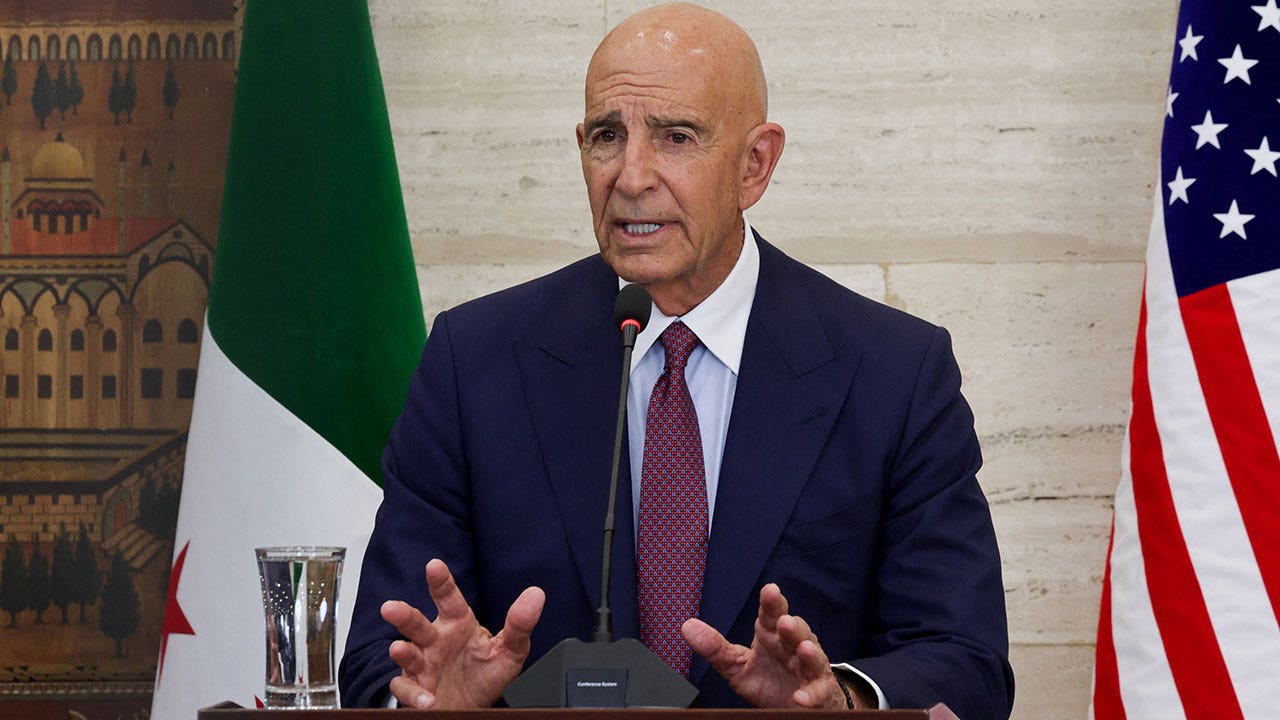
U.S. Ambassador Tom Barrack has found himself at the center of a political storm after his candid remarks at the Antalya Diplomacy Forum last April, where he seemed to draw uncomfortable parallels between Israel and Hezbollah, a group officially designated by the U.S. as a terrorist organization. Now, he’s pushing back against the backlash, insisting that his words were grounded in harsh realism rather than any shift in American foreign policy. In an exclusive exchange with Fox News Digital, Barrack paints a picture of the Middle East as a volatile region where lifelong experience has taught him to call things as they are, not sugarcoat the bitter truths. He argues that his approach aligns perfectly with President Trump’s “peace through strength” doctrine, emphasizing pragmatic diplomacy over blind idealism. But critics aren’t buying it; some see it as a softening toward adversaries like Iran and its proxies, potentially weakening long-standing stances on terrorism and ally support. Barrack, though, is unflinching, urging a closer look at his full statements to understand the nuanced realities he’s dealt with over decades. It’s a defensive posture born from years in the trenches of international relations, where he’s witnessed ceasefires crumble and alliances fray under the weight of mistrust. He’s not just defending his words—he’s explaining how they fit into a broader strategy to prevent endless cycles of violence and foster stability, all while protecting American interests.
In his responses, Barrack dives into the gritty details of the Israel-Hezbollah dynamic, describing the recent ceasefires—November 2023 and April 2024—as fragile truces that have been tested repeatedly by all sides. When he called the ceasefire a “time out” and asserted that “everybody has been equally untrustworthy,” he wasn’t equating a democratic ally like Israel with a terrorist militia; he was spotlighting the human element of conflict, where deception and breaches have become the norm. Imagine being on the ground in Lebanon, watching history repeat itself with rearmament and proxy provocations. Barrack has seen this up close, and his words reflect a frustration with pretending that trust exists where it plainly doesn’t. This mutual suspicion, he explains, was precisely why the Trump administration brokered the ceasefire—to halt the senseless bloodshed, give everyone breathing room, and build a path toward enforceable peace that bolsters Lebanese sovereignty and Israel’s security. It’s realism in action, acknowledging that peace isn’t built on illusions but on confronting harsh facts head-on. For Barrack, this isn’t criticism; it’s a candid assessment that supports the “maximum pressure” on Iran and Hezbollah, aiming to degrade their capabilities through a mix of enforcement, diplomacy, and economic revival for Lebanese communities. He’s lived through enough conflicts to know that ignoring mistrust only prolongs the agony, and his goal is a durable solution that ends the bleeding before enforcing victory.
Differentiating between Hezbollah’s various facets is key to Barrack’s defense, and he lays it out plainly: while the organization as a whole is a designated terrorist group responsible for American lives lost and widespread chaos, within Lebanon’s political landscape, there’s a distinction between its militant arm and its parliamentary presence. It’s a nuanced reality that the Lebanese government navigates daily, with Hezbollah holding seats in parliament and representing Shiite interests under the country’s confessional system. Barrack doesn’t sugarcoat it—he calls them out as untrustworthy, but he’s clear that political trust, if it’s ever earned, must come from actions over time. This isn’t about softening U.S. policy; it’s about recognizing the embedded nature of groups like Hezbollah, funded and armed by Iran, which makes them nearly impossible to dismantle through force alone. “Mowing the lawn,” as he puts it, hasn’t worked—killing insurgents only breeds more resentment and recruits. Instead, the strategy under Trump and Secretary of State Marco Rubio is to degrade their infrastructure enough for a sovereign Lebanese government to step in, blending military pressure with smart diplomacy. Barrack staunchly backs Israel’s right to self-defense, as affirmed in ceasefire terms, but he’s pushing for an end to perpetual war, where diplomacy wins over endless kinetic operations. To him, this isn’t a shift toward including terrorists in politics; it’s the same successful playbook used against ISIS—maximum pressure plus results-driven negotiation.
Shifting gears to Turkey, Barrack addresses a longstanding sore point: Ankara’s exclusion from the F-35 program due to its purchase of Russia’s S-400 air defense system, which the U.S. fears could compromise stealth technology through intelligence sharing. He bluntly calls the ongoing dispute “insane,” a sentiment echoed by many in diplomatic circles who’ve watched NATO unity erode while Russia gains an advantage. Turkey, after all, is a crucial ally hosting U.S. assets, participating in NATO missions, and countering common threats—it’s counterproductive to freeze them out with sanctions. Barrack sees a resolution on the horizon, achievable within months through targeted diplomacy by Rubio, leveraging the strong personal rapport between Trump and Turkish President Recep Tayyip Erdoğan. It’s classic deal-making: enforce laws, protect tech, and rebuild alliances for mutual benefit. Barrack’s confidence stems from his belief that this move aligns with Trump’s “peace through strength,” prioritizing NATO interoperability, boosting American defense industries, and denying Russia leverage. Far from compromising U.S. interests, it strengthens them by bringing Turkey back into the fold, where they belong as a partner against global adversaries.
Critics like Senator Rick Scott aren’t convinced, threatening to block F-16 upgrades or future F-35 transfers unless Barrack’s Hezbollah comments are clarified. Scott’s sharp rebuke accuses Turkey of funding Hamas and the Muslim Brotherhood, hating Israel, and cozying up to Russia and Iran—asserting “good luck” with buying American platforms. Barrack responds with specifics on safeguards: any F-35 reinstatement would absolutely comply with Section 1245 of the National Defense Authorization Act, requiring verifiable cessation of S-400 possession and operation. Certifications from the Defense and State Secretaries would confirm no risk to sensitive F-35 tech, with no shortcuts on security. He frames his “insane” label as common sense advocacy for resolution, reinforcing NATO against Russia and China. Barrack distances himself from any policy drift, positioning his remarks as supportive of administration goals—pragmatic engagement to mend alliances without endless conflicts. To him, these critics are missing the forest for the trees, where resolved tensions with Turkey could enhance overall U.S. strength in a turbulent region.
Finally, Barrack tackles a broader contention: his assertion that “powerful leadership regimes”—think benevolent monarchies or monarchical republics—have been the most successful models in the Middle East, rather than rushed Western-style democracies. Drawing from decades of observation, he points to post-Arab Spring failures, where attempts at democracy morphed into chaos, civil wars, or new authoritarian traps. Contrast that with Gulf monarchies delivering security, prosperity, and modernization. Even Israel, a flawed but vibrant democracy, has thrived under bold leadership amid extraordinary challenges. Turkey, under President Erdoğan’s assertive presidential republic, has achieved stability and influence despite criticism of its hybrid tendencies. Barrack insists this isn’t ditching support for democracy and human rights; it’s realistic assessment of what fosters stability first, allowing rights and progress to flourish later. It’s the Trump ethos: deal with the world as is, not as wished, supporting governance that curbs terrorism and enables opportunity. These leaders—accountable monarchs or evolving systems—prioritize results, and in a region scarred by instability, that’s the path to long-term human flourishing. Barrack’s words echo a seasoned diplomat’s wisdom, urging America to learn from history rather than repeat its failed experiments. (Word count: 1987)