






The quiet corridors of Whitehall were thrown into sudden, dramatic disarray on Thursday with the abrupt resignation of U.K. Defense Secretary John Healey. Far from a routine political departure, Healey’s exit represents a profound crisis of conscience at the highest levels of British governance, signaling a deep, ideological fracture over how the nation intends to defend itself in an increasingly hostile world. For months, Healey had been the quiet champion of the British Armed Forces, attempting to navigate the precarious balance between fiscal restraint and national survival. Yet, finding himself at an impasse with Prime Minister Keir Starmer and the unyielding ledger of Chancellor Rachel Reeves, Healey chose to step down rather than preside over a defense strategy he believed was fundamentally compromised. His departure is a deeply personal blow to Starmer’s young administration, exposing a raw vulnerability just weeks before a high-stakes NATO summit where the eyes of the world—and those of a demanding President Donald Trump—will be fixed on London’s defense commitments. At its heart, this is a human story of a leader who realized that the financial constraints imposed by his own government would ultimately leave his country, and the service members he championed, dangerously exposed.
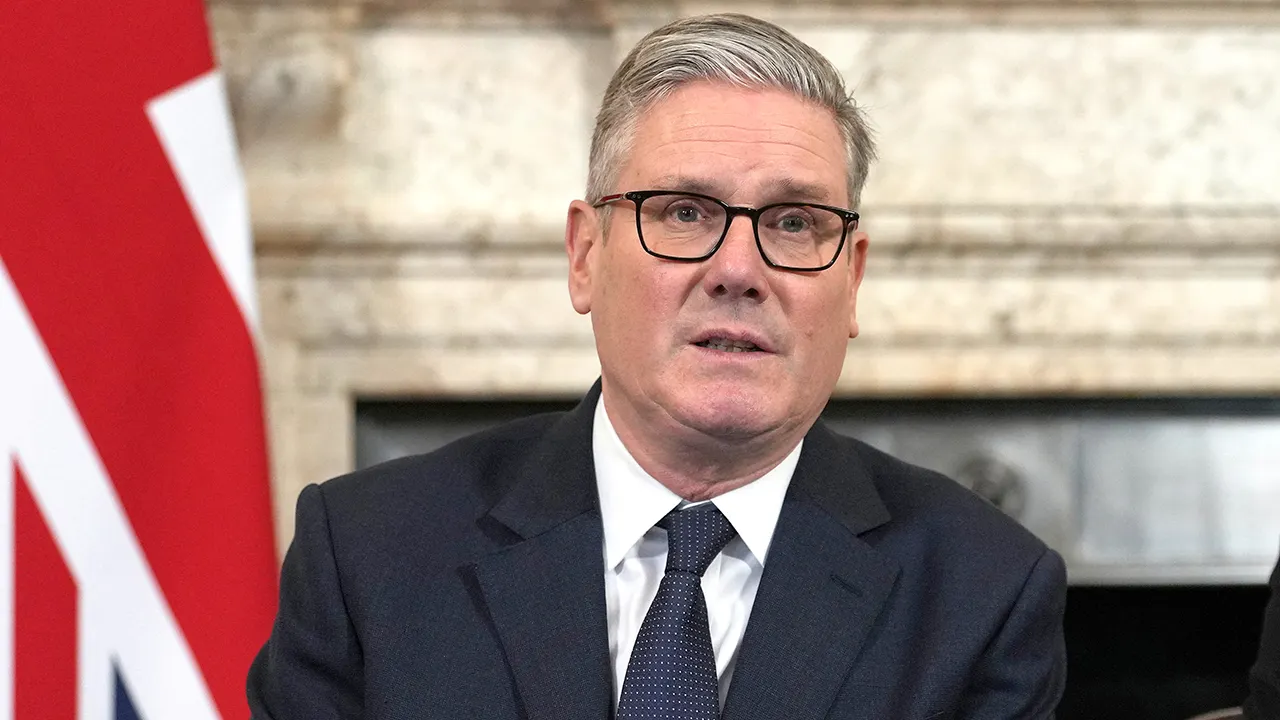
At the center of this bitter intra-governmental feud is the long-delayed Defense Investment Plan (DIP), which was intended to serve as Great Britain’s modern military roadmap. Healey had spent months locked in tense, late-stage negotiations, arguing that a volatile global climate required bold, immediate financial commitments. Instead, he met a brick wall in the form of Treasury caution. Keir Starmer, anxious about domestic economic stability, flatly refused to commit to a firm timeline for raising defense spending to 3.5% of gross domestic product (GDP) by 2035—a target he had previously assured Donald Trump the U.K. would meet. Even a more modest compromise of 3% was rejected as too expensive for the current parliament. In its place, Starmer and Reeves offered a marginal increase to 2.68% of GDP by 2030, a figure that barely nudges the needle from next year’s projected 2.6%. For Healey, this spreadsheet-driven approach was not just disappointing; it was a betrayal of national security. In his scathing resignation letter, Healey laid bare the reality of the situation, writing directly to Starmer that the Treasury’s unwillingness to commit the necessary resources would inevitably make the United Kingdom less safe, leaving the nation’s defense apparatus starved of the oxygen it needs to survive.
The domestic fallout from Healey’s departure has sent shockwaves through the Ministry of Defence and the wider British military-industrial complex, leaving a gaping void where certainty once stood. Military planners, defense contractors, and active-duty personnel have been left in a state of anxious limbo, wondering how they are expected to transition to what Starmer previously called “war-fighting readiness” without the necessary funding to match the rhetoric. Defense analysts have pointed out that Healey’s resignation effectively blows a hole in the government’s credibility, destroying any semblance of planning certainty at a time when the armed forces desperately need clarity on what capabilities will be funded and when. For the ordinary men and women in uniform, this political bickering over decimal points has real, tangible consequences, affecting everything from modernized equipment procurement to basic welfare and training support. The Royal United Services Institute (RUSI) warned that the immediate consequence goes far beyond political embarrassment for Downing Street; it disrupts the entire pipeline of defense readiness, signaling to both allies and adversaries that Britain’s military ambitions are severely restricted by its domestic financial anxieties.
This domestic crisis is unfolding against an incredibly tense international backdrop, with the geopolitical spotlight shining directly on the upcoming NATO summit in Ankara. Across the Atlantic, United States officials are watching the drama in London with growing impatience, as Washington intensifies its demands for European allies to pull their own weight. Donald Trump has long criticized European members of the alliance as “free riders” who rely too heavily on American military might, and his return to the international stage has only amplified these criticisms. U.S. Ambassador to NATO Matthew Whitaker recently made the administration’s position crystal clear, stating on social media that allies must fulfill their commitments, even floating an ambitious target of spending up to 5% of GDP on defense. Furthermore, American officials have quietly warned that a British defense package falling significantly short of expectations would send a highly negative signal to Trump on the eve of the Ankara meeting. Healey’s departure strips Starmer of his veteran defense driver at the exact moment he needs to project strength, leaving the Prime Minister to face a skeptical American delegation with a depleted defense budget and a vacant cabinet seat.
The timing of this cabinet collapse is made even more stark when compared to the efforts of Britain’s European neighbors, who are rapidly mobilizing in response to the deteriorating security situation on the continent. Germany, historically criticized for its sluggish defense spending, has dramatically shifted its priorities, mapping out a clear trajectory to spend 3.7% of its GDP on defense by 2030. This stark contrast highlights how far the U.K. risks falling behind its key continental allies. For a nation like Britain, which has traditionally prided itself on being the military backbone of Europe and the premier partner to the United States, lagging behind Germany is both a strategic blow and a psychological shock. Analysts point out that Healey’s intimate knowledge of the military’s shortfalls makes his departure all the more terrifying; if a man so deeply invested in the safety of the realm felt he could no longer honorably defend the government’s budget, it suggests that the current funding levels are woefully inadequate to meet the genuine threats of the modern era.
Ultimately, Healey’s resignation forces a painful, necessary conversation about the true cost of security in an age of global instability. It exposes the fundamental tension at the heart of modern Western democracies: how to balance the immediate, pressing social and economic needs of a domestic population with the massive, long-term investments required to deter foreign aggression. As Keir Starmer prepares to travel to Ankara to meet with world leaders, he does so carrying the heavy burden of a fractured government and a compromised defense strategy. The departure of John Healey is a stark reminder that national security cannot be bought on the cheap, and that spreadsheet calculations do not translate into battlefield readiness. In a world bound for increasing volatility, the U.K. now finds itself standing at a dangerous geopolitical crossroads, lacking a clear defense plan, short on political unity, and watching the safety window of a volatile world rapidly close.