





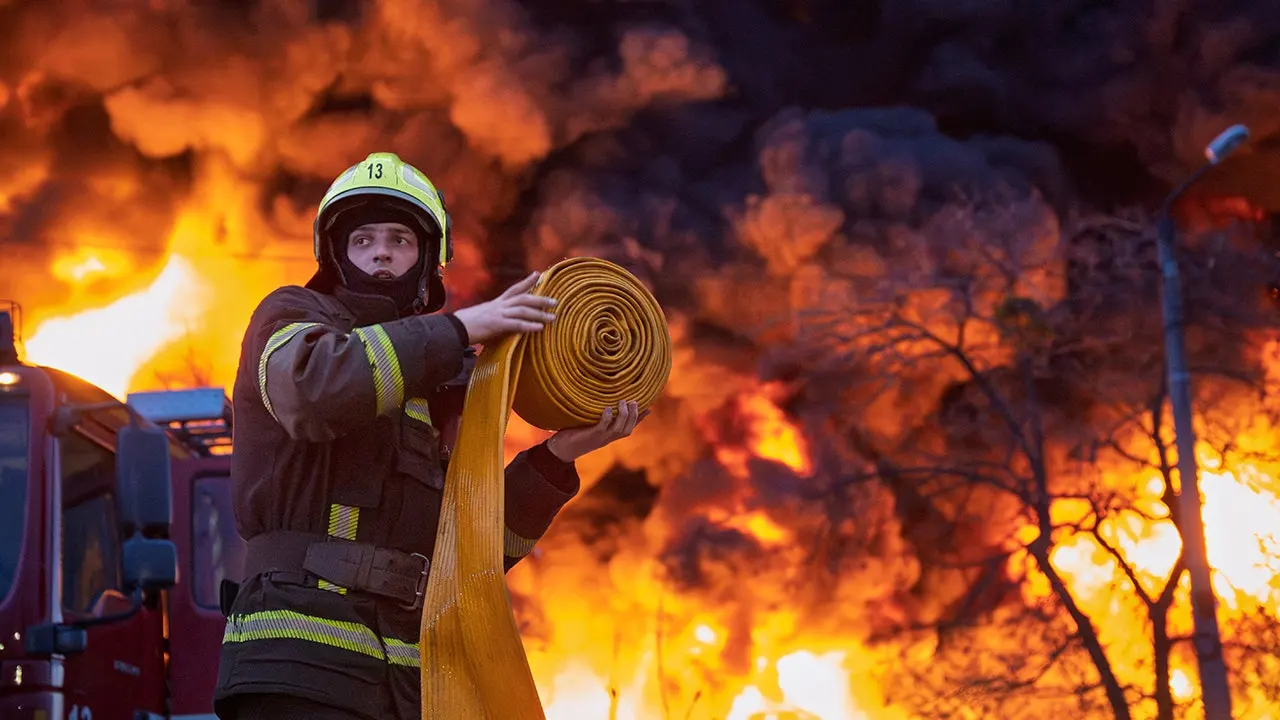
In the quiet of a winter night, the skies over Ukraine erupted into chaos as Russia unleashed what authorities described as its largest aerial assault in nearly two weeks—a relentless barrage of nearly 700 drones and dozens of ballistic and cruise missiles aimed squarely at civilians. From the golden hour of dusk into the shadowed veil of midnight, these attacks rained terror on unsuspecting neighborhoods, shattering lives and homes alike. At least 16 people were killed, including a 12-year-old child in Kyiv, while more than 80 others nursed injuries ranging from shrapnel wounds to the invisible scars of shock. Families huddled in basements or hallways, clutching pets and loved ones, as explosions echoed like thunder through the air. In the aftermath, broken windows offered glimpses of ruined interiors, and power outages plunged nearly 800,000 homes in the Dnipro region into cold darkness, with heating systems silenced, leaving elderly residents particularly vulnerable to frostbite and despair. This wasn’t just a military tactic; it was an intimate assault on the ordinary rhythms of daily life, turning Ukraine’s cities into zones of dread where every drone whistle summoned memories of fragility.
Tetiana Sokol, a 54-year-old Kyiv resident whose easy life with her dogs and cats now feels like a distant memory, recounted the harrowing ordeal with raw emotion to The Associated Press. She described two missiles striking perilously close to her home, the air filling with blinding flashes and deafening blasts that shattered glass and sent debris flying like shards of her former security. Huddled in the hallway with her frightened dog, Tetiana grabbed whatever she could—blankets, perhaps a memento—and fled into the night, her heart pounding with fear she couldn’t fully articulate. “On the third attack, everything broke, everything flew—we were shocked, we didn’t know where to run,” she shared, her voice trembling as she worried about her cats that had vanished into hiding spots unknown. Already traumatized, the dog paced nervously, a living portrait of collective unease. Tetiana’s story is just one thread in the broader tapestry of Ukraine’s plight, where civilians like her are forced to improvise safety amid a war that has claimed over 15,000 lives according to the United Nations, proving that Moscow’s forces treat no target as sacred when waging their invasion over four grueling years.
Amid this storm of destruction, Ukrainian President Volodymyr Zelenskyy has been tirelessly advocating for stronger defenses, recently embarking on a whirlwind 48-hour tour of Germany, Norway, and Italy to secure allies’ support for advanced air defense systems. Ukraine’s burgeoning domestic arms industry, particularly in drones and missiles, has shown remarkable resilience, but it still lags behind the sophistication of U.S. Patriot systems, which can intercept projectiles mid-air with precision. Zelenskyy, echoing the frustrations of a nation on the edge, emphasized that cash-strapped Ukraine urgently awaits a 90-billion-euro EU loan, currently stalled by Hungary’s objections, alongside unwavering commitments from partners. He pointedly criticized any easing of sanctions against Russia, arguing that such moves fuel the Kremlin’s arsenal. “Another night has proven that Russia does not deserve any easing of global policy or lifting of sanctions,” Zelenskyy posted on X, expressing gratitude to Germany, Norway, and Italy for fresh agreements on air defense aid, while pressing the Netherlands and others to deliver promised supplies like Patriot missiles.
The human toll spread across multiple cities, painting a grim map of suffering. In Kyiv, the bombardment demolished 17 apartment buildings, 10 private homes, a hotel, an office center, a car dealership, a gas station, and parts of a shopping mall, injuring more than 50 and claiming four lives, including that innocent child’s, whose dreams were cut short in an instant. Further south in Odesa, a port city vibrant with maritime history, nine perished and 23 were hurt—victims of indiscriminate strikes that cry out as acts of terrorism, as Zelenskyy’s foreign minister Andrii Sybiha denounced on X. In Dnipro, three women lost their lives amid injuries to around three dozen others, disrupting communities already strained by displacement. Even Zaporizhzhia saw one death, underscoring how Russia’s aggression normalizes the unacceptable. Ukraine’s air force valiantly defended, shooting down or disabling 667 of nearly 700 targets, including 636 Shahed drones, though 20 drones and 12 missiles still found their marks across 26 locations, highlighting the gaps in protection that Zelenskyy fights to close.
Yet the shadows of war extend beyond Ukraine’s borders, as retaliatory strikes revealed the cycle of pain. In Russia’s Krasnodar region, a Ukrainian drone attack claimed the lives of a 14-year-old girl and an adult woman in Tuapse, a Black Sea port, damaging six apartment buildings, 24 private houses, and three schools. Fragments from drones scattered near the waterfront, a stark reminder that no side remains untouched by this conflict’s bitter embrace. Russia’s Defense Ministry reported downing 207 Ukrainian drones that night, framing it as self-defense, but the civilian casualties—children and families—evoke universal anguish, blurring the lines between military necessity and human tragedy.
As the dust settles on yet another chapter of this enduring crisis, the calls for accountability grow louder, with inquiries into war crimes echoing from diplomats and survivors alike. Ukraine’s resilience shines through in their air defenses’ performance and Zelenskyy’s diplomatic fervor, but the world watches as dependencies on foreign aid highlight vulnerabilities. Personal stories like Tetiana’s and the nameless victims remind us that beneath the geopolitical chessboard lie real people—mothers, children, retirees—whose lives are interwoven with shattered hopes and unyielding courage. In humanizing this horror, we see not just statistics, but the essence of survival: neighbors helping neighbors rebuild, pets offered comfort in dark times, and a nation rallying against an invader that seeks to extinguish their light. The path ahead demands global empathy, not indifference, as Ukraine pleads for the tools to defend its skies and secure a future unmarred by missiles’ roar. Without swift action, such nights will continue to breed ghosts of what could have been, urging humanity to remember that peace is the ultimate defense.