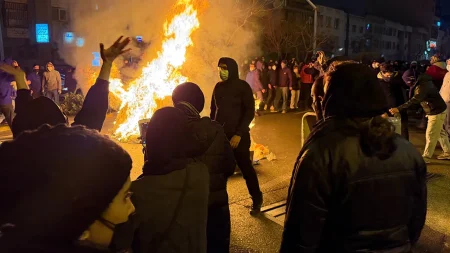




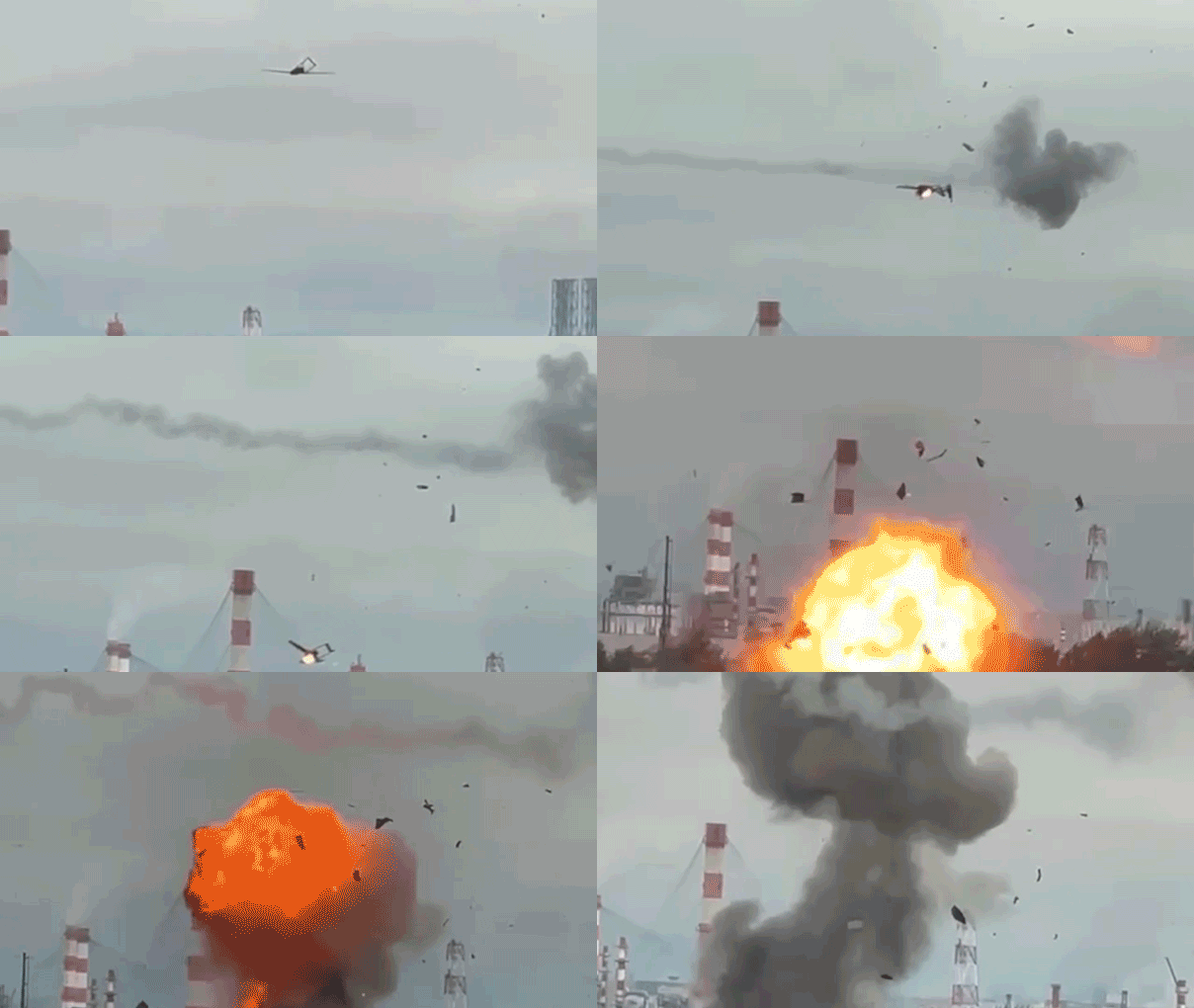
For years, the war in Ukraine was a distant, televised tragedy for the residents of Moscow, insulated as they were by the Kremlin’s massive domestic air defense systems and the state’s carefully curated narrative of absolute security. That illusion was shattered in the dark, early hours of a Thursday morning when the sky over the capital’s Kapotnya district erupted into a hellish canvas of orange flames and dense, choking black smoke. One of Ukraine’s largest coordinated drone operations since the start of the full-scale invasion had bypassed the ring of defenses surrounding Russia’s primary power center, striking the vital Moscow Oil Refinery for the second time in just three days. As the low electronic hum of incoming unmanned aerial vehicles (UAVs) vibrated through residential neighborhoods, those sleeping in nearby high-rises were shaken awake by thunderous explosions and the blinding flash of impact. In an instant, the terror that Ukrainian citizens had endured daily for nearly three years was reflected back onto the streets of Russia’s capital, transforming a geopolitical chess game into a terrifying, immediate reality for regular Muscovites who suddenly found their own windows rattling from the shockwaves of modern warfare.
The immediate aftermath of the strike tore through the fabric of daily life in Moscow, giving rise to an atmosphere of profound vulnerability and heavy militarization that had not been seen in the capital since the dark days of the late twentieth century. In the streets surrounding the burning Kapotnya refinery, ordinary citizens struggled to process the sudden transformation of their city into an active combat zone, with one terrified resident describing the experience to local reporters as “pure hell” and admitting to a sense of absolute, paralyzing terror. Another, looking out over the rising plumes of smoke, gave voice to a growing, hushed sentiment of exhaustion among the populace, questioning why “this madman” would not stop a “crazy and pointless war” that has brought nothing but death and destruction to both nations. In response to the breach, the Kremlin went into an immediate visual lockdown; Red Square was hastily sealed off from the public, and a heavy security apparatus was deployed across the historic center, with gunners behind automatic weaponry positioned on the high towers of the Kremlin, the ancient brick ramparts, and near Vladimir Lenin’s Mausoleum. The physical disruption rippled outward as major international airports suspended flights, arterial roads were choked with traffic restrictions, and emergency services scrambled to treat at least sixteen wounded civilians across the wider region, all while Ukraine’s Foreign Minister, Andrii Sybiha, took to social media to pointedly remind Muscovites that this chaos was the direct harvest of the aggressive war their government had sown years prior.
Strategically, the choice of the Kapotnya refinery as a primary target highlights Ukraine’s calculated shift toward eroding Russia’s economic lifeline and crippling the logistics of its military machine. The facility is not merely an industrial landmark; it is a critical juggernaut of energy infrastructure, responsible for supplying roughly 40 percent of Moscow’s entire domestic fuel market and up to 70 percent of the gasoline and aviation fuel required by the surrounding metropolitan region. By striking this specific hub, Kyiv successfully disrupted the daily commerce and military supply chains of the capital, executing what Ukrainian officials term “long-range sanctions” that target the tangible resources funding the invasion. Despite assertions from the Russian Defense Ministry that over 550 drones were intercepted overnight across several regions—including more than 130 headed directly for Moscow—the visible destruction at the refinery stripped away the veneer of Russian military invincibility. It proved that the mass-produced, low-cost drone fleets emerging from Ukraine’s hidden, underground factories are highly capable of penetrating the most heavily guarded airspace in the world, shifting the tactical equilibrium of the conflict and showing that high-value economic targets deep within Russian territory are no longer beyond Kyiv’s reach.
This dramatic escalation on the home front of the aggressor serves as a powerful diplomatic tool for Ukrainian President Volodymyr Zelenskyy, who has been tirelessly arguing to international allies that Ukraine is highly capable of turning the tide of the war if given the appropriate support. Zelenskyy recently carried this message of resilience and strategic capability directly to G7 leaders and President Donald Trump during high-stakes diplomatic summits in France, using the success of these deep-penetration strikes to validate Ukraine’s military methodology. The operations are part of a broader, multi-front pressure campaign designed to fragment Russian resources; simultaneously, Ukrainian forces launched precise strikes on critical transport, road, and rail infrastructure linked to Russian supply routes in occupied Crimea, aiming to systematically isolate the annexed peninsula. By demonstrating that they can simultaneously strike the economic heart of Moscow and cripple the military supply lines leading to the southern front, Ukrainian leaders are making a compelling case to the global community that their defense strategy is not just holding the line, but actively reshaping the boundaries of what is possible in this conflict.
Yet, as has been the tragic pattern of this war, every breakthrough on the battlefield triggers a cycle of retaliation that falls heaviest on the shoulders of innocent civilians. Even as Moscow burned, the Russian military unleashed its own arsenal of missiles and attack drones across Ukraine, targeting critical energy and oil infrastructure in the Poltava region and the areas surrounding Kyiv, leaving thousands of families in the dark as winter’s chill began to settle over the country. The psychological weight on Ukrainian communities intensified with reports that Russia was mobilizing its fleet of Tu-95MS strategic bombers, moving them to forward-operating airfields in preparation for another massive, coordinated strike designed to crush Ukraine’s power grid and break the spirit of its people. This endless loop of strike and counter-strike highlights the deep human exhaustion that defines this era of the war, where a successful military operation on one side of the border almost certainly guarantees a night spent in a freezing bomb shelter for families on the other, compounding the collective grief of two societies caught in the destructive gears of imperial ambition.
At the geopolitical level, the stark contrast between the violent reality on the ground and the political theater of the ruling elites has never been more glaring. As drones rained down on Russian oil fields and security forces patrolled a locked-down Red Square, President Vladimir Putin was in the city of Kazan, attempting to project an image of global solidarity and diplomatic normalcy as he hosted leaders from the Association of Southeast Asian Nations (ASEAN) bloc. This display of normal diplomacy, however, does little to mask the domestic anxiety or the ultimate truth of the conflict: that the war has reached an unsustainable impasse where military victories are measured in burned refineries and diplomatic efforts are often used as smoke screens for continued aggression. President Zelenskyy has repeatedly emphasized that the path to a lasting peace can only begin when Moscow abandons its territorial delusions and agrees to genuine, transparent negotiations, rather than using the guise of talks to buy time for its next offensive. Until that fundamental shift occurs, the “new kind of war”—defined by low-cost drones, high-altitude fear, and the quiet desperation of ordinary people on both sides of the border—will continue to claim lives, shatter economies, and leave a generation of humans asking when the madness will finally end.