


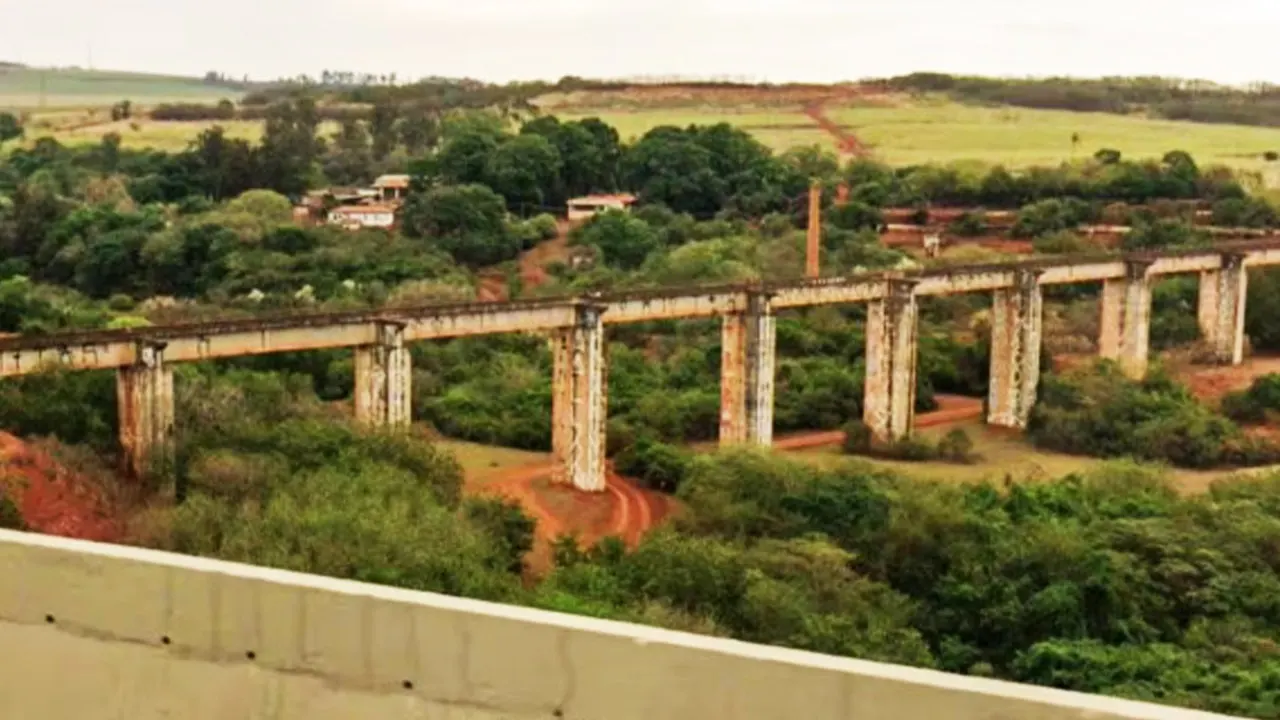
Maria Eduarda Rodrigues de Freitas was a vibrant, ambitious 21-year-old student from Jandira, Brazil, whose life was defined by promise, potential, and an eager appetite for the natural world. On a recent Saturday, she sought to break the monotonous routine of her academic studies by embarking on a guided hiking and adventure excursion in the lush countryside, a journey that promised a thrilling encounter with nature and an opportunity to conquer her personal boundaries. The centerpiece of this grand weekend getaway was an adrenaline-inducing rope-jumping experience hosted on a massive, abandoned bridge located approximately 90 miles northwest of the bustling metropolis of São Paulo, near the municipality of Limeira. The bridge, a decaying, monumental structure of concrete and rusted steel rising high over a deep gorge, had become a popular local hotspot for extreme sports enthusiasts looking to feel the exhilarating rush of leaping into the open void. To Maria, this was not merely a recreational activity, but a significant milestone of youthful courage—an opportunity to stretch her wings, escape the ordinary, and experience a moment of pure, unadulterated freedom in the sky. Tragically, what was meant to be a triumphant weekend memory, captured in post-jump smiles and shared stories with her loved ones, dissolved into an unimaginable, heart-wrenching nightmare. The sheer, radiant vitality of this young woman, standing at the edge of what should have been a carefully double-checked and highly controlled jump, stood in agonizing contrast to the catastrophic negligence that awaited her. Her journey to that bridge was built on a foundation of complete trust—a fundamental belief that the professional instructors guiding her held her life in high regard and would meticulously guard her safety at every step. As she stood on the precipice, overlooking the vast green canopy below, her heart ran fast with a mix of fear and excitement, completely unaware of the fatal oversight ahead.
The specific activity Maria chose to experience, rope jumping, is a notoriously high-octane extreme sport that differs significantly from traditional bungee jumping. While bungee jumping relies primarily on highly elastic cords that stretch and contract to pull the jumper back upward in a series of vertical bounces, rope jumping utilizes specialized, low-stretch climbing ropes designed to arrest a fall and smoothly transition the jumper’s downward momentum into a wide, pendulum-like swing across the canyon. The physics of the sport demand absolute, uncompromising precision; every single knot, harness, carabiner, and anchor point must be rigorously set, as there is absolutely zero margin for error when leaping from heights exceeding one hundred feet. On this fateful afternoon, Maria sought to elevate the thrill even further, requesting that her launch from the abandoned bridge be executed “airplane style.” This dramatic launching method involved two instructors physically lifting her body above their shoulders, allowing her to stretch her arms wide like wings, mimicking a bird taking flight as she was cast off the platform. Video footage of the moments leading up to the tragedy, which quickly circulated online and sent shockwaves through the community, captured this precise arrangement. It depicted two helmeted instructors, securely fastened in their own safety harnesses and lines, lifting the trusting young student high into the air. With a final, encouraging push, they threw her off the edge of the abandoned bridge, casting her out into the open sky. However, instead of the smooth, swinging trajectory promised by the physics of the sport, Maria plummeted straight down in a terrifying, unchecked free-fall. She fell approximately 130 feet to the hard ground below, entirely disconnected from the life-saving ropes that should have held her, her final moments of joy instantly shattered by an unfathomable and fatal impact.
In the immediate aftermath of the horrific plunge, a profound and heavy silence enveloped the canyon as the stark reality of what had transpired became devastatingly clear. Emergency responders were quickly summoned to the scene, but the sheer height of the fall meant there was absolutely nothing that could be done to save the young student, and she was tragically pronounced dead on impact. Local police investigators, led by civil police chief Andrea Levy, immediately launched an intensive probe to unravel how such a basic, catastrophic failure of safety equipment protocols could have occurred. When questioned by authorities, the three instructors involved in facilitating the jump made a series of baffling and deeply disturbing admissions that shocked seasoned investigators. According to investigator Levy, the instructors openly acknowledged that Maria had not been connected to any safety equipment whatsoever before she was launched from the towering bridge. In a stunning display of disorganization and reckless neglect, the instructors admitted to police that they could not remember whether they simply forgot to attach the critical safety ropes, who among them was specifically assigned to secure her rigging, or who was responsible for conducting the final safety check before launch. “They do not remember whether they forgot to attach [the ropes], or who was supposed to do it, or who failed to check. But the fact is the ropes were not attached to her,” Levy told reporters, summarizing the tragic simplicity of the error. This revelation painted a horrifying portrait of a systemically flawed operation, where basic double-checks were completely neglected and the ultimate responsibility for a young life was treated with a casual, almost incomprehensible indifference that cost a promising student her life in an instant.
As the details of the incident came to light, law enforcement authorities moved swiftly to arrest the three instructors at the scene, booking them on severe criminal charges. Under Brazilian law, the instructors are being investigated on suspicion of homicide with “eventual intent” (known locally as homicídio com dolo eventual), a unique and serious legal concept that applies when individuals engage in extreme actions where they actively accept the risk that their conduct could result in someone’s death, even if they did not explicitly set out to commit murder. By failing to perform the most basic safety checks on a high-risk, extreme sport, the prosecutors argue that the instructors demonstrated a reckless disregard for human life that falls squarely under this legal definition. Meanwhile, the legal representation for the accused instructors sought to mitigate the severity of the public backlash, issuing a formal statement emphasizing their clients’ extensive backgrounds in adventure sports. They argued that the three men were experienced operators who had successfully conducted rope-jumping activities for years without a single prior accident, framing the event as a tragic anomaly rather than a pattern of systemic negligence. However, this defense did little to assuage the anger of investigators and the public, as police broke down whether the tourism group even possessed the necessary regulatory licenses and operational permits to conduct extreme sports at the abandoned bridge in the first place. The investigation continues to scrutinize the division of labor among the guides, seeking to establish a clear chain of accountability and determine how a group of self-proclaimed experts could collectively fail to perform the most fundamental duty of their profession, leaving a grieving family to bear the heavy burden of their incompetence.
While the complex legal machinery began to grind forward, the family and community of Maria Eduarda Rodrigues de Freitas were left to pick up the shattered pieces of their lives. On Sunday, just one day after her life was so abruptly cut short, family members, friends, and grieving classmates gathered to lay the young woman to rest in her hometown of Jandira, a somber service marked by heavy tears, disbelief, and a shared sense of outrage. The sudden loss of a young person in the prime of her life under such preventable circumstances sent massive shockwaves through the region, prompting local authorities to step forward with public expressions of grief and support. The City of Limeira, representing the municipality where the tragedy occurred, issued a heartfelt statement offering its deepest condolences to those who knew and loved her, stating that in this moment of profound pain, the city stands in complete solidarity with Maria’s grieving family, friends, and loved ones. Municipal officials also pledged their full cooperation with state investigators, promising to open their archives and resources to ensure that justice is thoroughly served and that such a tragedy never repeats itself on their soil. For her parents and close relatives, the official statements and police investigations offer little comfort in the face of an empty bedroom and a future forever stolen. Their agonizing grief highlights the intensely human cost of a commercial industry that commodifies thrill-seeking, showing how easily the pursuit of a temporary high, when paired with professional complacency, can permanently destroy a family’s happiness and leave an irreplaceable, agonizing void in the hearts of those who loved her most.
The tragic death of Maria Eduarda Rodrigues de Freitas serves as a sobering and urgent wake-up call for the global adventure tourism community, shedding light on the dangerous lack of oversight that often plagues extreme sports worldwide. In an era where social media and the desire for thrill-inducing experiences drive young people to seek out increasingly risky activities like rope jumping, the responsibility of commercial operators to maintain impeccable safety standards becomes more paramount than ever. This heart-wrenching incident illustrates that experience alone is never a substitute for rigorous, standardized checklists and redundant safety protocols; even the most seasoned instructors can fall victim to dangerous complacency, with deadly, irreversible consequences for innocent clients. As tourists, we place an immense, unquestioning trust in guides, handing over our physical well-being under the assumption that they will protect us from harm. When that trust is breached so catastrophically, it calls into question the ethical standards of the entire industry and demands a sweeping, international reevaluation of how these dangerous excursions are regulated, monitored, and policed. Moving forward, the memory of Maria must not be relegated to a mere statistic of freak accidents or tragic news cycles; instead, her legacy should be one that actively champions strict safety reforms, mandatory double-checks, and uncompromising legal accountability. Only by transforming this profound tragedy into a powerful catalyst for systemic change can we hope to prevent other families from enduring the agonizing heartbreak of losing a loved one to a completely avoidable oversight, ensuring that the human pursuit of adventure never again comes at the cost of a precious human life.