


The crisp evening air in Seattle is thick with palpable anticipation as the United States men’s national soccer team prepares to step onto the iconic, artificial turf of Lumen Field. Fresh off a dominant, emotionally charged 4-1 victory over Paraguay in their opening match, the Americans are riding a wave of rare optimism that has electrified their fan base. Yet, as they prepare to face a formidable, physical Australian squad on Friday, a heavy shadow of anxiety hangs over the squad’s training camp. The central narrative dominating sports talk radio, social media debates, and tactical boardrooms isn’t just about defensive patterns or midfield rotations; it centers entirely on the physical state of the nation’s soccer talisman, Christian Pulisic. Dubbed “Captain America” for his heroic saves of the national program in its darkest hours, Pulisic’s presence on the pitch is the ultimate barometer of American soccer’s potential. As fans from across the Pacific Northwest—a region legendary for its rabid, European-style soccer culture—descend upon the Emerald City, the collective breath of a sporting nation remains tightly held. This match represents more than just another three points in a group stage; it is a critical litmus test for a program trying to prove it can stand tall on the global stage, even when its brightest star is forced to fight a battle against his own body.
To understand the sheer weight of Pulisic’s potential absence, one must appreciate the emotional and tactical anchor he has become for this generation of American players. During the emphatic triumph against Paraguay, he was the literal and figurative heartbeat of the attack, demonstrating world-class vision to serve up a clinical assist before his night was cut short by a nagging calf injury that forced him out at halftime. A strained calf is a notoriously fickle and deceptive injury in professional sports, requiring a delicate balance between active recovery and complete rest to avoid a catastrophic tear that could sideline a player for months. For the United States, Pulisic is not just a high-scoring winger; he is the psychological catalyst whose blistering pace and fearlessness on the ball inject deep confidence into his teammates while striking genuine fear into opposing backlines. The collective groan that echoed through social media when he failed to emerge from the locker room for the second half last week was a testament to his singular importance. Without his unpredictable spark on the left flank, the team’s offensive rhythm must undergo a fundamental shift, transforming from a dynamic, vertical counter-assault to a more patient, possession-oriented style that asks younger, less-tested players to step out of his shadow.
At the center of this gathering storm stands Mauricio Pochettino, the newly minted USMNT manager whose globally renowned tactical pedigree and calm demeanor are being tested in the international crucible like never before. Addressing a room full of eager journalists, Pochettino did little to quench the thirst for definitive answers, instead offering a masterclass in protective press diplomacy. He described Pulisic’s physical recovery as “evolving,” noting that while the superstar was feeling significantly better than he did on the night of the injury, any decision regarding his participation against Australia would remain up in the air until the absolute eleventh hour. Pochettino finds himself walking a dangerous tightrope: he must balance the immediate, high-stakes demand to secure a win against a disciplined Australian team with the long-term, non-negotiable imperative of preserving his best player’s health for the knockout stages. The manager’s words revealed a deep empathy for his player’s desperate desire to represent his country, acknowledging the mental agony that comes with being sidelined during such monumental occasions. By consulting closely with the medical staff, Pochettino is treating Pulisic’s recovery not merely as a medical checklist, but as a holistic psychological journey, ensuring that when their captain does return, he is completely free of hesitation.
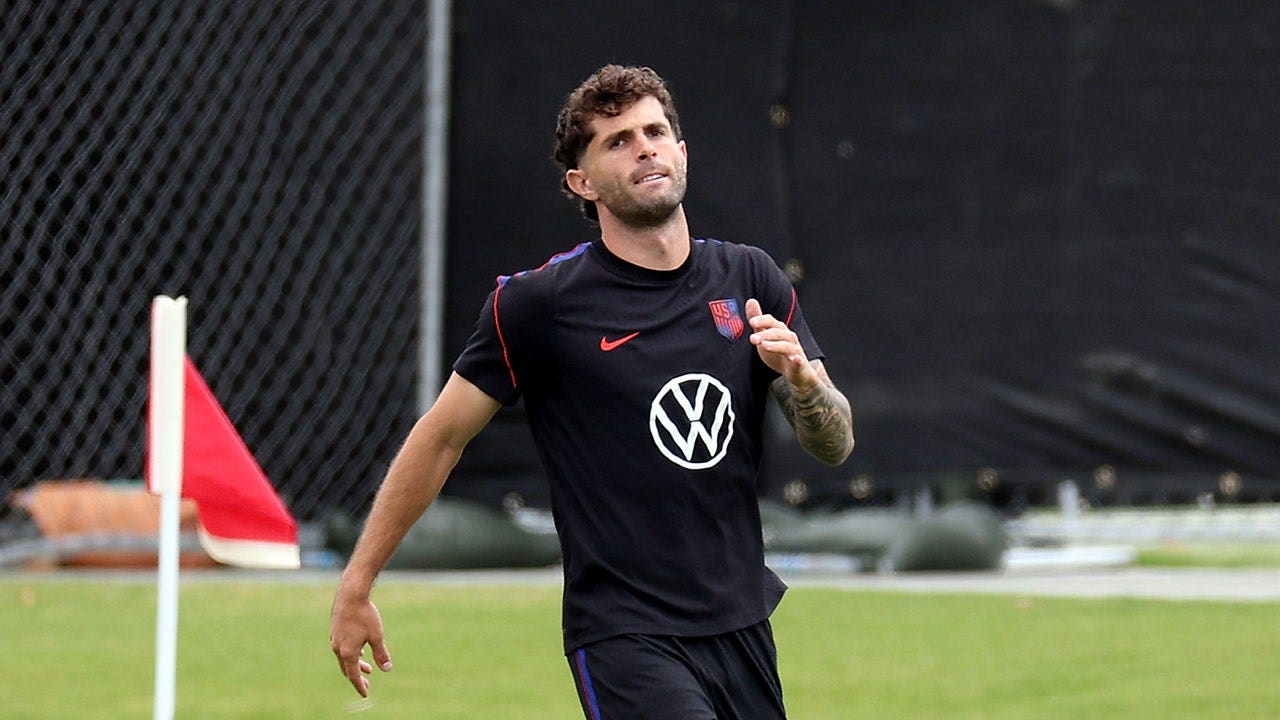
Behind the closed gates of the training facility, away from the relentless flash of cameras, the reality of Pulisic’s rehabilitation routine reveals the quiet grind of professional sports. During the open portion of Thursday’s practice, onlookers witnessed a familiar but frustrating sight: Pulisic working through a heavily modified, solitary training program, focused on light lateral movement and cardiovascular maintenance rather than the intense, high-contact tactical drills of the main group. This isolation highlights the frantic contingency planning currently consuming Pochettino’s coaching staff as they prepare for life without their primary creative outlet. If Pulisic is ruled out, the tactical chessboard must be hastily redrawn, likely calling upon Malik Tillman, who showed flashes of brilliant, direct creativity when he occupied the left wing in the second half against Paraguay. Another option involves shifting Sebastian Berhalter into a more prominent midfield role, a tactical tweak that would prioritize defensive solidity and physical pressing over Pulisic’s natural, direct attacking flair. Pochettino’s refusal to name a definitive replacement is a calculated chess move designed to keep the Australian scouts guessing, forcing them to prepare for multiple tactical versions of an American side that must learn to survive and thrive through collective adaptability rather than relying on individual magic.
Yet, despite the immense external pressure and the looming tactical uncertainty, the mood inside the American locker room remains remarkably light, grounded by a unique sense of camaraderie that defines this group of players. Nowhere is this youthful resilience more evident than in the candid, refreshing comments of central midfielder Weston McKennie. When pressed by reporters for an insider’s update on his teammate’s calf, McKennie offered a dosage of genuine human humor, admitting with a grin that he was simply trying to keep spirits high while operating entirely “in his own la-la land” and suggesting that reporters ask Pulisic directly. This lightheartedness is not a sign of indifference, but rather an essential protective mechanism used by elite athletes to navigate the paralyzing pressure of international tournaments. McKennie’s humorous defense of his teammate humanizes a squad that is often treated as a collection of asset statistics, reminding fans that these athletes are real young men navigating massive expectations together. The genuine warmth and support they offer one another—hoping for Pulisic’s speedy recovery while preparing to fight tooth and nail without him—serves as the true cultural foundation of this team, showing that their ultimate strength lies in their collective unity and unwavering belief in whichever player wears the shirt.
As the countdown to kickoff begins, the stakes could not be higher for both the United States and Australia in their quest for continental respect. With the Socceroos coming off an impressive, hard-fought victory against Türkiye, Friday’s encounter at Lumen Field is a direct battle for sole possession of first place in Group D, a positioning that could dictate a much smoother path through the tournament’s knockout brackets. Australia brings a physical, highly disciplined, and transition-heavy style of play that will ruthlessly exploit any American hesitancy or lack of defensive cohesion. For the United States, this match is a golden opportunity to write a new, defining chapter of their modern soccer history, proving to their global critics and to themselves that they are a complete national team capable of conquering top-tier opponents through structural depth and collective grit. Whether Christian Pulisic steps onto the pristine Seattle turf in his iconic jersey or is forced to watch from the comfort of the technical area in a training jacket, the match against Australia will be remembered as a massive turning point in this tournament. It is a stage set for unsung heroes to rise, for a tactical mastermind to prove his worth under pressure, and for a nation to show that its soccer dream is larger than any one player, no matter how bright his star may shine.