


The global diplomatic stage is witnessing a profound geopolitical shift as the United States and the Islamic Republic of Iran prepare to sign a monumental memorandum of understanding (MOU) on June 19 in Switzerland. This landmark agreement, designed to permanently reopen the highly contested Strait of Hormuz and address Tehran’s controversial, illicit nuclear weapons program, has triggered starkly divergent reactions from the two nation-states and their global observers. In Washington, the deal is framed as a triumph of strategic, measured pressure and an opportunity to restore stability to global energy routes that have long been choked by military tensions. Conversely, inside Iran, the state-controlled media apparatus has launched a synchronized propaganda campaign, heralding the pending agreement as an absolute victory over Western imperialism and its regional allies, particularly Israel. State television broadcasters have confidently declared to the domestic public that the United States was ultimately “forced” to sign the agreement in order to salvage its position and bring an end to a conflict it could no longer sustain. This massive narrative disconnect illustrates the deep complexities of modern diplomacy, where a single piece of paper can represent a stabilizing peace to one audience and a hard-fought, defensive triumph to another. For the international community, which has long viewed Iran through the lens of its State Department designation as the world’s most active state-sponsor of terrorism, this sudden development raises crucial questions about whether the deal represents a genuine step toward peace or a clever public-relations shield for an embattled regime.
From the American perspective, the diplomatic breakthrough was presented with the characteristic confidence and directness of President Donald Trump, who used his social media platform to break the news to the global public. Announcing that the comprehensive agreement was officially complete, Trump authorized the immediate, toll-free reopening of the Strait of Hormuz and ordered the dismantling of the restrictive U.S. naval blockade that had crippled Iranian shipping. In a signature, triumphant declaration, the President wrote, “Ships of the world, start your engines. Let the oil flow!” Soon after, Vice President JD Vance elaborated on the strategic necessity of the deal during a major television appearance, emphasizing that the agreement marks an incredibly significant moment for American leadership. Vance urged the American public to recognize three key achievements embedded within the MOU: the instantaneous physical reopening of one of the world’s most critical maritime corridors, the systematic dismantling of Iran’s pathway to acquiring or procuring nuclear armaments, and the restoration of global economic predictability. By connecting these complex, high-level diplomatic maneuvers directly to the everyday economic realities of working-class families—who feel the immediate impact of global energy crises at the gas pump—the administration sought to humanize its foreign policy, presenting the deal as a highly pragmatic, transactional victory that secures American interests abroad while lowering costs and enhancing security at home.
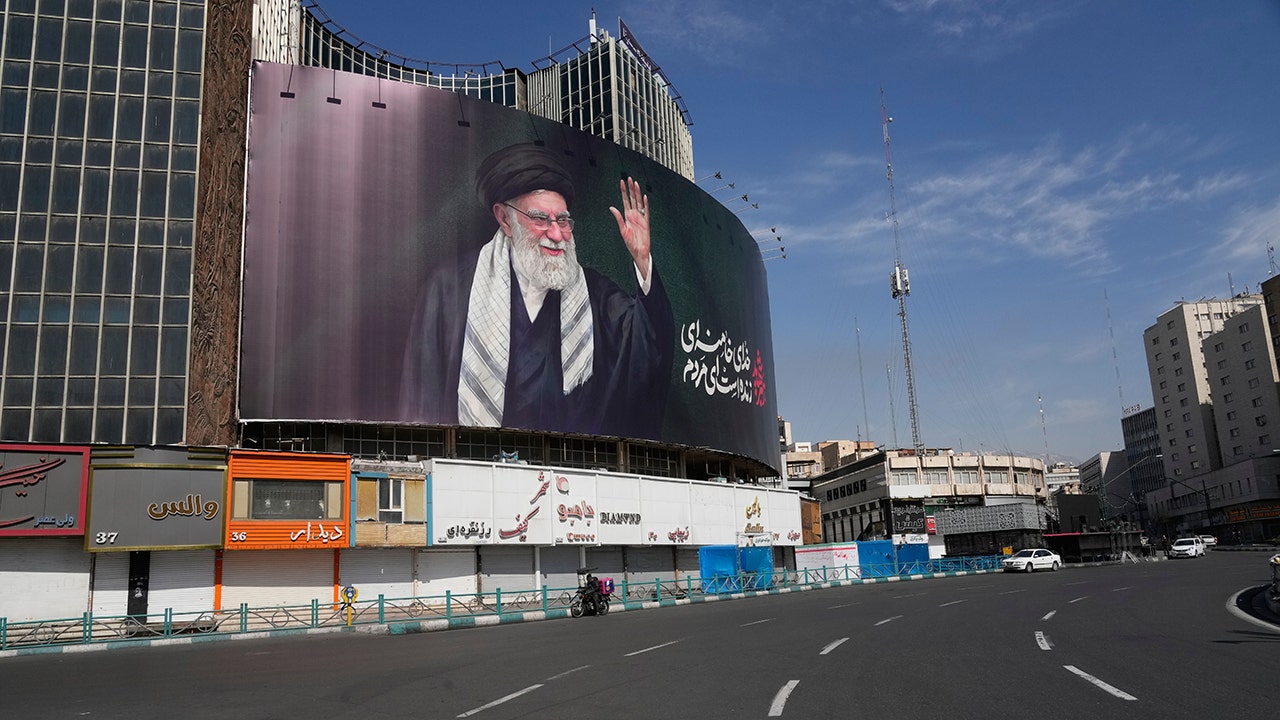
In stark contrast, the narrative crafted within the halls of government in Tehran is designed to project absolute strength and zero capitulation to the domestic population. Rather than positioning the MOU as a delicate compromise with a foreign superpower, top Iranian officials have styled it as a strategic retreat by the West. Deputy Foreign Minister Kazem Gharibabadi made it clear that the agreement was drafted with what he termed “active distrust,” assuring the Iranian public that the regime has not let its guard down and will rigidly police every single commitment made by the United States. This posture of defiance was amplified by Foreign Minister Abbas Araghchi, who utilized the state-run Islamic Republic News Agency to tell the nation that Iran’s ultimate diplomatic authority does not simply rely on its military hardware, but on its national cohesion and the resilience of its citizens. Araghchi asserted that the Iranian nation had achieved profound strategic victories during recent conflicts, claiming that these achievements have permanently altered the balance of power in both regional and global equations. State media has used this messaging to rewrite the narrative of economic hardship, attempting to convince a weary public that the severe sanctions and military blockades they endured were not signs of national vulnerability, but necessary sacrifices that eventually forced the United States to sue for peace.
Beyond the official press releases and triumphant broadcasts, seasoned Middle East analysts and regional watchdogs have injected a heavy dose of skepticism into the global conversation, warning that the regime’s historic patterns cannot be ignored. Lisa Daftari, a prominent expert on the Iranian regime and the editor-in-chief of The Foreign Desk, cautioned that the core “DNA” of the Islamic Republic is historically built upon a cycle of delay, deceit, and deniability. According to Daftari, Tehran’s leadership has historically approached international agreements not as pathways to permanent behavioral reform, but as tactical pauses—brief windows of relief designed to lift crippling economic sanctions and ease military pressure so the regime can quietly rebuild its missile stockpiles, fund its proxy networks across Lebanon and Yemen, and advance its regional influence. She urged the Trump administration to closely examine the unconfirmed details of the MOU, such as the specific timetables for sanctions relief and uranium enrichment limits, stressing that a totalitarian system that maintains its domestic grip on power through fear and violent suppression is highly unlikely to transform into a reliable international partner overnight. Daftari warned that foreign policymakers must operate under the assumption that Tehran will actively seek out every possible loophole to preserve its nuclear capabilities and continue funding its regional proxy wars, even as it continues to oppress its own citizens at home.
This skepticism is deeply shared by the exiled democratic opposition to the regime, who look beyond the macro-political headlines to highlight the lived experiences of ordinary Iranians back home. Cameron Khansarinia, representing the movement led by exiled Crown Prince Reza Pahlavi, articulated a powerful sentiment shared by millions of Iranians within the country and throughout the global diaspora: that regardless of international deals signed in European luxury hotels, the domestic struggle for human dignity and freedom will not cease. Opposition leaders argue that the future of Iran must be determined solely by its own citizens, emphasizing that with or without foreign intervention, the grassroots domestic push to dismantle the theocratic dictatorship remains completely undeterred. For these democratic activists, high-level diplomatic agreements are often seen as short-term stabilization measures that inadvertently validate an illegitimate regime, rather than helping the people who risk their lives on the streets of Tehran to demand a secular, free society. This perspective humanizes the geopolitical narrative by shifting the focus away from international shipping lanes and enrichment centrifuges, reminding the world that the ultimate catalyst for lasting stability in the Middle East is not a temporary treaty, but the unyielding desire of the Iranian people to reclaim their fundamental human rights.
This call for internal justice was echoed in a highly critical statement by Maryam Rajavi, the President-elect of the National Council of Resistance of Iran, who welcomed the prospects of peace while issuing a profound warning about the regime’s survival tactics. Rajavi pointed out that state-sponsored warmongering and regional meddling are not merely aggressive foreign policies; they are vital survival mechanisms for the religious autocracy, serving as a shield against internal popular uprisings and domestic dissent. Because external conflict is utilized to justify the suppression of civil liberties, Rajavi noted that true peace and domestic stability are perceived by the ruling clerics as “poison.” She argued that while any agreement to halt active warfare is a relief to a population weary of suffering, no international treaty can be deemed a true humanitarian success if it ignores the systematic human rights violations occurring within Iran’s borders. Rajavi insisted that any meaningful, lasting global agreement must go beyond military and economic compromises to mandate an immediate end to the execution of political dissidents and the violent suppression of peaceful protesters. Ultimately, these diverse perspectives reveal that while the world watches Switzerland with hopes of a stabilized energy market, the true test of the MOU will lie not in the signing of the document, but in how it impacts the ordinary, everyday human lives caught in the balance.