


A confidential report prepared directly for Iran’s presidency has sparked urgent conversations in international diplomatic circles, forcing Washington and its allies to confront a profound question: Is the Islamic Republic significantly more vulnerable to regime change than previously assumed? This explosive document, titled “What Iran Wants,” was leaked to the public and reportedly reveals that a mere 9% of Iranians support the current status quo, while nearly three-quarters of the population demand either deep structural reforms or the complete dismantling of the political system. Obtained by the news outlet IranWire and authored by Ali Rabiei—a social adviser to President Masoud Pezeshkian and a former government spokesperson—the report suggests that the country’s domestic crisis has evolved far beyond temporary dissatisfaction with individual leaders, transforming instead into a widespread rejection of the ruling establishment itself.
For foreign policy analysts and human rights advocates, these findings serve as a stark validation of the invisible struggles endured by millions of Iranians. Miad Maleki, a senior fellow at the Foundation for Defense of Democracies, emphasizes that these statistics should prompt a radical reassessment of the potential for a political winter giving way to a sudden spring of upheaval. Maleki notes that because the research was conducted under the watchful eye of a police state, the numbers are highly likely to be a conservative floor rather than a ceiling. In a society where a dissenting opinion can lead to job loss, imprisonment, or execution, the sheer fact that over 70% of respondents dared to voice a desire for systemic change illustrates a level of courage born from absolute desperation, hinting at a society that has reached its absolute breaking point.
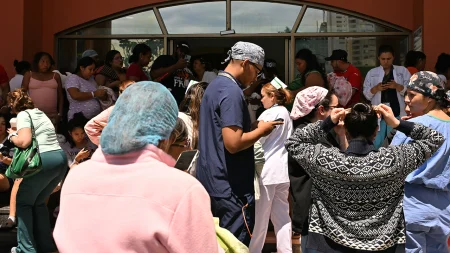
The human suffering underlying these percentages is laid bare by the report’s devastating economic and emotional metrics. An overwhelming 81% of respondents reported struggling to put food on the table, while three-quarters face immense difficulties covering basic healthcare expenses, and more than half cannot meet their monthly household costs. This material deprivation has triggered a severe psychological toll across the nation: approximately 64% of those surveyed live with persistent anger, while half describe feeling completely hopeless, and nearly half struggle with daily sadness, depression, and anxiety. Far from being a statistical abstraction, these figures paint a heartbreaking portrait of a population physically and emotionally exhausted by the baseline struggle of daily survival.
Significantly, the Iranian public is placing the blame for this misery squarely on the shoulders of their own leaders rather than external forces. Despite years of government propaganda pointing to international blockades, nearly 47% of respondents blamed domestic government inefficiency for their economic plight, and over 26% cited rampant state corruption, compared to just 20.7% who blamed foreign sanctions. This shift in perception is critical, as it indicates that the regime’s traditional scapegoat no longer holds weight with the public. Furthermore, the report highlights a massive crisis of institutional confidence, with roughly 60% of citizens expressing deep distrust in the government, parliament, judiciary, and state television, revealing a total breakdown of the traditional social contract.
Despite the gravity of these findings, the regime’s internal recommendations reveal a leadership fundamentally detached from reality, choosing to treat a systemic wildfire as a mere public relations issue. Rather than proposing genuine political liberalization, economic accountability, or judicial reform, Rabiei’s recommendations merely urged state institutions to manage public anger through better communication. The presidency was advised to use state television to paint a more inclusive national image, soften aggressive religious rhetoric, and better explain away the impact of sanctions. This superficial approach to a systemic crisis demonstrates that the ruling elite is either unwilling or entirely unable to offer the real, structural concessions that the population is actively demanding.
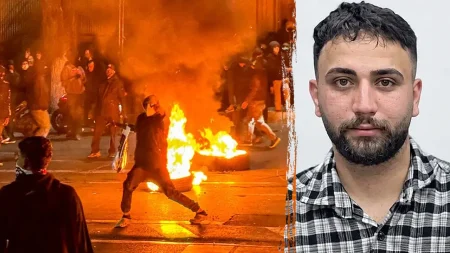
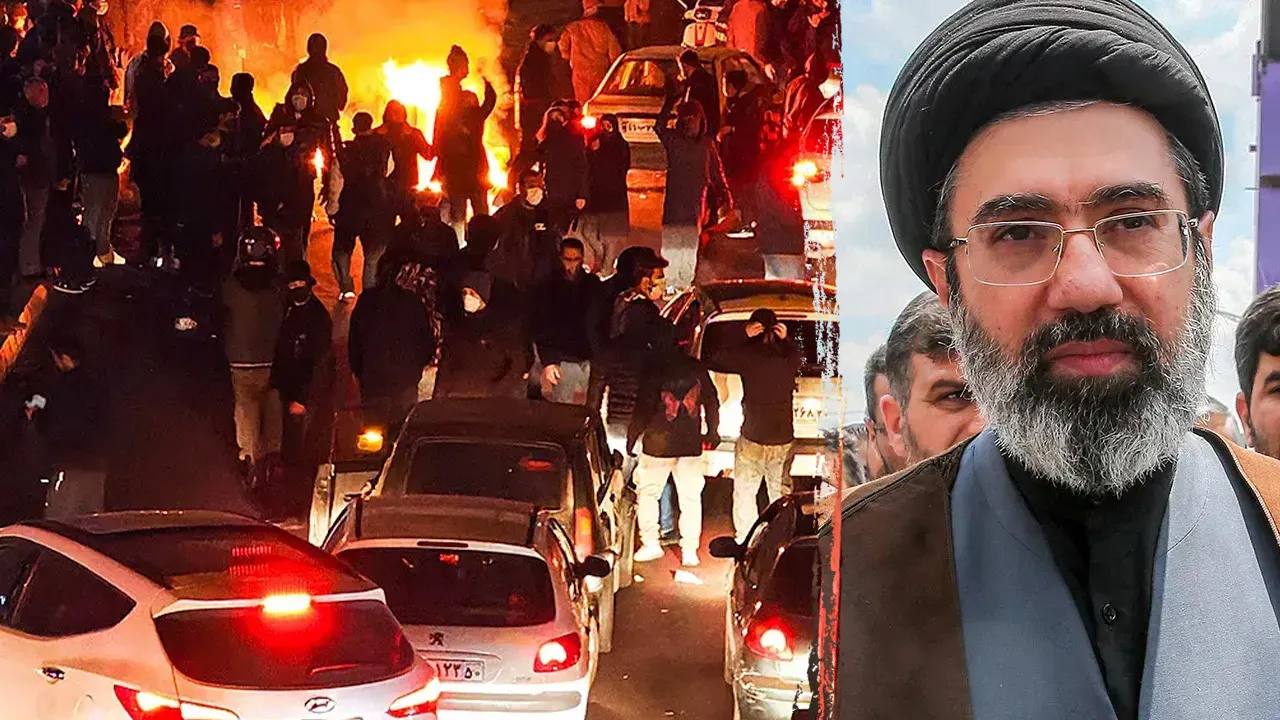
Ultimately, while the report confirms that the Iranian people have largely concluded that peaceful reform is impossible, it also highlights the immense barrier that remains: a highly militarized state designed specifically to crush dissent. The Islamic Republic has spent nearly half a century perfecting the machinery of violent suppression, meaning that any spark of organized opposition faces lethal retaliation. However, with protests having already expanded to hundreds of cities and labor strikes quadrupling nationwide, analysts argue that further unrest is entirely inevitable. The pressing question for the global community is no longer whether the Iranian people will rise again to claim their basic human dignity, but whether the democratic world will be ready to actively stand with them when they do.