


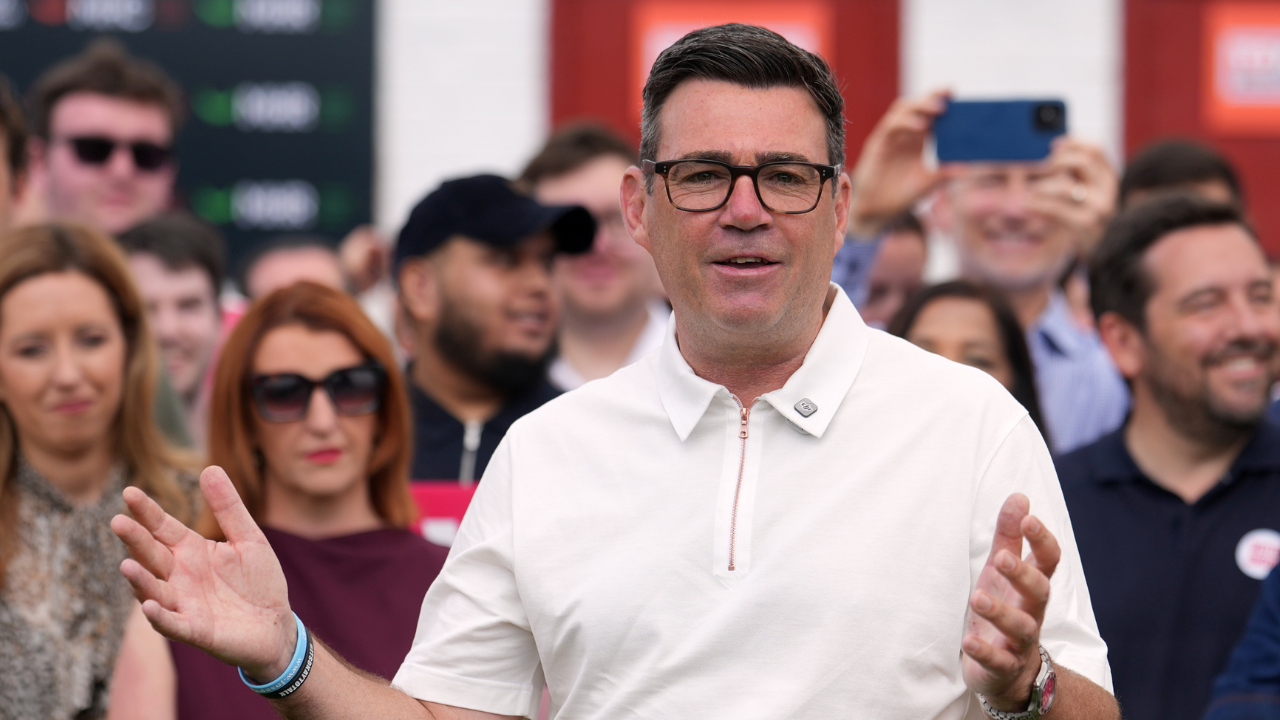
The United Kingdom is on the verge of welcoming its seventh prime minister in just over a decade, as Andy Burnham prepares to step into 10 Downing Street. Burnham, the 56-year-old former mayor of Greater Manchester, secured a virtually clear path to the Labour Party leadership following the abrupt resignation of Keir Starmer. Demonstrating overwhelming dominance, Burnham gathered nominations from 322 of Labour’s 403 Members of Parliament on the very first day of the leadership process. This massive show of support far exceeded the minimum threshold of 81, effectively locking out potential rivals and setting the stage for his formal confirmation. Under Britain’s parliamentary system, the governing party possesses the authority to replace its leader—and consequently the prime minister—without triggering a national election, meaning Burnham can govern until the next mandated general election in 2029.
Despite his swift ascension, Burnham’s lack of a fresh national mandate has drawn sharp criticism from political opponents and foreign policy analysts alike. Critics point out that he has bypassed the intense national scrutiny typical of a general election campaign or a prolonged, competitive internal party debate. While Burnham did win a parliamentary by-election in Makerfield this June with 54.8% of the vote, marking his return to the House of Commons after nearly ten years in regional politics, detractors argue this localized victory is insufficient for the nation’s highest office. Nigel Farage, leader of Reform UK, publicly criticized the transition as another round of “musical chairs” in Westminster, arguing that the British public is tired of leadership changes behind closed doors and demanding a fresh general election to establish a clear democratic mandate.
Burnham’s journey to the pinnacle of British politics began in the working-class north-west of England, raised by a British Telecom engineer and a receptionist. After studying at Cambridge University, he climbed the Labour ranks to serve as culture secretary and health secretary under Tony Blair and Gordon Brown. After two unsuccessful bids for the party leadership in 2010 and 2015, Burnham pivoted to regional governance, serving three terms as the directly elected mayor of Greater Manchester. In this role, he built a formidable national profile, championing “Manchesterism”—a political philosophy prioritizing local communities over Westminster party politics. His signature mayoral achievements included bringing the region’s fragmented bus system under public control through the “Bee Network” and his dedicated advocacy for the families of the 1989 Hillsborough stadium disaster victims.
On the international stage, Burnham’s impending premiership introduces a potentially tense dynamic with Washington, given his history of outspoken criticism against Donald Trump. Burnham has previously accused the American president of fueling global instability, comparing the unpredictability of Trump’s return to office to the economic chaos triggered by former British Prime Minister Liz Truss. Following the January 6 Capitol riot, Burnham went so far as to declare on social media that any British politician who supported Trump should feel ashamed. Trump has dismissed Burnham’s remarks, characterizing him as an “extremely liberal” former “mayor of a town” and warning that the United Kingdom is struggling. Despite this friction, Burnham has aligned with party lines to support maintaining a functional bilateral relationship with the U.S., though he insists Britain must remain independent enough to disagree with Washington when necessary.
Domestically, Burnham represents a shift to the left of his predecessor, Keir Starmer, advocates of which predict a more radical economic agenda. Analysts suggest his administration may explore wealth taxes, electoral reform, and a major expansion of social housing, alongside his established priorities of vocational education, affordable public transport, and lower utility bills. To ease anxieties regarding his limited recent exposure to international affairs, Burnham has pledged unconditional continuity for Britain’s core defense pillars, including its commitments to NATO, the national nuclear deterrent, and ongoing military support for Ukraine. On the Middle East, Burnham has taken a more progressive stance than previous leadership, criticizing Labour’s initially slow response to the Gaza conflict, calling for earlier ceasefires, and raising the possibility of trade restrictions on goods from Israeli settlements, while still firmly condemning the October 7 terrorist attacks.
As Burnham prepares to meet King Charles III to be formally invited to form a government, he inherits a nation navigating sluggish economic growth, severely strained public health services, and a persistent cost-of-living crisis. While he is legally permitted to govern without calling a public vote for the next five years, some political strategists suggest he might capitalize on the initial momentum of his appointment to call a snap general election to secure his own personal mandate. Whether he chooses to ride the wave of his sudden ascension or consolidate power through the existing parliamentary majority, Burnham’s transition from regional champion to national leader represents a bold new chapter for a country weary of political volatility.