


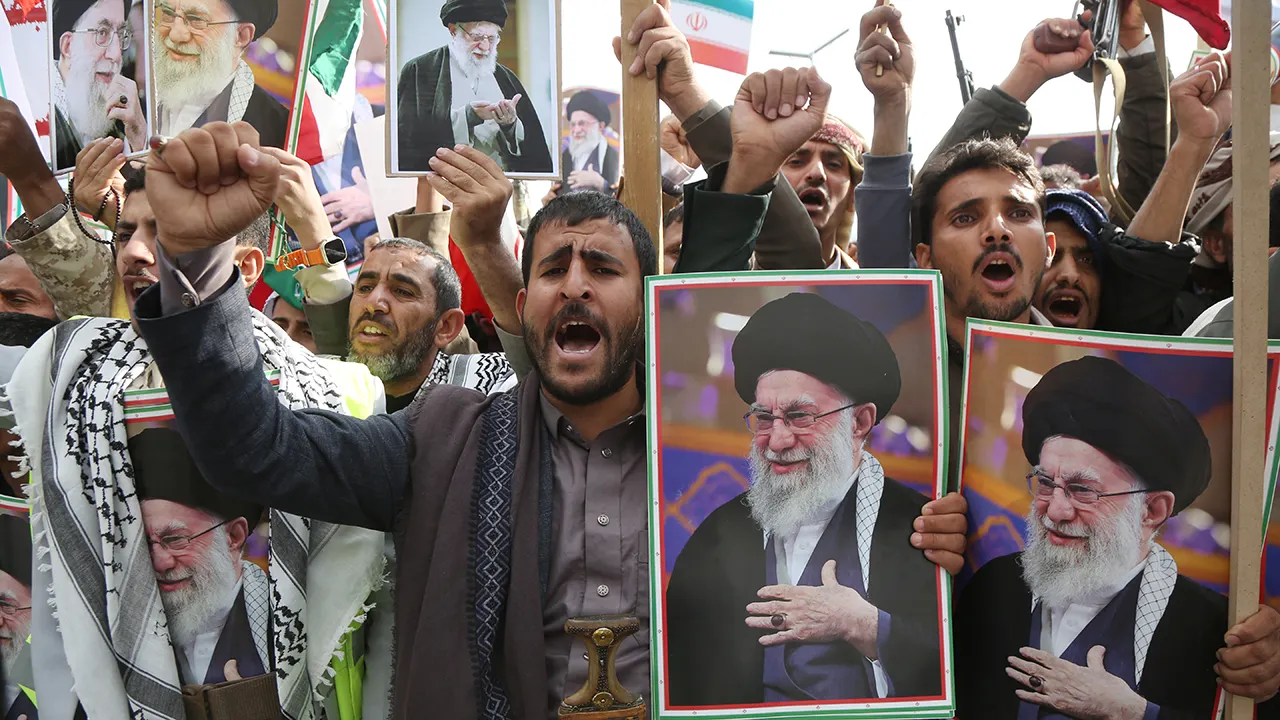
A fragile peace in the Middle East is once again on the brink of collapse as regional tensions ignite a dangerous new standoff in Yemen. The U.S.-designated terrorist group, the Houthis, who control northern Yemen, have fiercely condemned a recent airstrike on the runway of Sana’a International Airport. While the Houthis immediately blamed Saudi Arabia for the attack, threatening to retaliate by striking King Khalid Airport in Riyadh, the incident has exposed deeper geopolitical fault lines. Prominent Saudi analyst Salman Al-Ansari clarified that the strike was actually carried out by Yemen’s legitimate, internationally recognized government—not Saudi Arabia—in a necessary move to protect its sovereign airspace. The strike was launched after the Houthi militia defied international protocols by attempting to land an unauthorized Iranian flight, bypassing mandatory security inspections intended to prevent the smuggling of illicit weapons and explosives.
This latest flashpoint threatens to shatter the delicate de-escalation that has largely held since a 2022 truce between the Saudi-led coalition and the Houthis. However, quiet on the ground has not translated to peace at sea. Since the outbreak of the Israel-Hamas conflict on October 7, 2023, the Houthis have aggressively targeted commercial shipping lanes in the Red Sea, aligning themselves with Iran’s broader regional agenda. Military spokesperson Yahya Saree declared that this latest airport strike represents “blatant aggression” that officially ends the period of truce, warning that Saudi Arabia will bear the consequences. Echoing this aggression, Iran’s state-run Press TV quickly condemned the incident as a direct violation of Yemeni sovereignty, further demonstrating the tight coordination between the Tehran regime and its heavily armed Yemeni proxy.
At the heart of the dispute is Mahan Air, an Iranian airline heavily sanctioned by the United States for transporting weapons, personnel, and advanced technology to terrorist organizations like Hezbollah. According to Yemeni government reports, the runway at Sana’a was targeted specifically to prevent a Mahan Air flight from landing. Undeterred, the aircraft eventually diverted and landed at the Houthi-controlled port city of Hodeidah. Security experts point out that the Houthis have viable civilian aviation options, including designated routes through Jordan for proper cargo inspections. By deliberately bypassing these channels, Iran and the Houthis are sending a clear political message: Tehran intends to establish direct, unchecked air corridors to Yemen, bypassing the international restrictions that have governed the war-torn country’s airspace since 2015.
This calculated defiance highlights a broader, highly concerning strategy employed by Iran and its “Axis of Resistance.” Nadwa Al-Dawsari, a Yemen expert and associate fellow at the Middle East Institute, warns that Iran excels at creating new realities on the ground, betting that the international community has little appetite for major military escalation. While traditional Iranian allies like Hezbollah have faced intense pressure and degradation in recent years, the Houthis have emerged as Tehran’s most resilient and strategically vital asset. Their geographical position allows them to exert immense leverage over global trade bottlenecks, transforming a localized rebellion into a major threat to international commerce, energy security, and maritime stability near the Horn of Africa.
The potential economic fallout of a renewed conflict could be devastating for the global economy. Muhammad Al-Farah, a member of the Houthi Political Bureau, openly threatened that further hostilities would prompt the group to choke off the vital Bab al-Mandab Strait. He warned that aligning disruptions in the Red Sea with Iranian actions in the Strait of Hormuz could cause global oil prices to skyrocket to $200 a barrel. For the Houthis, this escalation is framed as a patriotic struggle to “liberate” Yemen, but for the rest of the world, it represents a chokehold on global energy supplies and supply chains. Gulf nations, including Saudi Arabia and the UAE, remain deeply alarmed by Iran’s relentless pursuit of a “Shiite crescent”—a continuous arc of hostile influence stretching from Tehran through Iraq, Syria, and Lebanon, down to the southern gates of the Arabian Peninsula.
In response to the escalating crisis, the United States has reaffirmed its unwavering support for its regional allies. A State Department spokesperson emphasized that the strategic partnership between the U.S. and Saudi Arabia remains robust, particularly in confronting Iranian aggression and enforcing terror designations against the Houthis. Under current security directives, the U.S. remains committed to defending Saudi security, protecting freedom of navigation in the Red Sea, and curbing the export of state-sponsored terrorism. As the legitimate Yemeni government claws back control over nearly 80% of the country’s physical territory, the coming weeks will determine whether this latest airport confrontation was a temporary skirmish or the opening salvo of a devastating new chapter in the Middle East’s proxy wars.