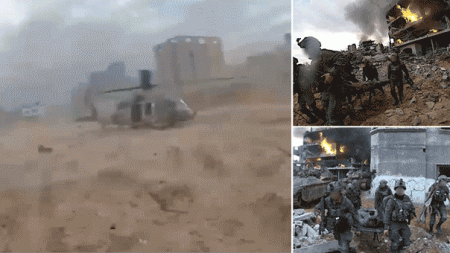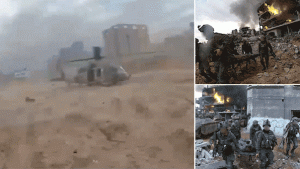




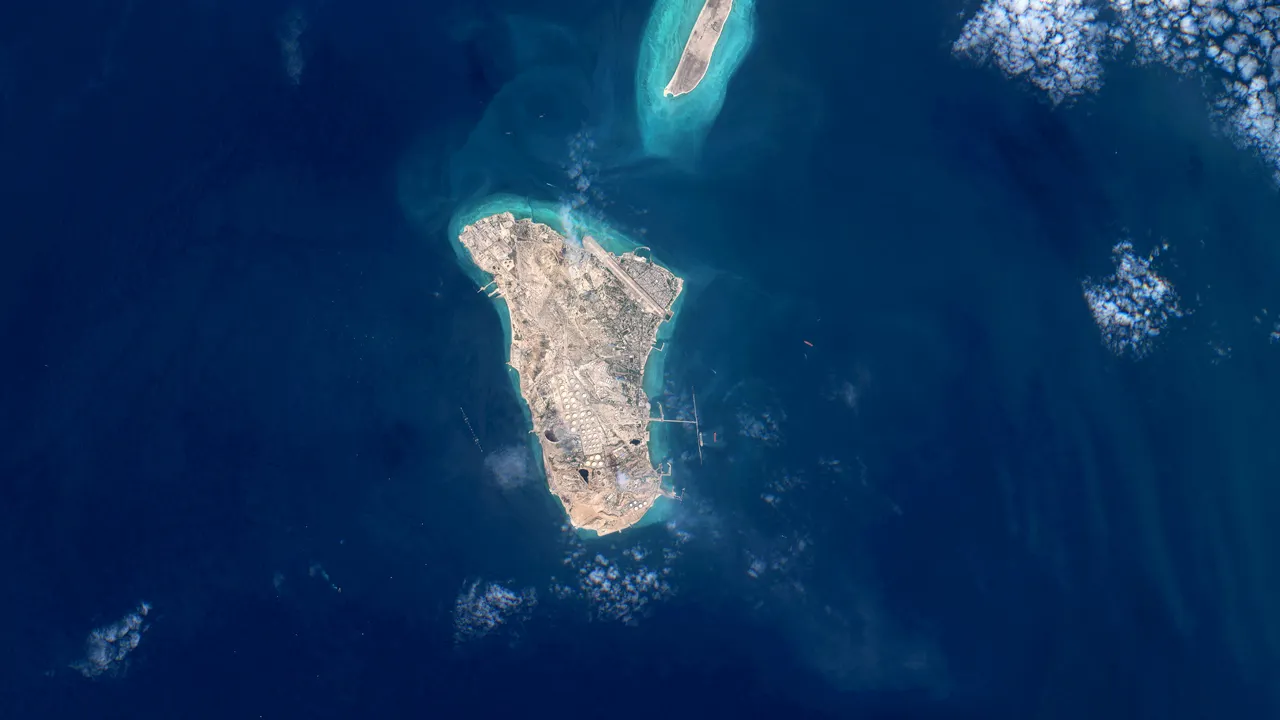
The image of an amphibious assault on Iran’s Kharg Island—complete with roaring helicopters, dominant Navy warships, and a blunt surrender ultimatum—is no longer just the stuff of military tabletop exercises. The scenario surged back into public discourse after President Donald Trump, in an exclusive interview with Fox News’ Trey Yingst, carefully avoided ruling out a potential seizure of the strategically vital territory. When pressed on whether he planned to take control of the island, Trump noted that revealing such plans would be “foolish,” while pointing out that past American strikes purposely spared Kharg’s infrastructure to avoid destabilizing the global energy market.
Indeed, the tiny, eight-square-mile island acts as the crown jewel of Iran’s economy, handling roughly 90% of the Islamic Republic’s crude oil exports. Military strategists like retired Vice Admiral Robert Harward, a former deputy commander of U.S. Central Command, suggest that any potential operation would heavily prioritize preserving this infrastructure rather than destroying it. The ultimate goal of an amphibious assault would be to minimize casualties and safeguard facilities so they could eventually be handed over to a future Iranian government focused on its citizens rather than exporting regional revolution. While Trump previously ordered military strikes to “hit everything but the oil,” experts warn that capturing Kharg is merely the opening gambit of a much riskier strategic puzzle.
Historically, Kharg’s geographic vulnerability is well-documented; British forces occupied the island twice in the 19th century to pressure Tehran, and its deep waters were leveraged in the 1950s to create a premier shipping terminal. Today, however, those same waters present a high-stakes challenge for modern commanders. Nicholas Carl of the American Enterprise Institute cautions that Iran has spent decades fortifying its defenses with anti-ship cruise missiles, naval mines, and swarms of fast-attack craft designed to keep foreign militaries at bay. Yet, analysts generally agree that the sheer dominance of U.S. air and naval power means capturing the island itself would likely take only a matter of hours.
The real danger begins the moment American troops secure the coastline. Located just 16 miles off Iran’s mainland, the island is well within range of Tehran’s extensive missile and drone arsenals. Admiral Harward notes that because Iran possesses very limited conventional air power, the primary threat to U.S. forces on the ground would be a barrage of mainland-launched missiles and loitering munitions. However, launched attacks on Kharg would force Tehran into a self-defeating paradox: in trying to repel American occupiers, they would be actively destroying their own economic lifeline and the source of their regime’s survival.
Given these intense operational risks, some military minds suggest that direct occupation might not be the most effective way to squeeze the regime. Admiral Harward points out that the U.S. can still tighten the economic screws through enhanced blockades, targeting overland supply routes, and disrupting Iranian air traffic without putting boots on the ground. Other naval strategists, including retired Vice Admiral Mark Fox, argue that instead of targeting a massive oil terminal like Kharg, the U.S. could seize smaller, disputed islands near the Strait of Hormuz—such as Abu Musa or the Tunb islands—to gain immense maritime leverage over Tehran with a fraction of the military footprint.
Ultimately, whether Washington ever greenlights an operation on Kharg Island, military planners agree that tactical victory is only a temporary fix. Holding the territory against relentless retaliatory strikes and managing the explosive regional escalation that would follow represents an archival, long-term commitment. For seasoned strategists, the true path to lasting security in the Middle East does not lie in a singular amphibious operation, but in a holistic pressure campaign that pushes for a fundamental shift in Tehran—moving away from proxy warfare and nuclear ambition toward a government that finally prioritizes its own people.