




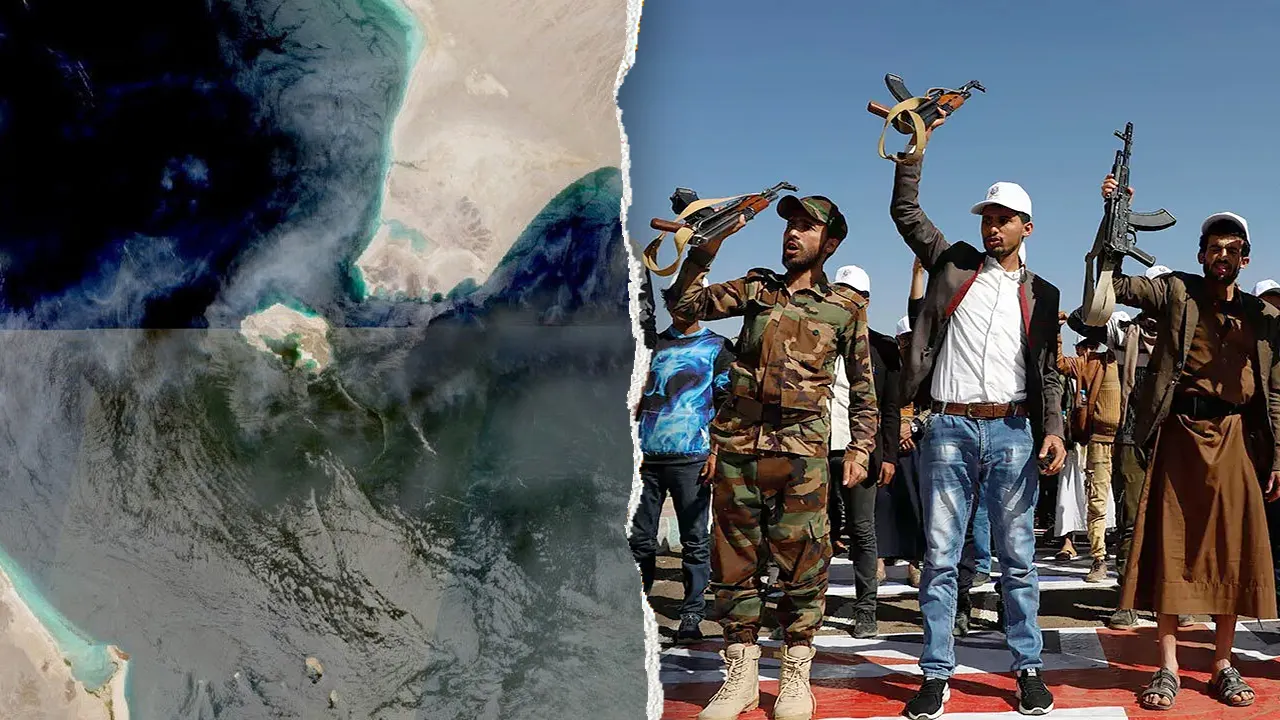
The threat of a severe bottleneck in global trade has reached a critical flashpoint as Iran has reportedly instructed Yemen’s Houthi militants to prepare to shut down the Bab el-Mandeb Strait, a vital shipping corridor connecting the Red Sea to the Gulf of Aden. According to reports from Reuters, this directive is designed as a direct retaliatory measure in the event that the United States launches airstrikes against Iran’s domestic power infrastructure. Experts warn that even if the Houthis lack the physical military capacity to completely seal the waterway, any concentrated campaign of drone, missile, and sea mine attacks would severely disrupt international maritime commerce. Nadwa Al-Dawsari, a non-resident scholar at the Middle East Institute, emphasized that this threat must be taken seriously, noting that Tehran has already signaled that the strait will become a primary theater of response should regional tensions with the West escalate further.
Geopolitical analysts believe that a full-scale resumption of Houthi maritime hostility will inevitably trigger a wider regional conflict. Edmund Fitton-Brown, a senior fellow at the Foundation for Defense of Democracies and former British ambassador to Yemen, cautioned that if the Houthis go “all in” with their offensive, they will draw intense international anger, likely resulting in retaliatory American and Israeli airstrikes on the Yemeni cities of Sana’a and Hodeida. Although Western allies hold a distinct military advantage, such an escalation would carry unpredictable risks. Over the past year, while the Houthis temporarily scaled back their high-profile attacks on commercial vessels, they did not lay down their arms. Instead, they utilized the lull to quietly advance and refine their arsenal, stockpiling sophisticated anti-ship missiles, unmanned aerial vehicles, and naval mines specifically designed to maximize economic damage.
In response to the growing peril, the U.S. State Department reasserted its commitment to guaranteeing the freedom of navigation in the Red Sea, a mission it defines as a core national security interest. A spokesperson clarified that the administration is actively enforcing the designation of the Houthis as a Foreign Terrorist Organization and working aggressively to disrupt the transfer of Iranian funding and weaponry. To date, Washington has sanctioned over 200 entities connected to the Houthis in an attempt to starve the group of assets. Despite these extensive economic and military measures, history shows that the Houthis can inflict massive global economic pain without needing a total blockade. By simply launching occasional, highly publicized attacks, they can drive maritime insurance rates to exorbitant levels, forcing international shipping conglomerates to abandon the Suez Canal route entirely and redirect their ships around Africa, adding massive delays and fuel costs to global supply chains.
The strategic geography of the Bab el-Mandeb makes it exceptionally vulnerable, particularly because Iran has already compromised and threatened the Strait of Hormuz—the primary global transit point for Middle Eastern petroleum. Out of necessity, Saudi Arabia recently diverted roughly 70% of its energy exports overland to its Red Sea port in Yanbu, meaning that the Bab el-Mandeb now carries about 7% of the entire world’s energy supply. A closure or active combat zone in this narrow strait would effectively choke off this vital alternative route, triggering immediate energy spikes worldwide. This high-stakes coordination highlights the deep influence Tehran wields over the Houthis. Experts point out that major decisions regarding the gateway are not driven by localized Yemeni grievances but are heavily coordinated through a joint operations room managed directly by the Islamic Revolutionary Guard Corps (IRGC), which reportedly controls the precise timing of any threatened blockade.
The international community has voiced unanimous alarm over these developments. United Nations Secretary-General António Guterres, speaking through his spokesperson Stéphane Dujarric, strongly condemned the threats, warning that maritime disruptions would endanger the safety of innocent seafarers, dismantle global supply chains, and worsen the already catastrophic humanitarian crisis within Yemen itself. The U.N. called on all parties to respect Security Council Resolution 2722, which demands an immediate halt to all Houthi aggression against commercial vessels. Additionally, the crisis has cast a harsh spotlight on the failures of international diplomacy in Yemen. Internal Yemeni political figures, such as Amr Al-Bidh of the Southern Transitional Council, have openly criticized U.N.-brokered prisoner exchange deals, arguing that they inadvertently facilitate the release of convicted smugglers who specialize in bringing sophisticated Iranian weapons components into Houthi-controlled territory.
While the Office of the U.N. Special Envoy for Yemen defended its neutral mediation role—explaining that the specific names of detainees are negotiated and decided solely by the warring local factions rather than the U.N. itself—the reality on the ground remains highly volatile. The Houthis have already declared all Israeli-linked vessels to be “legitimate targets,” and their readiness to act on Iran’s instructions underscores a bleak reality: the Bab el-Mandeb has been transformed from a traditional commercial lane into a geopolitical hostage. As the U.S., its allies, and regional partners brace for potential escalation, the world finds itself watching a narrow strip of water where a single command from Tehran could instantly throw the global economy into profound disarray.