





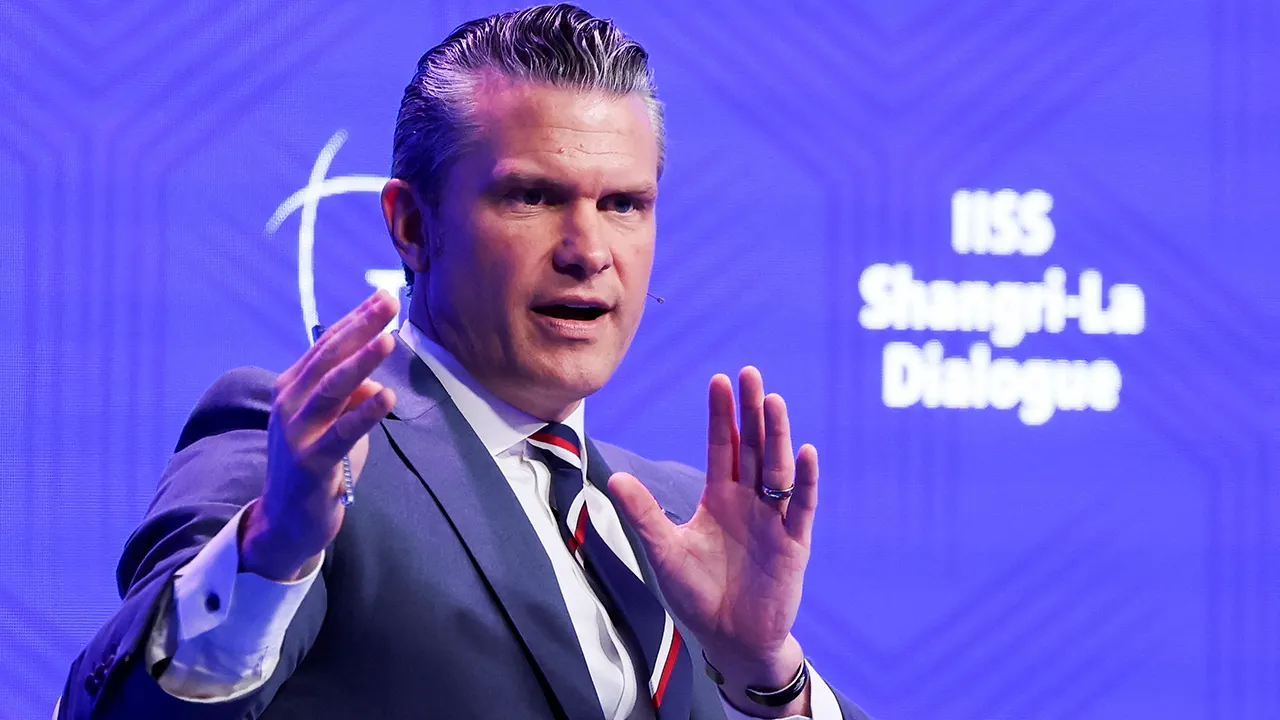
The geopolitical chessboard of the Western Hemisphere has pivoted sharply toward South America, where the fragile democratic structures of Bolivia are currently trembling under the weight of escalating civil unrest and the looming shadow of a coup d’état. In a decisive display of Washington’s reconfigured foreign policy priorities, newly appointed Secretary of War Pete Hegseth issued a stern, unequivocal warning that the United States will not stand idly by while a democratically elected partner is forcibly dismantled by criminal interests. Leveraging the collective strategic resources of the Americas Counter Cartel Coalition (A3C)—a recently established, highly integrated multinational military and political alliance designed to eradicate cartel dominance—Hegseth made it clear that the preservation of Rodrigo Paz Pereira’s six-month-old presidency is a matter of vital, non-negotiable regional security. Addressing the international community through an official public statement, the War Secretary asserted that Washington is actively monitoring the fluid and increasingly dangerous situation unfolding in La Paz, emphasizing that the ancestral heart of the Andes must not be allowed to degenerate into a lawless territory. By framing the defense of Bolivia as an essential front in a broader war against cartel influence, Hegseth highlighted that the A3C will continuously support its regional partners to ensure that profit-driven criminal networks are deterred from spreading death and destruction across the hemisphere. For Hegseth, who has explicitly prioritised hemispheric security as his absolute top mission since taking the helm of the War Department, this escalating South American crisis represents a monumental trial by fire, testing whether this newly consolidated multinational security alliance can successfully stabilize a region under siege.
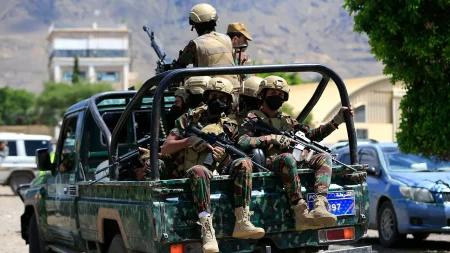
On the ground, far removed from the high-level policy summits and diplomatic cables of Washington, the daily reality for ordinary Bolivians in major urban centers like La Paz is one of paralyzing anxiety, economic suffocation, and systemic disruption. The breathtaking mountain capital, usually a vibrant tapestry of commerce, street food vendors, and rich cultural heritage, has transformed into a volatile battleground where the air is regularly filled with the stinging scent of tear gas and the thick, black smoke of burning tires. For weeks, massive popular protests and coordinated blockades have ground vital transit networks to a complete halt, cutting off main supply lines, preventing food from reaching local city markets, and leaving thousands of commuters stranded on the streets of major cities. The sudden and dramatic resignation of Bolivian Defense Minister Marcelo Salinas has only intensified this profound sense of national vulnerability, signalling a dangerous fracture within the security apparatus of an administration already fighting desperately for its political life. These are not merely abstract political events; they manifest as agonizingly long lines forming outside empty grocery stores, furious arguments at shuttered service stations, and the painful realization among working-class families that their hard-earned money is rapidly losing its value to runaway inflation. As the streets of Bolivia continue to simmer with systemic anger and physical blockades restrict the free movement of citizens, the basic thread of civic trust is snapping, exposing the raw structural wounds of a society caught between an unyielding state leadership and a desperate populist movement on the brink of total rebellion.
The spark that ignited this sprawling dry tinderbox of popular discontent can be traced directly to a series of bold, highly unpopular economic reforms introduced by President Paz Pereira shortly after he assumed leadership of the nation. Seeking to quickly revitalize a stagnant national treasury, Paz championed a controversial land reform bill designed to bolster large-scale, corporate agribusiness; however, this legislative push immediately alienated rural Indigenous farming communities, who viewed the laws as a direct threat to their sovereignty and a dangerous precursor to systemic, state-sponsored evictions. Compounding this rural outcry was a sudden, devastating economic shockwave in urban centers when the administration abruptly abolished long-standing state fuel subsidies, sending the cost of commercial gasoline skyrocketing by nearly ninety percent overnight. This massive price hike sent shockwaves through the transport sector, making it nearly impossible for taxi drivers, bus operators, and distribution truckers to maintain their livelihoods without charging exorbitant rates to an already impoverished public. To make matters worse, motorists across the country began discovering that the expensive new gasoline flowing through the pumps was heavily contaminated, resulting in catastrophic engine failures that ruined family vehicles and commercial fleets alike. The combination of intense rural land disputes and severe urban transport crises has created a perfect storm of grievances, uniting diverse socioeconomic classes against a young administration that ordinary citizens believe is profoundly out of touch with the existential economic struggles of daily survival.
Within the halls of American foreign policy, however, the official narrative surrounding these domestic grievances is viewed through a far more cynical, security-oriented lens that attributes the domestic unrest to the unseen hand of transnational criminal enterprises. United States Secretary of State Marco Rubio minced no words in his public defense of the Bolivian administration, declaring unequivocally that the United States stands in absolute solidarity with the country’s legitimate constitutional order against what he characterized as an organized assault by criminals and drug smugglers. This sentiment was echoed and expanded upon by Deputy Secretary of State Christopher Landau, who argued that the ongoing civil blockades and riots are not organic expressions of democratic discontent, but rather a sophisticated, well-funded “coup d’état” fueled by a corrupt nexus of rogue regional politicians and cartel networks seeking to regain their lost leverage. By emphasizing this perspective, American officials seek to reframe the domestic protests as a coordinated campaign of unconventional warfare designed to install a regime sympathetic to illicit trafficking corridors that span South and Central America toward the United States border. This hardline stance reflects a broader strategic calculation by the Trump administration to draw a clear line in the sand, demonstrating to regional adversaries that Washington views any attempt to overthrow democratically elected partners in the Western Hemisphere as a direct, unacceptable threat to American national security.
Adding a layer of deep historical irony and geopolitical intrigue to the unfolding drama is the prominent, lingering shadow of former Bolivian President Evo Morales, whose fourteen-year tenure as the nation’s first Indigenous leader left an indelible mark on the country’s political landscape. Re-emerging from his self-imposed isolation, Morales has taken to social media to demand immediate action, delivering a stark ultimatum to President Paz: choose between the self-destructive path of full-scale militarization or initiate steps for an emergency national election within ninety days. Operating as a calculated political chess master, Morales attempts to position himself as the voice of the marginalized Indigenous majority, even as he remains deeply ensconced in Bolivia’s central, coca-rich Chapare region—a territory long recognized as a stronghold of radical agrarian unionism and coca production. Crucially, the former leader has spent nearly two years residing in this remote area while evading a federal arrest warrant charging him with human trafficking and statutory rape, allegations stemming from an alleged relationship with a fifteen-year-old girl during his presidency. Though Morales vehemently dismisses these disturbing accusations as politically motivated fabrications engineered by his rivals to destroy his enduring legacy, his physical isolation in a region heavily associated with the cocaine trade provides his detractors, both in La Paz and Washington, with ample ammunition to link his political ambitions directly to the interests of the illicit drug trade.
Ultimately, the crisis in Bolivia has evolved far beyond a localized policy dispute, transforming into a complex, high-stakes human drama where the fates of millions of ordinary people are held hostage to a volatile mix of international security interests, drug cartel dominance, and internal class division. For the indigenous farmer protecting their ancestral land, the city commuter staring at a broken-down car, and the young family navigating the soaring prices of daily basic commodities, the ideological debates raging between Washington, La Paz, and the Chapare jungle offer very little practical comfort or relief. The United States’ deployment of the Americas Counter Cartel Coalition signals a highly militarized, containment-oriented approach to hemispheric stability, yet the persistent societal inequalities that fuel these recurrent revolutions remain largely unaddressed. As long as the structural economic divides and the immense profits of the illicit drug trade continue to overlap, Bolivia will remain a fragile battleground, illustrating the tragic precarity of a nation caught in the crosshairs of global geopolitics. Whether President Paz can weather this storm, or whether the country will once again succumb to the historic cycle of political instability, remains an open, deeply unsettling question that will shape the balance of power across the Americas for generations to come.