






In our contemporary political landscape, where the mechanics of American democracy are constantly examined under a magnifying glass, the quiet, everyday administrative systems that keep our country running can suddenly find themselves thrust into the center of a national firestorm. This delicate reality was cast into sharp relief recently in New Jersey, when a routine technical audit uncovered a startling discrepancy: approximately 6,600 noncitizens had been mistakenly registered as eligible voters for the upcoming 2024 presidential election. For the average American citizen, such a revelation triggers an immediate, visceral sense of unease, conjuring up deeply held anxieties about the vulnerability and accuracy of our most sacred democratic processes. Voting is not merely a constitutional right or a civic chore; it is the fundamental thread that connects individual citizens to the governance of their communities and country, making any threat to its integrity feel deeply personal. When a simple computer glitch in a state agency quietly compromises the accuracy of voter rolls, it chips away at the delicate bedrock of public trust that holds our society together. The New Jersey incident was instantly transformed from a localized administrative headache into a high-stakes talking point on the national stage, highlighting the profound friction between the fallibility of modern technology and the absolute precision demanded by our electoral systems. It served as a stark reminder that behind the abstract debates over election policy lie real human beings—well-meaning civil servants trying to navigate complex databases, and everyday residents caught in the gears of a bureaucratic machine that occasionally breaks down. This error sparked an intense nationwide debate about how we maintain the security of our elections without losing sight of the human elements that make democracy worth defending in the first place.
The discovery of the New Jersey voter roll error did not remain a localized issue for long; instead, it was swiftly swept into the raging tempest of federal politics, serving as powerful ammunition for the ongoing debate over the Safeguarding American Voter Eligibility (SAVE) Act. Spearheaded by House Republicans and aggressively championed by former President Donald Trump, the SAVE Act seeks to establish a strict federal mandate requiring all prospective voters to present physical, in-person proof of citizenship when registering to vote in federal elections. For proponents of the legislation, the New Jersey incident was a glaring, undeniable proof of concept—a warning sign that current state-level safeguards are vastly insufficient to prevent noncitizens from entering the electorate. They argue that without a uniform, nationwide standard to verify citizenship at the point of registration, the integrity of federal elections remains fundamentally compromised, leaving the door open for errors that could alter the course of history. However, this perspective overlooks the logistical reality of the error itself, creating a sharp partisan divide where one side views the bill as an essential shield for the ballot box, while the other sees it as an unnecessary, politically motivated overreach that fails to address the actual root causes of administrative failures. The debate quickly polarized Capitol Hill, setting up a fierce confrontation between a Republican caucus eager to pass the measure as a critical security patch and a Democratic party united in its opposition to what they perceive as a federal intrusion into state-run elections.
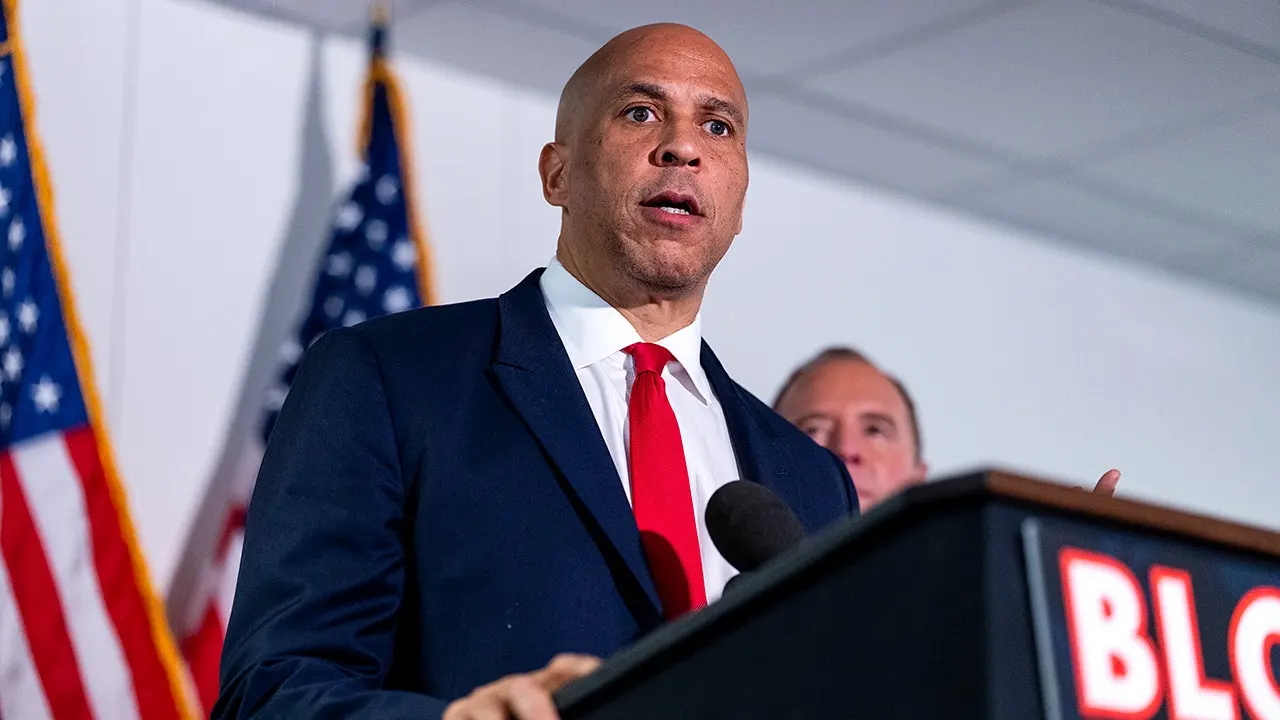
At the heart of the Democratic pushback stands New Jersey Senator Cory Booker, who has emerged as one of the most vocal and passionate opponents of the SAVE Act, arguing that the legislation is a wolf in sheep’s clothing. Booker, known for his empathetic and community-focused approach to politics, views the Republican legislative push not as a genuine effort to secure elections, but as a dangerous vehicle for systemic voter suppression that would harm millions of eligible citizens. In his view, requiring millions of everyday Americans to produce immediate, physical documentation of citizenship—such as original birth certificates or active passports—presents an insurmountable barrier for vulnerable populations, including low-income families, elderly citizens, and young college students who may not have ready access to these documents. Booker argues passionately that the SAVE Act would effectively disenfranchise millions of eligible, patriotic Americans under the guise of solving a problem that is already illegal under federal law and exceedingly rare in practice. He contends that the legislation is a blunt instrument designed to solve a problem that requires a scalpel, pointing out that a clerical error at a state motor vehicle agency would not be prevented by forcing legitimate voters to jump through bureaucratic hoops. For Booker, this fight is deeply personal; it is about protecting the dignity and access of every single eligible voter, ensuring that the right to participate in our democracy is not restricted to those with the time, money, and resources to navigate complex federal verification processes.
Rather than turning to sweeping federal mandates that could inadvertently lock eligible voters out of the system, Booker argues that the solution to these administrative hiccups lies in local accountability and rigorous state-level oversight. In New Jersey, the response to the software glitch was swift and transparent, led by Democratic political figures like Governor Mikie Sherrill, who acted quickly to address the failure once it was identified by state administrators. Sherrill announced that the state had successfully purged the affected noncitizens from the voter rolls and immediately initiated a comprehensive investigation into the “serious software error” within the state’s Motor Vehicle System. This rapid, self-correcting response is precisely what Booker points to as evidence that the system works when local officials are held accountable and allowed to do their jobs without federal interference. He praised the quick action of New Jersey leadership, emphasizing that the state took the matter incredibly seriously and acted with the urgency required to restore public confidence. Booker noted that clerical and software errors are not unique to New Jersey, pointing to similar recent incidents in Texas and Oregon where administrative oversights were caught and corrected by state authorities. By highlighting these examples, Booker seeks to humanize the bureaucracy, framing the issue not as a coordinated conspiracy to commit voter fraud, but as a common technical challenge that requires ongoing maintenance, vigilance, and technological upgrades rather than polarizing national legislation.
The clash over the SAVE Act and the New Jersey voter rolls exposes a deeper, more fundamental philosophical divide in American political life: the delicate balance between election security and voter accessibility. One school of thought, championed by the Republican party, asserts that any measure of insecurity, no matter how small or accidental, threatens the legitimacy of the entire democratic process, justifying strict, uniform federal interventions to restore faith. The opposing view, held by Booker and his Democratic colleagues, maintains that the greatest threat to democracy is not administrative error, but the systematic exclusion of eligible voters through overly restrictive laws that target the most vulnerable. This philosophical gridlock is compounded by the lack of a standardized national framework for identifying, tracking, and reporting software glitches or voter roll discrepancies across the fifty states. Without clear, objective data, these technical errors are easily weaponized by political actors to feed into broader, more anxiety-inducing narratives about election integrity and widespread fraud. This data vacuum makes it nearly impossible to conduct a sober, non-partisan analysis of how widespread these issues actually are, leaving the public caught in a crossfire of conflicting rhetoric where one side preaches absolute security and the other champions absolute access, leaving ordinary citizens confused and cynical about the state of their democracy.
Ultimately, Senator Cory Booker’s defense of New Jersey’s handling of the voter roll glitch is a plea for pragmatism and a rejection of political opportunism. He cautions against allowing honest administrative errors to be exploited to advance partisan agendas that would ultimately harm everyday Americans. As the nation marches toward future elections, the debate over how we secure our ballots while preserving the right to vote remains one of the defining challenges of our time. The New Jersey incident reminds us that technology is only as good as the humans who design and monitor it, and that maintaining a healthy democracy requires continuous work, transparency, and a willingness to self-correct when things go wrong. By focusing on local accountability and robust state-level enforcement, Booker advocates for a path forward that respects the constitutional authority of states to manage their own elections. This approach prioritizes the dignity of the voter, seeking to build a system where errors are corrected quickly, laws are enforced fairly, and every eligible citizen is encouraged to make their voice heard. Rather than dividing the country further with sweeping federal restrictions, the focus must remain on restoring trust at the community level, ensuring that our democratic institutions remain both secure and deeply human, proving that we can protect the ballot without shutting the door on the people.