





1
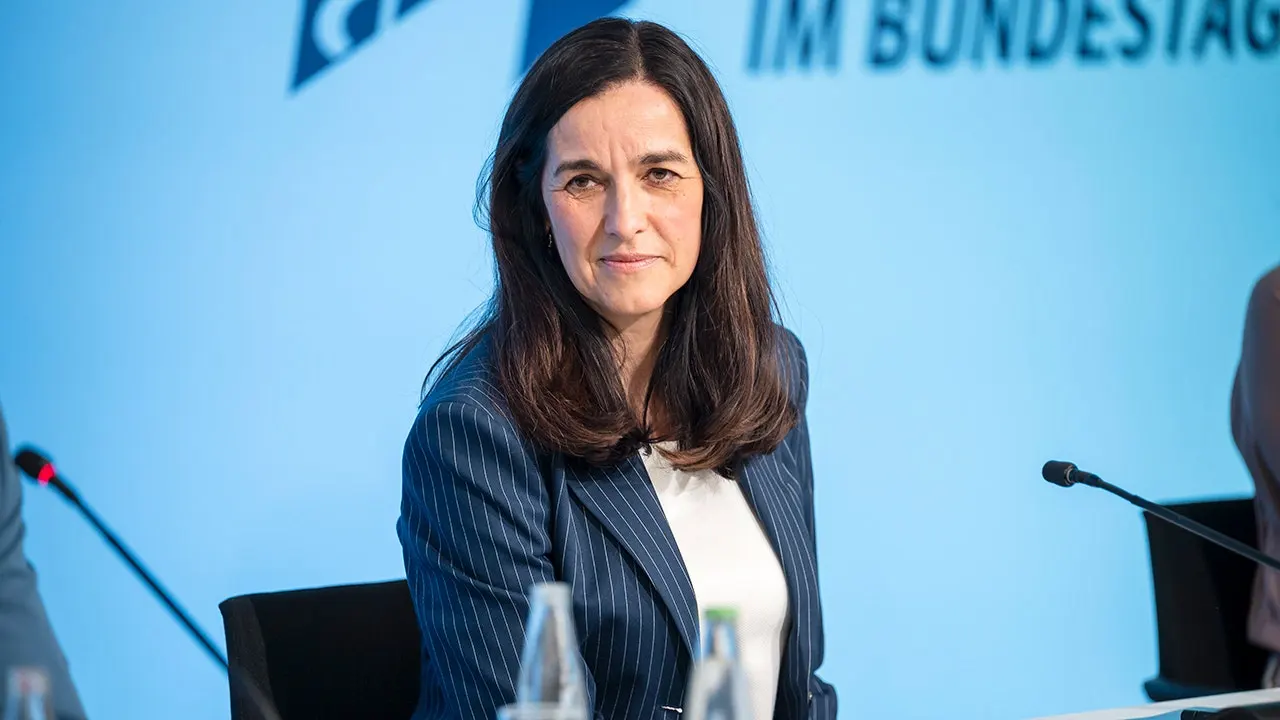
In the careful, quiet language of diplomacy, a routine notification can sometimes carry enormous weight. That was the case this week in Budapest, where Hungary formally asked ten members of the Russian mission to leave the country. The announcement came from Anita Orban, the Deputy Prime Minister and Minister of Foreign Affairs, but not before she clarified one small and human detail: despite sharing a famous Hungarian surname, she is not related to former prime minister Viktor Orban. That distinction was perhaps a fitting reminder that Hungary, like all countries, is not simply a single emotion or a single loyalty; it is a living nation trying to find its footing between pressure from the Kremlin and the expectations of its European and American allies. The request itself was delivered on Tuesday, with a senior official at the Ministry of Foreign Affairs informing the Russian ambassador that, in the judgment of Hungarian authorities, ten people attached to the Russian mission had engaged in activities that were unacceptable for diplomats under the Vienna Convention. There was no dramatic announcement, no screaming headlines in Budapest, no public protester. The official statement was dry and confident. But the message was unmistakable: Russia’s presence in Hungary had crossed a boundary, and the Hungarian side responded by drawing another line. Anita Orban spoke forcefully on X, the social media platform formerly known as Twitter, explaining that those ten individuals had participated in acts that were “unacceptable” according to the rules governing diplomatic behavior. She then made it clear that this was not a step taken lightly. In the world of international affairs, telling another country’s officials to leave is not a decision that any diplomat makes without thought. It is an act of sharp assertion, a way of saying that there are lines that cannot be crossed, that somewhere beneath a plan of trade, energy cooperation and even difficult membership talks, there is a threshold of security and sovereignty that must be respected.
2
To understand why this mattered so much, one has to understand what the Vienna Convention truly protects. The Vienna Convention on Diplomatic Relations, signed in 1961, is often backstage peace between nations. Along with giving foreign diplomats privileges and immunities around the world, it also imposes limitations: diplomats are not supposed to interfere in the internal affairs of the host country. They are expected to behave like guests, not to meddle with local politics, to gather information only through legitimate channels, or to run operations that could destabilize their host government or its people. When a government uses a word like “unacceptable” to describe the behavior of another country’s team inside its borders, it is a serious claim—especially in the world of secret services and mysterious operations. It is not just a diplomatic phrase; it was a public accusation. What exactly these ten people supposedly did was not laid out in detail—Hungary’s announcement was deliberately short. The phrase “activities that are incompatible with their diplomatic statute” could mean many things, but in diplomatic practice it is usually the polite term used when spies have crossed some line. That could include espionage, bullying of Hungarian citizens, creating radical networks, spreading false information, or maybe Eastern Europe is doing something darker. For a country that has often try to balance the European Union and the mainland, such a statement was emerging. But by choosing the instrument and the procedure, Hungary was also saying, we are not breaking off with the Russian state. We are simply saying this is not way to behave. As if to underline that point, Anita Orban immediately confirmed that the decision did not imply the breaking of diplomatic ties with Russia. We don’t cut off the conversation, we don’t cut off the embassy, and we don’t force the ambassador to go home. At least those ten people, or perhaps more accurately, those two people, going by a number of different titles and gifts, are being sent off. The remaining Russian diplomats were still there, and the pause in the relationship was clear. But the boundary had been set between what can be politely tolerated in a world flooded with tension and what can become explicitly unacceptable in a fragile relationship.
3
In her public message, Anita Orban tried to offer a thoughtful explanation for this apparently extremely dangerous step. She said it was protecting Hungary’s security and having sovereignty, not a desire to war. “This decision protects Hungary’s security and sovereignty,” she wrote, maybe expecting to reassure her readers that they were seeing a conscientious, clean, possible, not an emotional impulse. “It does not imply breaking off diplomatic relations with Russia. Hungary intends to continue the necessary dialogue, based on mutual respect and adherence to the rules.” That final phrase – “mutual respect and adherence to the rules” – is what makes the entire story so much more fascinating. It is the language of a person trying to live in a world where the rules are under constant stress. Hungary has had a complicated relationship with Moscow for decades. It has been an active member of NATO and the European Union, but it has also sometimes needed Russian energy, Russian pipeline and Russian investors. At the same time, like many countries in Europe, it finally has had to face a new theme: intercepting Russian spying, sabotage, organized crime, even attacks on telecommunications infrastructure, or at least attempts at it. As the crisis goes on, the role of a diplomat can become heavier with signal and less straightforward. To have a minister who is not related to one of the most well-known politicians of the same name, and at the same time doing one of the more controversial acts of true diplomacy, is useful. It can feel like the world of diplomacy is made of certain statements that are designed to move on. But, ultimately, a country’s sovereignty is not something that can be ignored. The appearance of the Hungarian side was that the Russian diplomats, or people associated with the Russian mission, had gone beyond acceptable diplomatic parameters. By sending them home, Hungary signaled that, at least on this one issue, it was placing its own sovereignty above the pressure, either from Moscow or from any domestic interest that wanted to be closer to the Moscow.
4
The Russian response was quick and predictable, though it still echoed with seriousness. In comments to RIA Novosti, the Russian state news agency, the Russian Foreign Ministry promised “an appropriate response” to the expulsions. For those who follow the history of diplomatic negativity, it is almost a standard set: a country puts out a tank, removes some officials, and then the other country says, we will have to respond. That response can be either a very serious set of consequences, seven months or years behind them, or it can be a more severe diplomatic and political tension that does not lead to public. But the significance was deeper than something like a diplomatic duel. It was a sign of the far larger conflict in Europe in 2016. German officials have recently issued public warning that Russia is thinking about tenable hybrid attacks on European soil, increasing a shadow war. In February, for example, Germany confronted a renewed threat to its narrative, trying to be more intense to protect enemy infrastructure and influence democracy. The phrase “shadow war” is not something taken from light. It describes a series of passive or active, all-purpose watches that are carried out with bladed pieces of information, cooks, orbital attacks, state-financed crimes, micro-electronic disruption, maybe even some highly skilled Soviet drug espionage. From the point of view of Russian cooperation, the landscape is to be the texture of every single European network. Again, Hungarian gesture is not a stand-alone event; it is part of a broader pattern. The border between Russia and the West has become porous, more than a national boundary, and it has become a liquid shadow experience that moves across cities and months. That is why this simple-sounding decision to ask ten people to leave is not so simple. It indicates how far the EU and NATO member states are willing to go to signal that in the Western stage, we are no longer putting up with a certain style of behavior.
5
European Union responded carefully but also clearly. European Commission spokesman Christian Wigand said Tuesday that the Commission “will take note of Hungary’s legitimate decision” to expel the Russian diplomats. He noted that the movement was expected in response to “Russia’s persistent campaign in using hybrid attacks against the EU and its member states.” This is a significant moment. Hungary is a member of the European Union, and it is also part of NATO, the alliance that began with the United States and built a transatlantic block of the free world. In this context, saying “legitimate” from Brussels is not just doing a brotherhood a small gesture; it was a sign that the European institutions had standing in line with Hungary’s decision. For years, the European Union has been testing unity when facing Russia. Energy crises, murder, weapons, natural resources, displaced people—all have made a lot of European diplomatic fire. Having a country that always appears to be more suspicious of Russia than its Western neighbors, becoming the one to throw numbers of Russian diplomats out into the air, can feel a little surreal. But political geographies are often strange. Countries don’t always act in ways that seem easy or obvious; their positions are shaped by a mix of history, political talent, national mood, and direct threats. In this case, Hungary was both a NATO and EU member, maybe a bridge and at the same time a barrier. When the EU Commission came up with a 10-decade phrase, it was not just to support a single member state; it was to send a signal to the Kremlin that off-the-ice hostile actions inside Europe would not continue. Germany, France, Poland and, in earlier whoa, perhaps a new leader in London, have all felt the pressure from Russia’s shadow theater in the past. The fact that Hungary, it is so often the shops of the buyer to be respectful, was now doing the expulsion was evidence that no one, even those with most foreign languages, could afford to be generous with their security.
5
It is perhaps useful to think of what this means for ordinary Americans and Europeans, not just for politicians and diplomats. The news articles the reader were written in a simple, neutral journalistic tone, but under every word is a serious incident. The “10 individuals with the Russian mission” are not a random group of movers. They might be spies. They might be writers, propagandists, or operatives who, if they continued staying in Hungary, would find themselves living in a place where one person’s “legal” disappears behind something more uncomfortable. The demand to leave may mean they are going back to Moscow. However, the fault line between Russia and the West is not only in Ukraine, not only in those hours of the Ukrainian war, but in the everyday spaces where officials live and listen, they talk to locals, they maybe send secret instructions under diplomatic cover. A diplomat’s position is often an interpreted language: you can say either, and a routine, extremely calm note can be the equivalent of setting a fire. By moving this freak, the Hungarian state says: There are lines, even for them. This is also a response to a wider shock that is felt in Washington, Brussels, and many capitals: that Russia’s contact with the West has become too intimate, too adversarial, and too challenging. The fact that Hungary has not cut off diplomatic relations means that something means friendship still matters. But the verbal reality is ruined. Russia’s Foreign Ministry promised a response, but the United States and its allies are likely watching for what it actually is. Will they expel a few Hungarian diplomats in Moscow? Will their ambassador now be subjected to the same “surveillance” and staff? Will some Russian official give a carefully worded floor? All of that is likely. But for those who know the complex history of Russia and its relationship with Europe, there is a more subtle pattern behind such actions: when states throw out each other’s spies, they are usually not trying to start a war; they are indicating the relatively normal flows and settings of a persistent tension. They are, in a weird way, trying to repair boundaries and ease the pressure, not just to explode it.
5
The larger story here is about resilience and belongs to a world that is caught between open conflict and quiet assassinations. Hungary, with its delicate geographic position and its inherited European identity, is like human laboratory: it tries to manage, survive, and be negotiated in a such condition. When it announced that those ten people should leave, it was to prove to its own population that it can also stand for its own clarity. This is not just about what happened in the East; it’s also about what happens, for example, in nations of common, but if a European government needs to cross a constantly way, it is also showing that it will not be a punishment from a capital in the home again. The humanization of the story is at its core: there are ordinary Hungarians who wake up, wait for their breakfast, maybe listen to alarm, look at European Union updates. They do not want a war, and they do not want their country to be dangerous. They want their children to play in the streets, their prices to be fair, their schools to function. At the same time, they want to live in a country that is not so weak that another great power can send agents anywhere they want, without any consequences. As the Hungarian state sent this demand, the people who read the announcement may have felt a complicated mood: a slight presence of normality, a worry, or maybe a hidden need to show “we are conscious too.” From such news, we can not only see the official Kremlin in Moscow, but also the quiet diplomacy of the world, where the room is full of on-the-ground secrets and non-water forward. At the end, the only true answer is whether the expulsion alters Russia’s behavior, or at least forces it to cover its activities even deeper. If it turns out to be just another piece of the dance in the long diplomatic dance, then we know that in this post-Soviet, post-Cold War landscape, the boundaries of the Eastern and Western theatres are still shifting, and no one can say, for good, exactly where they will be drawn. But what is clear now is that Hungary did not choose the path of silence, and with its simple statement, “not breaking relations” while asking a total of ten Russian officials to leave, it showed that even a smaller country could stand up to the moon of international pressure, and it expected that.
6
At its heart, this action in Budapest is a story about how a modern nation in the middle of Europe tries to protect itself in an age of information, energy, and military. The vote to expel ten people was hardly a declaration of war, but it shows the country’s willingness to set firm standards. It also shows the world, we might want to recall, that no Russian diplomat or agent should ever think they are beyond the reach of the legal system in their host country. NATO’s presence and the U.S. founding membership have, over time, created a system of mutual defense, but not every threat is a tank through the border; some threats are subtle, more direct, more silent. The fact that the Russian Foreign Ministry promised an “appropriate response” shows that the majority of the world is watching and that no action is one-way. Yet, Hungary’s government insisted it is not breaking diplomatic relations. It wants to maintain a dialogue that is based on mutual respect and adherence to the rules. Those are not empty words; they are a possible formula for survival for smaller nations who are once situated next to a large and sometimes aggressive power. If this action speeds up any escalation, it might be because too many of those inside the Russian mission had forgotten their limits. But in the human world, and among Americans, the feeling maybe is not one of excitement or celebration, but of seriousness. It is sometimes enticing to think that all this could be a matter of diplomatic overkill, but the stakes—security of the nation, the democratic order, the trust between states—are very real. In six paragraphs, the news might seem to be under report in a rapid, immediate line, but it is not the truth. It is a matter of protection for the small and vulnerable, a pushback to the bigger promises of power, and a reminder that no state, no matter how charming, should think it can poke around behind the scenes without consequence. As the diplomatic gears turn, in Moscow and Washington and Brussels, the internal question is: will the strategic trust in Europe last longer than the same-week media interest? Only the next few months and diplomatic visits will show. But for which we know now, the phrase “protects Hungary’s security and sovereignty” might be, in the end, not just a formal sentence but a declaration. A country stood up, sent them home and, at least for now, tries to live in the way it thinks is right, if not fully to do what it thinks is needed. The world’s eyes, for the present, are on the fixed road of the diplomacy here.