





In the fog of war, money moves quietly, but in Ukraine’s fight for survival, that money has a very loud paper trail—and it runs straight through Washington. Since Russia’s full-scale invasion, the United States has committed staggering sums to Ukraine’s defense: $67.8 billion in defense articles and services from February 2022 through March 2026, according to congressional reports, and roughly $195 billion overall for Operation Atlantic Resolve when you factor in replenished U.S. weapons stocks, military operations in Europe, and economic, development, and humanitarian assistance. That kind of money invites a natural, uncomfortable question: How do we know it’s not disappearing into the same corruption that has plagued the former Soviet Union for decades? The answer, according to regional security expert Carrie Filipetti, is a sprawling, layered system of oversight that most Americans never see. Filipetti, a former Deputy Assistant Secretary of State and now executive director of the Vandenberg Coalition, told Fox News Digital that Washington has built dozens of safeguards into its Ukraine aid programs, precisely because it knows the risks. “Of course, in all of the former Soviet Union countries, there is significant corruption,” she said. “A lot more work needs to be done. But we know, at least on the U.S. side, as we’re providing support for their military, we have a lot of mechanisms.” It’s a reminder that the debate over Ukraine aid isn’t just about geopolitics or battlefield strategy—it’s also about trust, accountability, and whether a country fighting for its very existence can clean house at the same time. The billions are real, the war is real, and so is the fear that some of that money could end up in the wrong hands. But according to Filipetti, the machinery designed to prevent that is more extensive than most people realize.
Trust, however, has been tested in recent months by a wave of corruption investigations that have reached into the highest levels of President Volodymyr Zelenskyy’s government. The drumbeat of allegations has been relentless, and it has forced the Ukrainian leader into a delicate political dance: defending his administration while also showing Western allies that no one is above the law. In August, Zelenskyy dismissed Iryna Mudra, a deputy head of the presidential office, as anti-corruption investigators pursued a money-laundering case involving another deputy head of the office. Mudra herself has not been named a suspect, according to the Associated Press, but the message was clear: even the most powerful figures in the presidential administration are not untouchable. Then came the resignation of Andriy Yermak, the influential head of the presidential office, on Nov. 28, 2025, after investigators searched his premises. Former Deputy Prime Minister Olha Stefanishyna was dismissed by Zelenskyy as Ukraine’s ambassador to the U.S. on Aug. 3—two days before a suspicion notice was served against her, according to the Kyiv Post. And Defense Minister Mykhailo Fedorov was fired on July 15 in a broader reshuffle over internal wartime disagreements, a move that sparked protests across the nation and, later, public complaints from Fedorov himself about what he described as ingrained corruption and patronage networks. For Filipetti, this wave of resignations and dismissals is actually a sign of institutional health, not dysfunction. “We’ve seen that Zelenskyy is taking really seriously the criticisms of corruption, and every time there is an allegation, he moves very swiftly to remove those individuals from the government,” she said. “And the fact that there are these independent bodies is, I think, really important. They’re listening to them. They’re making sure that they’re trying to root it out as much as humanly possible.” The political pressure is real, but so is the institutional response—and that matters for Ukraine’s credibility with its Western backers, who are watching every move.
What does oversight actually look like in practice? It’s not just a single inspector general peering over spreadsheets in a Washington office. According to Filipetti, more than two dozen federal agencies are involved in monitoring U.S. assistance to Ukraine. “Over 24 federal agencies are involved in oversight,” she said. “To make certain that there are no consequences to the U.S. taxpayer, to our equipment in terms of the corruption issue, U.S. contributions are very much protected.” That means everything from Pentagon audits and State Department reviews to Treasury Department financial monitoring and intelligence community assessments. It also means a fundamental shift in how aid is delivered. Filipetti explained that much of the U.S. economic assistance now operates on a reimbursement model: Ukraine pays for goods or services upfront, provides documentation, and only then gets reimbursed by Washington. That’s a deliberate firewall against embezzlement, designed to ensure that American dollars don’t flow into private bank accounts or patronage networks. The system isn’t perfect—a February 2024 review by the USAID inspector general found that the agency did not independently verify some Ukrainian health workers’ salary claims before reimbursement—but the overall architecture is built to catch problems before they become full-blown scandals. The sheer scale of the aid makes this oversight essential. The U.S. has committed $67.8 billion in defense articles and services through the Presidential Drawdown Authority, the Ukraine Security Assistance Initiative, and Foreign Military Financing. Add in the broader $195 billion appropriated for Operation Atlantic Resolve, and you’re talking about one of the largest foreign assistance efforts since the Marshall Plan. With that much money in motion, the question isn’t whether there will be mistakes—it’s whether the system can catch them and correct course. So far, Filipetti argues, it has. The safeguards are not just bureaucratic window dressing; they are the price of continued American support, and both Washington and Kyiv know it.
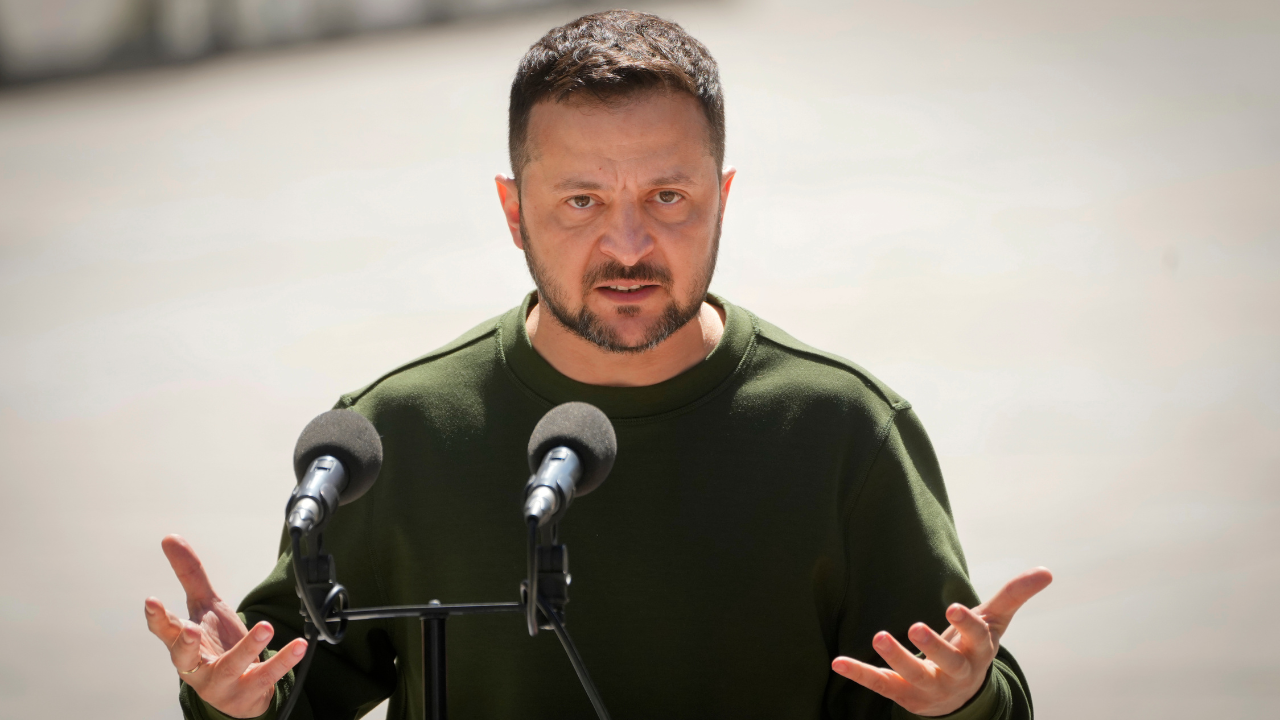
Zelenskyy, for his part, has pushed back hard against any suggestion that the corruption investigations implicate him personally. “The heads of anti-corruption agencies have zero questions for me,” he said in remarks published Aug. 23. “They understand perfectly well that I am not involved in anything like that.” That defiance is understandable for a wartime leader trying to project stability, but it also underscores a delicate balancing act. Ukraine has built independent anti-corruption bodies—most notably the National Anti-Corruption Bureau of Ukraine, or NABU—and those bodies are now doing exactly what they were created to do, even when it makes life uncomfortable for the government. For Western allies, that’s both reassuring and awkward. It’s reassuring because it shows the system works; it’s awkward because it complicates the narrative of a unified wartime government. Filipetti says this is all part of Ukraine’s long-term path toward the West. “I think every country has been really adamant that the Ukrainians move forward in their anti-corruption mechanisms,” she said. “Obviously, if Ukraine ever wants to be a formal member of NATO, that’s something that they will need to prove and demonstrate.” In other words, fighting corruption isn’t just a domestic issue for Ukraine—it’s a ticket to membership in the transatlantic community. Every dismissed official, every searched office, every suspicion notice is a signal to Brussels and Washington that Ukraine is serious about earning its place. But it’s also a reminder that the road to NATO runs through more than just the battlefield; it runs through the courtroom, the audit, and the oversight committee. The Ukrainians understand that, and so do the Americans who are footing the bill.
Meanwhile, the war itself continues to demand urgent attention, and no need is more pressing than air defense. As Russian strikes intensify, Ukraine’s cities and energy grid face another brutal winter, and Zelenskyy has been blunt about what he needs: more Patriot interceptors. He has said he wants 300 additional interceptors for the coming winter, while Ukraine’s air force has requested 360. Filipetti called interceptor missiles “one of the most urgent needs that the Ukrainians have right now.” That’s why the idea of sending Patriot capabilities—and eventually producing them on Ukrainian soil—has become so central to Zelenskyy’s strategy. But there’s a catch. President Donald Trump has been reluctant to keep depleting U.S. missile inventories, arguing that America needs its own weapons for its own defense. “We want missiles too,” Trump said Aug. 6 when asked about Zelenskyy’s requests for long-range missiles and Patriot systems. “Biden gave him so much, Biden gave $300 billion worth of ammunition.” The tension is familiar: Ukraine wants more, the U.S. worries about its own stockpiles, and European allies are being pressed to step up and shoulder more of the burden. For Filipetti, the interceptor shortage is a reminder that aid oversight and military assistance are two sides of the same coin. The billions flowing to Ukraine are only useful if they translate into weapons that can actually stop Russian missiles—and only if the systems in place ensure those weapons aren’t diverted or wasted. That’s a hard balance to strike, especially when the battlefield is shifting and the political clock in Washington is always ticking. The need is urgent, the resources are finite, and the trust between allies is constantly being tested.
In the end, the story of U.S. aid to Ukraine is a story of competing pressures: urgency and accountability, trust and verification, wartime necessity and long-term reform. The Biden administration and now the Trump administration have both had to navigate these tensions, and the result is a system that is far from perfect but far from toothless. Filipetti’s message is one of cautious confidence. The safeguards are real, the oversight is extensive, and the Ukrainians—whatever their internal struggles—are making visible efforts to root out corruption. The recent resignations and dismissals are messy, but they are also evidence that the anti-corruption machinery is working. The challenge now is to keep it working while the war grinds on. Ukraine needs more interceptors, more financial support, and more political patience from its allies. It also needs to keep proving that it can be a reliable partner, not just in battle but in governance. For Washington, that means maintaining the oversight mechanisms that protect taxpayer dollars while continuing to support a country that is fighting for its sovereignty. For Ukraine, it means showing that the fight against corruption is as serious as the fight against Russia. Neither battle is easy, and neither will be won overnight. But as Filipetti suggests, the pieces are in place—if the political will holds on both sides of the Atlantic. The next few months will test that will, just as they will test Ukraine’s air defenses, its institutions, and its resolve. The money will keep flowing, the investigations will keep coming, and the war will keep demanding more. The only question is whether the system can hold it all together.