




The Unfolding Tragedy in the Himalayas: A Story of Waiting, Resilience, and Unanswered Questions
In a quiet corner of the State Department, officials are poring over lists, cross-referencing names, and making phone calls that carry the weight of a world’s worry. As of Tuesday, they have confirmed that 18 Americans have made it to safety, yet approximately 70 more remain unaccounted for in the devastating flood zone along the Nepal-China border. This is not just a statistical update; it is a landscape of human anxiety, where every ringing phone could bring either relief or devastation. The State Department has extended its deepest sympathies to all those affected, reaffirming an enduring friendship with the Nepali people, but behind the diplomatic language lies a more profound sentiment: the agonizing limbo of not knowing. Families across the United States are clinging to shreds of hope, refreshing news feeds, and checking their phones with trembling hands, waiting for any word about their loved ones who were caught in one of the most catastrophic natural disasters of recent memory.
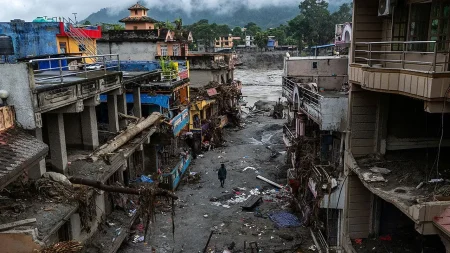
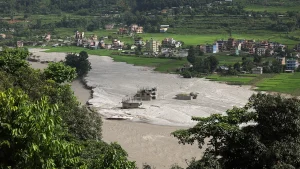
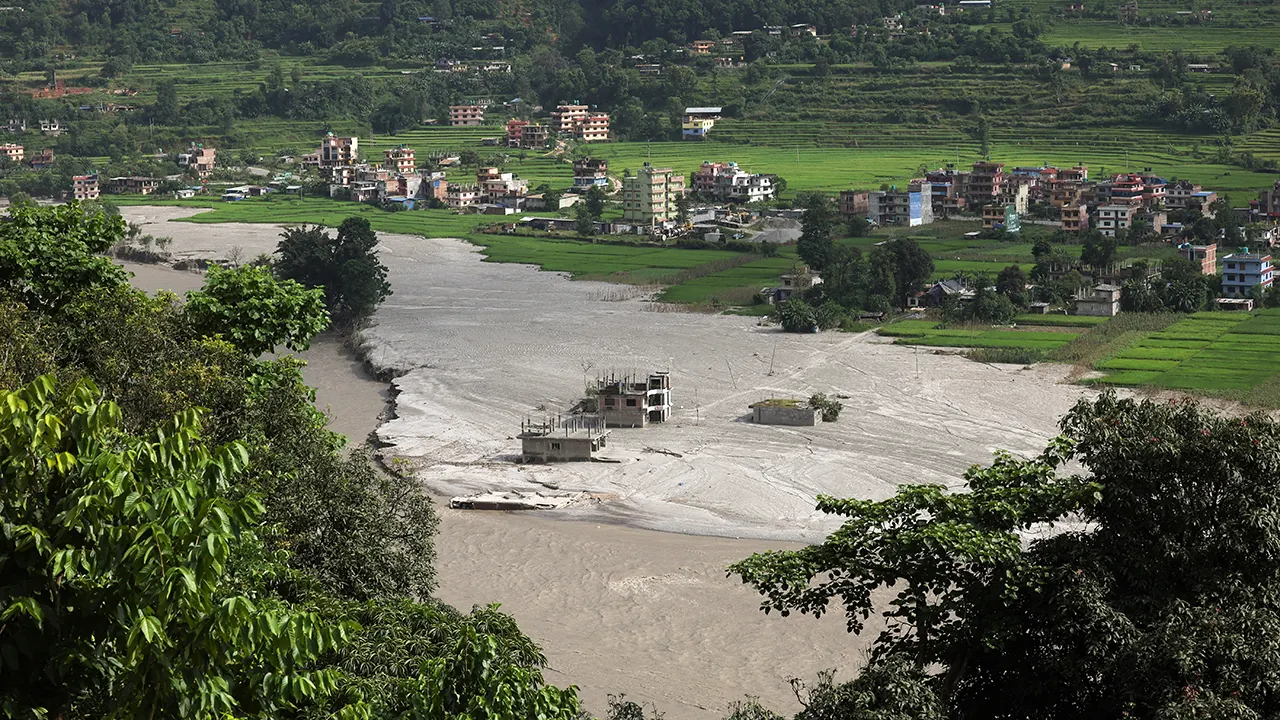
The disaster itself was sudden and unforgiving, triggered by a glacier collapse on August 26 that unleashed a torrent of water, mud, and debris through the steep Himalayan valleys. What had been a landscape of breathtaking beauty became a killing field, with flash floods and landslides sweeping away entire communities, roads, bridges, and anything else in their path. In the days that followed, the world watched in horror as the death toll climbed past 1,399 across Nepal and China’s Tibet region, with more than 5,400 others still missing. The numbers are staggering, almost too large to process, yet they represent individual lives—farmers, engineers, tourists, traders, and families who were simply going about their daily routines when the mountains turned against them. For those who survived, the trauma is immeasurable, and for those searching, the task is monumental.
For the American families awaiting news, the term “unaccounted for” carries a particularly heavy burden. It does not mean confirmed dead, and it does not mean missing in a traditional sense; rather, it means that communication has been severed, that the chaos of the disaster has swallowed the trails of their loved ones. These are trekkers who came to witness the majesty of Annapurna and Everest, engineers who came to work on hydropower projects, or tourists who sought adventure in one of the world’s most remote and beautiful regions. The State Department has promised to remain in close contact with these families, offering regular updates as more information becomes available, but such updates are often agonizingly slow. Every confirmed survivor brings a wave of relief, but for the 70 still unaccounted, each passing day deepens the worry. Officials have not confirmed any American deaths, and that sliver of uncertainty, while painful, is also a source of hope.
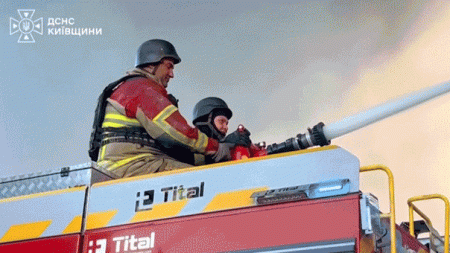
Meanwhile, on the ground in Nepal, rescue efforts have taken on a grim and focused urgency. Nepalese authorities have announced that they are concentrating their search operations on three hydropower project tunnels, where they believe dozens of workers may still be trapped beneath the debris. The primary focus is on the Chilime hydroelectric project, a massive infrastructure undertaking that had housed workers in canteens and residences within the tunnel complex. According to Dharma Raj Upreti, chief of Nepal’s disaster authority, rescuers believe people are still alive inside, having found shelter in the labyrinth of underground passages when the floodwaters struck. The image is haunting: workers who had gone about their day in the bowels of a mountain, perhaps taking a meal in the canteen or resting in their quarters, suddenly confronted by the roar of catastrophic water and debris. Now, rescuers are racing against time, using whatever tools they have to dig through the rubble, listening for any sound of life beneath the mountain’s oppressive weight.
The broader devastation across Nepal and Tibet is almost incomprehensible in its scale. Entire villages have been wiped from the map, their homes filled with silt and stone. The region’s infrastructure, fragile even in the best of times, has been shattered, with bridges washed away and roads buried under landslides. In some areas, rescuers have resorted to using ziplines to transport trapped citizens across gaping chasms where roads and bridges once stood. The Nepali government and its international partners are working around the clock, but the sheer difficulty of the terrain, combined with the risk of additional flash floods and landslides, has made the operation incredibly perilous. Both the Nepali and Chinese governments have pointed to climate change as the culprit behind the glacier collapse, a stark reminder that the consequences of a warming planet are not abstract or distant—they are here, now, devastating communities and shattering lives in the span of a single afternoon.
As the days stretch into weeks, the world is left to grapple with the profound questions that arise from such tragedy. For the Americans unaccounted for, there is still hope, but there is also a mounting sense of dread. The State Department has urged Americans not to travel to the disaster zone, warning that the region remains unstable and dangerous. Yet for those with loved ones in the area, such warnings are moot; they would brave the treacherous terrain themselves if they could, just for a chance to find their family members. In the United States, communities have rallied around the affected families, holding vigils and fundraisers, sharing information on social media, and offering whatever support they can. It is a reminder that in times of profound crisis, humanity’s capacity for compassion and solidarity emerges most strongly. The friendship between the United States and Nepal is being tested, but it is also being strengthened through this shared grief and the collective effort to search, rescue, and rebuild.
In the end, the story of these 70 unaccounted Americans is a story of waiting, but it is also a story of resilience. It is the story of rescue workers who refuse to give up, of families who refuse to lose hope, and of a global community that refuses to look away. The death toll is immense, the missing number in the thousands, and the road to recovery will be long and painful. But in the tunnels of the Chilime hydropower project, in the search grids being combed by Nepalese soldiers, and in the quiet offices of the State Department, the work continues. Every effort is being made to bring the missing home, to provide answers to the families who desperately need them, and to honor the memory of those who have been lost. The mountains that once stood as symbols of eternity have shown their volatile power, but the human spirit, in all its fragility and strength, remains unbroken. For the 70 Americans still unaccounted for, their families wait with bated breath, holding onto the slim but powerful thread that they will be found, and that this tragic chapter will yield, at last, some measure of closure and peace.