




The Shocking Violence Unfolds in Kyiv
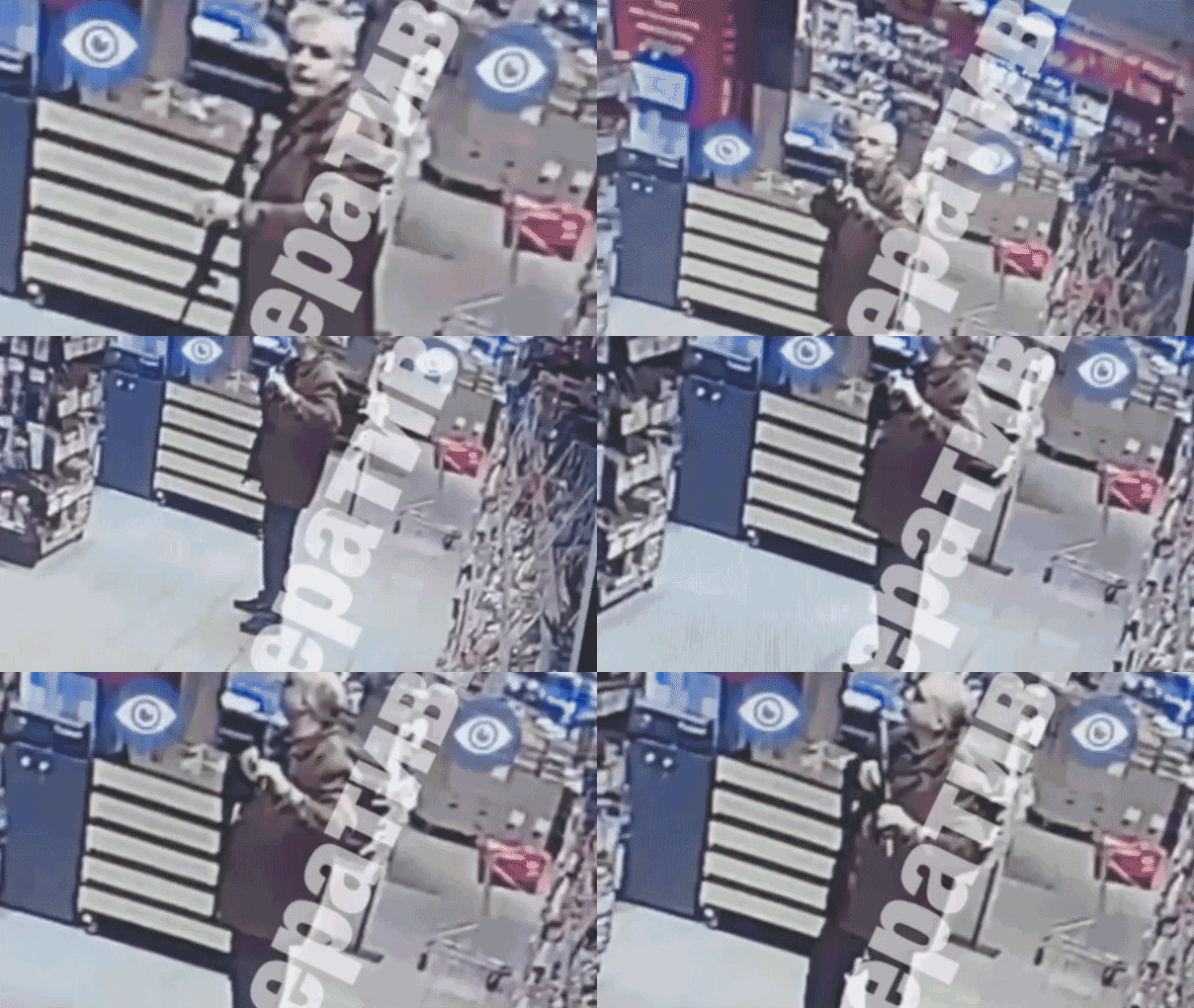
In the heart of Ukraine’s capital, a quiet Saturday morning turned into a nightmare when a lone gunman unleashed terror on innocent shoppers at a bustling supermarket. Imagine waking up to the sounds of daily life—people grabbing groceries, laughing with neighbors, perhaps picking up milk for the kids—only for that routine to shatter with gunfire echoing through the streets of Kyiv. The 58-year-old perpetrator, a Russian native who had spent years living in the volatile Donetsk region, stormed the store armed and fueled by unknown grievances. Eyewitness accounts paint a harrowing picture: civilians dropped to the ground in panic, shelves overturned in a frenzy of chaos. Recognizable by his calm demeanor before the madness, the man opened fire indiscriminately, turning a place of community sustenance into a blood-soaked arena. Survivors later recounted the piercing shots, the screams, and the desperate scramble for cover behind produce stands or in the frozen foods aisle. It was the kind of scene that chills the soul, reminding us all of the fragility of everyday existence. But who was this man to disrupt such normalcy, and what drove him to this act of unimaginable brutality?
As details emerged, the attack escalated beyond the store. Beyond the initial barrage inside, the gunman dragged at least four terrified hostages into an uncertain standoff, their lives hanging by a thread as negotiations dragged on. According to Ukrainian officials, including Interior Minister Ihor Klymenko, the perpetrator took advantage of the hostages’ vulnerability, ultimately killing one in cold blood right in the heart of the crisis. Then, as if to taunt the authorities further, he stepped outside onto the street, where he ruthlessly shot and killed four more unsuspecting people—probably pedestrians going about their day, maybe hurrying to appointments or enjoying the mild weather. Graphic footage captured by bystanders sent shockwaves through social media and news outlets alike: the sickening muzzle flashes at point-blank range, bodies crumpling onto the pavement, leaving pools of blood that stained the concrete. One can’t help but imagine the personal stories behind those lost lives—the dreams cut short, the families left devastated. A 12-year-old boy, just a child full of innocence and potential, was among the wounded, his life forever altered by this senseless violence. Another victim, a dedicated supermarket security guard, heroically tried to intervene but paid with his blood. The human toll extended to 14 injured in total, with officials warning that the count might climb as more people sought medical help for the traumas they endured. This wasn’t just an incident; it was a profound betrayal of peace in a time of war-weary fragility.
Authorities, backed by the fierce resolve of Ukrainian special forces, refused to let the terror continue. For nearly 40 grueling minutes, they attempted negotiations—using every psychological tool and plea to de-escalate the situation and secure the hostages’ safety. Yet the gunman remained unmoved, his grip on control unwavering. Finally, with lives at stake and no other options, the elite teams stormed the makeshift lair in a high-stakes operation. In a flurry of precision moves, they neutralized the threat, killing the shooter on the spot. It’s the kind of heroism that demands admiration: these brave men and women, trained in the crucible of ongoing conflict, risked everything to end the carnage. Through it all, the public watched breathlessly, phones buzzing with updates, gratitude swelling for the protectors who stood firm. The exchange of gunfire was brief but intense, a testament to the calculated valor required in such desperate moments. Balancing the need for justice with the preservation of life is never easy, but in this instance, it saved countless others from a worse fate. One can’t overlook the emotional weight on those first responders—cops, medics, and volunteers—who rushed into the aftermath, comforting the shaken and carting the wounded to hospitals amid sirens and grief.
Unraveling the gunman’s past adds layers of mystery and tragedy to this tale. Born in Moscow and a longtime resident of Donetsk, affected by the region’s ongoing strife, he had a checkered history with the law—previous prosecutions for various criminal offenses loomed over him like a shadow. Strangely, despite that record, authorities had granted him a valid firearms permit, a decision now scrutinized under the harsh light of hindsight. Trying to picture this man outside the carnage, one neighbor, a 75-year-old woman named Hanna Kulyk, described him as an “educated, refined man”—someone who lived quietly alone, rarely mingling with others. “You’d never guess he was some kind of criminal,” she told The Associated Press in a voice tinged with disbelief and sorrow. It speaks to the hidden depths of human nature; how someone seemingly ordinary could harbor such darkness. Compounding the horror, just before the supermarket rampage, he allegedly set fire to an apartment, though it’s unclear if that arson caused additional injuries. This act painted a broader canvas of premeditated malice, suggesting a plan that spiraled into communal suffering. As investigations delve deeper into his motives, driven by Ukraine’s National Police and the Security Service, they meticulously piece together clues—from his digital footprints to possible mental health struggles. It’s a reminder that behind every headline lies a complex individual story, one that intersects painfully with society’s failings.
The aftermath rippled through Kyiv and beyond, leaving scars on a city already battered by conflict. Six lives were extinguished in the blink of an eye—mothers, fathers, friends whose absences will echo in empty homes and unspoken words. Among them, a woman later succumbed to her wounds in a hospital bed, her final moments surrounded by beeping machines and loved ones’ prayers. The 14 wounded, including that young boy and the security guard, fought battles in intensive care, their recoveries symbolizing resilience amid devastation. Families clung to hope, organizing vigils and sharing memories online, turning collective grief into a force for unity. President Volodymyr Zelenskyy, ever the voice of steady leadership, expressed profound empathy: “My condolences to the families and loved ones of the victims… We wish all the wounded a swift recovery.” His words, posted on X (formerly Twitter), underscored the national mourning and resolve. Meanwhile, Mayor Vitali Klitschko highlighted the human cost, urging support for the injured as they relearn to walk, breathe, and live again. The community pulled together—blood drives sprang up, therapists offered counseling, neighbors cooked meals for the bereaved. Yet beneath the solidarity lurked questions: how could such evil erupt here, and what safeguards might prevent it? Ukraine, still reeling from invasion, now grappled with domestic threats, a bitter irony in a land accustomed to external foes. The trauma lingered in the air, a palpable sadness that hugged the corpses on the pavement and the living who mourned.
As probes intensified, Ukraine’s leadership declared the assault an act of terrorism, compelling thorough scrutiny of every detail. Zelenskyy vowed to uncover all motives, ensuring no stone remained unturned in the pursuit of truth and justice. “All available information about him and the motives behind his actions is being thoroughly investigated,” he stated, his tone resolute amid the uncertainty. This commitment wasn’t just procedural; it was personal, a promise to the dead and the hurting. Internationally, reactions poured in—condolences from allies, expressions of shock from afar, reinforcing Ukraine’s global plight. Experts in forensics and psychology pieced together timelines, analyzing the weapons permit’s issuance and the arson link, searching for patterns that could avert future horrors. For victims’ families, the wait for answers was agonizing, each news bulletin a fresh wave of anguish. And for society at large, this demanded soul-searching: about mental health support in turbulent times, gun control debates, and the lurking dangers of unresolved grievances. In the end, through human compassion and indefatigable inquiry, Kyiv aimed to heal—not just wounds, but the invisible fractures in collective trust. As the dust settled, a new feature emerged to make such stories accessible: “You can now listen to Fox News articles!” promising auditory immersion for those processing tragedies from afar. This innovation bridged barriers, allowing folks to feel the weight of events without visual overload, perhaps offering solace in shared narratives. Ultimately, the Kyiv shooting wasn’t just a footnote in history; it was a tragic mirror held up to humanity’s capacity for both darkness and redemption, urging vigilance and empathy in an unpredictable world.