



For the past several years, a quiet, unspoken agreement has existed between the Kremlin and the residents of Russia’s major metropolitan hubs like Moscow and St. Petersburg. While young men from far-flung provinces were sent to the muddy, blood-soaked trenches of Ukraine, the urban elite in the nation’s capital were encouraged to carry on as if nothing had changed. Russian President Vladimir Putin went to great lengths to cultivate a comforting facade of stability, ensuring that high-end boutiques remained open, gourmet restaurants stayed packed, and the vibrant nightlife of the city continued to hum with energy. This deliberate projection of normalcy was designed to shield the domestic population from the grim realities of the “special military operation” and suppress any potential public unrest. However, foreign policy analysts warn that this psychological insulation has created a massive, dangerous blind spot in Russia’s national security apparatus. By convincing his military commanders and political elites that they were perfectly safe within the gilded bubble of the capital, Putin unwittingly fostered a culture of complacency. This false sense of security has left the country’s top military brass highly vulnerable, offering Ukrainian intelligence and covert operatives a golden opportunity to penetrate deep behind enemy lines and strike at the very heart of the Russian war machine.
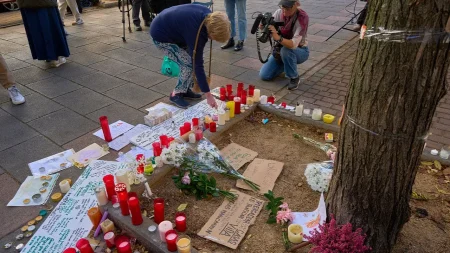
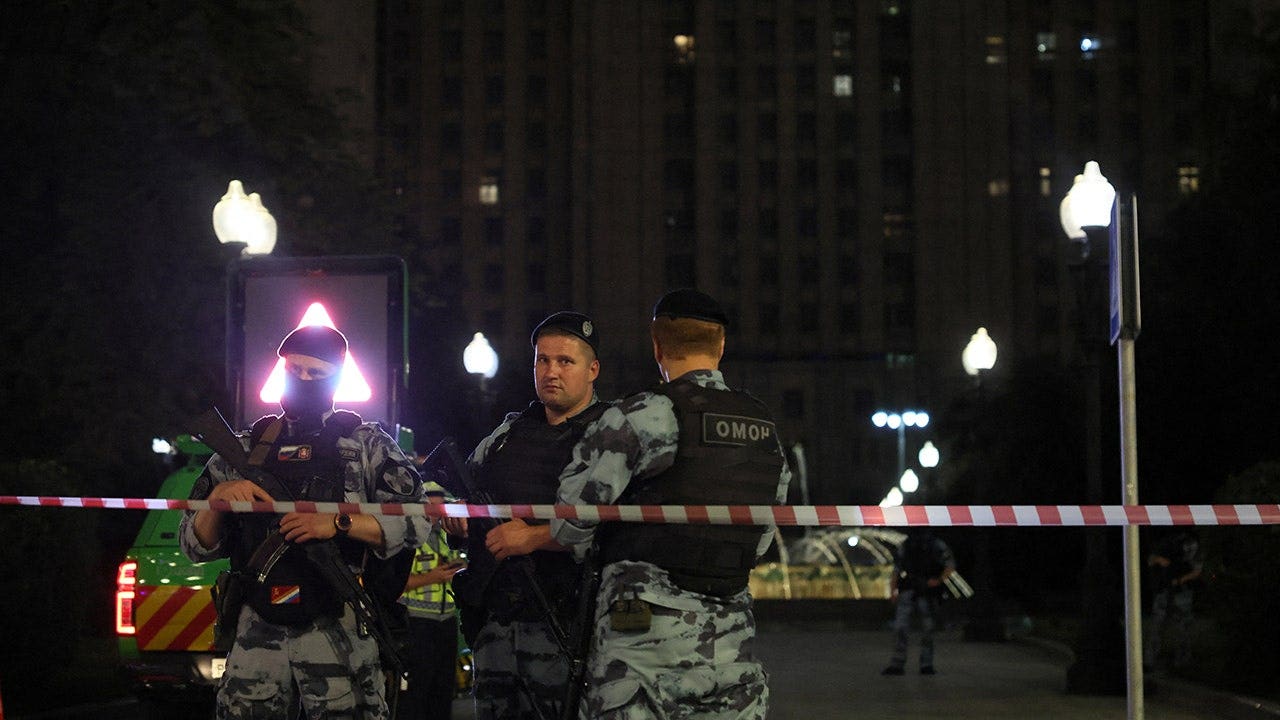
The stark reality of this vulnerability was laid bare on August 1st, when a devastating explosion ripped through Balzi Rossi, an upscale, opulent Italian restaurant nestled inside one of Moscow’s iconic Stalinist skyscrapers. The target of this high-profile attack was reportedly Colonel General Alexander Chaiko, a controversial and heavy-handed military figure who commanded the disastrously botched Russian assault on Kyiv during the opening weeks of the 2022 invasion, and who was recently appointed as the chief of Russia’s aerospace forces. According to reports from various Russian media outlets, Chaiko was attending a private celebration in a secluded VIP section of the luxury establishment when the violence unfolded. Russian authorities revealed that an unidentified woman, acting as a courier, carried an improvised explosive device disguised as a gift or package into the restaurant. Though alert security personnel stopped and questioned her at the entrance, the bomb was detonated remotely moments later, leaving five people dead and nineteen others wounded. The sheer audacity of the operation—bombing a highly secured venue frequented by the ultra-wealthy and politically connected in the center of Moscow—sent shockwaves through the Russian capital, proving that the front lines of the conflict are no longer confined to distant battlefields.
This brazen attack has reignited a fierce, simmering debate within Russian military and political circles regarding the shocking lack of basic operational security among the country’s elite. Dr. Mark Episkopos, a Eurasia research fellow at the Quincy Institute for Responsible Statecraft, pointed out that despite a string of successful assassinations on Russian soil, top military commanders and pro-war influencers continue to flout standard safety protocols. There is a growing sense of frustration among low-ranking soldiers and hardline nationalists who see these lavish public gatherings as a slap in the face to those fighting on the front lines. The irony is palpable: while ordinary citizens are subjected to intense surveillance, high-ranking generals feel comfortable enough to host private parties in public spaces, broadcasting their locations to anyone with basic intelligence-gathering capabilities. This persistent hubris among the elite suggests that the Kremlin’s domestic propaganda has backfired, blinding its own leadership to the very real dangers that lurk in the shadows of their seemingly peaceful cities.
In response to their massive disadvantage in raw manpower, heavy armor, and conventional artillery, the Ukrainian military has pioneered a highly sophisticated and devastatingly effective style of asymmetric warfare. Unable to match Russia weapon for weapon in a head-on conflict, Kyiv has leveraged its agility, superior intelligence, and covert network capabilities to strike high-value targets deep inside Russian territory. Dr. Episkopos noted that Ukraine’s strategy brilliantly exploits Russia’s inherent geographic weaknesses, specifically its vast, sprawling landmass and porous, difficult-to-monitor borders. Unlike Russia, which relies heavily on devastating but indiscriminate airstrikes to hit Ukrainian targets, Ukraine has refined the art of the targeted, surgical strike. By utilizing localized intelligence, advanced Western surveillance data, and covert operatives on the ground, Kyiv has demonstrated an uncanny ability to bypass sophisticated Russian air defenses and state security networks, bringing the war directly to the doorsteps of those who planned and enabled the invasion.
The political fallout from the Balzi Rossi bombing was swift and fiercely rhetorical, with both sides utilizing the incident to advance their respective wartime narratives. The Russian Embassy in Rome immediately went on the offensive, pointing the finger directly at Kyiv and issuing a stern statement warning that the “Ukrainian terrorist contagion” was beginning to spread unchecked across Europe. Meanwhile, Moscow Mayor Sergei Sobyanin publicly condemned the incident as a “brutal terrorist act” and promised that those responsible would face swift and uncompromising justice. For its part, Kyiv maintained its customary policy of strategic ambiguity, refusing to officially claim responsibility for the attack while letting the psychological impact of the blast do its work. This specific methodology—using an unwitting civilian courier to deliver a remotely detonated explosive device—is highly characteristic of previous high-profile assassinations within Russia, including the targeted killings of prominent pro-Kremlin blogger Vladlen Tatarsky and senior military commanders like Lieutenant Generals Igor Kirillov, Yaroslav Moskalik, and Fanil Sarvarov.
Ultimately, the bombing at the Balzi Rossi restaurant serves as a grim reminder that no amount of state-sponsored propaganda can completely hide the destructive nature of war. For the average resident of Moscow, the conflict is no longer a distant, abstract news story playing out on state television; it is a violent reality that has shattered the peace of their local neighborhoods and high-end dining spots. By attempting to preserve an artificial sense of normalcy to maintain domestic political stability, Vladimir Putin has created an environment where his own military elite are sitting ducks. As Ukraine continues to refine its asymmetric tactics and push the boundaries of covert warfare, the gap between the illusion of safety and the reality of vulnerability continues to shrink. For the generals and policymakers in Moscow, the message of the attack is clear: as long as the war in Ukraine rages on, true security will remain an elusive luxury that no amount of political influence or wealth can buy.