





The bright hustle of Liuyang had always buzzed with the sparkle of festivals, where fireworks lit up the night skies like falling stars, a tradition as old as the city itself. Nestled in the heart of Hunan province, under the watchful governance of Changsha, Liuyang wasn’t just any place—it was China’s fireworks capital, a place where families labored in workshops that sang with the crackle of innovation and the steady rhythm of manufacturing. Imagine the pride in crafting displays that exploded in color, painting the heavens for weddings, holidays, and celebrations nationwide. But on that fateful Monday afternoon, the dream turned into a nightmare. An explosion rocked the Liuyang Huasheng Fireworks Manufacturing and Display Co., shattering the peace with a deafening roar that echoed through the valleys. At least 21 lives were lost in an instant, and 61 others were wounded, their bodies bearing the scars of the blast. State media painted the grim picture: a factory that was supposed to be a beacon of joy had become the scene of unspeakable tragedy, as reported by Xinhua, China’s steadfast voice of authority. The explosion wasn’t just an accident; it was a wake-up call, pulling back the curtain on the hidden dangers lurking in industries that thrived on controlled chaos. While Liuyang celebrated its status as a manufacturing hub, as detailed in China Daily, it also grappled with the delicate balance between prosperity and peril. Workers, many of whom were locals drawn by the promise of steady work, walked into those gates every day knowing the risks—family men and women supporting households, dreaming of better futures, only to find danger wrapped in the guise of excitement. The blast happened in the blink of an eye, triggered at the heart of the plant, sending shockwaves that could be felt for miles. Smoke billowed like a storm cloud, thick and choking, coloring the sky with an unnatural pallor that spoke of chemicals unleashed. Aerial footage from CCTV on Tuesday showed the aftermath: rubble strewn like discarded dreams, structures collapsed into heaps, and a ghostly haze lingering over the site. It was a visual reminder that even in the 21st century, human endeavors could trigger calamities that blurred the line between creation and destruction. Nearby residents described the ground shaking, windows rattling, evoking memories of earthquakes they’d only heard about. The city’s hub status meant safety protocols were often stretched thin, with companies racing to meet demand for the lunar new year and beyond. Yet, beneath the headlines, these were real people—fathers, daughters, brothers—whose days intertwined with the sparkling industry. One could envision Mr. Chen, a veteran worker with calloused hands from shaping fuses, now forever silenced; or young Ling, just starting out, her aspirations blown to pieces. The human cost wasn’t just numbers; it was stories untold, families torn asunder, grieving in quiet rooms while the world watched the smoke.
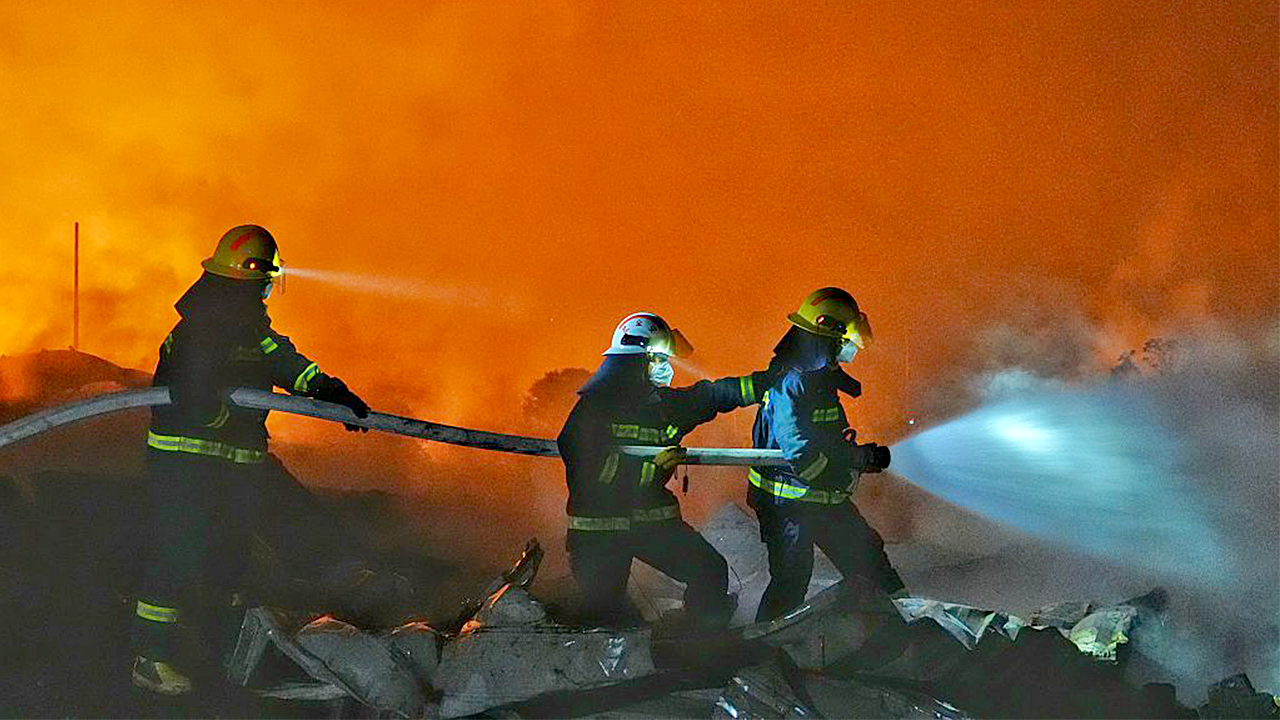
The response was swift and relentless, a testament to China’s mobilized forces when disaster strikes. Nearly 500 firefighters, rescuers, and medical personnel flooded the scene, their boots crunching over debris as they navigated the hazard zone, a swarm of heroes in uniform cutting through the acrid air. The South China Morning Post recounted their tireless efforts: some climbing through twisted metal, others administering aid to the injured, whose cries pierced the twilight. Evacuation orders emptied danger zones, people streaming out in waves, clutching belongings and carrying the elderly, their faces etched with fear and confusion. Two black powder warehouses stood as ticking time bombs, posing such high risks that authorities couldn’t take chances. Control measures were enacted against the company’s leadership, a nod to accountability amidst the chaos. Picture the firefighters, their faces smudged with soot, hearts pounding as they channeled training into action, using hoses to douse smoldering spots and humidifiers to tame the invisible threats. Robots, gleaming machines of modern ingenuity, joined the fray—substituting human limbs where danger loomed, rolling over rubble to probe for signs of life. It was a ballet of courage, where responders fought not just flames but the psychological weight of knowing lives hung on every decision. For the victims, the ordeal didn’t end with the blast; surgeries in makeshift med tents stitched wounds inflicted by shrapnel and concussions, while psychologists whispered consolations to those reliving the moment. Families outside the perimeter paced nervously, phones clutched, awaiting news—mothers praying for sons, wives for husbands. In rural China, community ties ran deep, and this explosion reverberated through social fabric, sparking vigils and donations to aid the bereaved. Widows emerged, their worlds upended, left to navigate grief without closure. Amid the adrenaline-fueled rescue, there was humanity in the small acts: a firefighter pausing to offer water to a shaken bystander, or volunteers distributing comfort to those evacuated. Liuyang’s spirit shone through, not broken but bending, as locals rallied to support the efforts, proving that in crisis, empathy bridged divides.
Delving deeper, Liuyang stands as a unique enclave, a city that owes its fame to fireworks—a craft passed down through generations, blending tradition with entrepreneurial zeal. Administrated by Changsha, Hunan’s bustling capital, Liuyang thrived on this legacy, its plants dotting the landscape like jewels. The Huasheng company wasn’t a lone operator; it represented a network of manufacturers catering to China’s insatiable appetite for pyrotechnics, from grand displays at state events to humble backyard parties. Yet, the industry wasn’t without its shadows. Incidents in the past, like sporadic factory mishaps elsewhere, had hinted at vulnerabilities—poor regulations, overworked staff, and perhaps shortcuts to cut costs in a competitive market. The explosion here raised eyebrows, not just locally but nationally, as experts wondered if outdated safety protocols had let a spark ignite a powder keg. Imagine the daily grind inside such a plant: the whir of machinery mixing powders, the scent of sulfur hanging heavy, workers in protective gear navigating narrow aisles. Many started young, lured by wages in a region where other jobs were scarce. Stories emerged of close calls—near-misses that everyone chalked up to luck. But luck ran out this time, transforming a routine shift into a massacre. Residents spoke of the factory’s prominence; it was an employer, a pillar, injecting vitality into the economy. Now, mourning draped the streets, with memorials sprouting—photos of the lost pinned to lampposts, flowers wilting under the sun. Broader implications loomed: could this be emblematic of China’s rapid industrialization, where growth sometimes outpaced safeguards? Environmental concerns added layers, as chemicals potentially leaching into soil raised alarms about long-term health. For the survivors, life altered irrevocably—those injured grappling with mobility losses or traumatic memories, seeking solace in therapy or folk remedies. The community’s resilience was palpable, neighbors cooking meals for the affected, mending the social tapestry one stitch at a time. In this microcosm of Hunan, the blast wasn’t isolated; it mirrored national struggles with safety in high-risk sectors, prompting whispers of reform even as investigations began.
Rescue operations unfolded like a chapter from a survival tale, meticulous and fraught with emotion. To prevent further blasts amid the rubble hunt, ingenious tactics came into play: sprayers misting water to neutralize volatile residues, humidifiers calming the air’s explosive potential. Robots, those unblinking sentinels, maneuvered into spaces too perilous for flesh and blood, cameras scanning for pulses beneath the debris. It was heart-wrenching work; one can feel the tension in imagining rescuers holding breaths, listening for faint calls through headsets. Success wasn’t guaranteed—some called the mission a “total loss” metaphorically, echoing other disasters, yet it yielded miracles too. A worker unburied from the pile, dazed but alive, reunited emotionally with kin outside. Medical teams, bearing stretchers through the maze, prioritized the critical—bandaging wounds, tackling infections from dust and chemicals. Psychological support wove in seamlessly; counselors coaxed survivors to recount details, processing trauma in real-time. The scale was staggering—61 injured, many with severe burns or fractures—demanding coordination across provinces, with ambulances ferrying the worst to distant hospitals. Families, barred from the site, waited in makeshift camps, sharing stories that humanized the crisis: “He was always careful,” one widow said of her husband, a foreman. “But fireworks—they’re fickle beasts.” Aid poured in—volunteers sorting donations, psychologists offering sessions at dawn. It was a reminder that rescue transcended physical deeds; it healed souls. Authorities, fearing aftershocks like quarantining hazardous areas, ensured no stone was left unturned, their diligence a silent vow. In the end, while lives couldn’t be reclaimed, the efforts mitigated the sorrow, turning despair into resolve for those left behind.
At the pinnacle of response came the voice of leadership, carrying weight and urgency. Chinese President Xi Jinping, ever vigilant after such tragedies, issued “important instructions” quintessential to his style—urging “all-out efforts” to rescue the injured and locate the missing, as Xinhua conveyed. His words were a clarion call: probe the cause relentlessly, hold leaders accountable, implement risk screenings in hazardous industries, and bolster public safety. It was a pattern familiar in China, where Xi often stepped in post-disaster, blending empathy with command. Investigations kicked off, forensic teams sifting through wreckage, consulting experts on fireworks chemistry—perhaps a spark from faulty wiring or a mishandled chemical? “Control measures” targeted company heads, implying suspensions or audits to dissect lapses. Xi’s orders extended beyond the site, mandating industry-wide reforms to avert repeats. One could envision the president in Beijing, poring over reports, feeling the nation’s pulse— this wasn’t just policy; it was stewardship for 21 families extinguished and countless more scarred. Accountability rang clear, with promises of justice for negligence, echoing past cases where officials faced repercussions for oversight failures. Strengthening public safety meant new protocols: better inspections, worker training, emergency drills. For the populace, it instilled hope that lessons would yield progress, preventing Liuyang from becoming a footnote in disaster history. Xi’s emphasis on hazards mirrored broader global talks on high-risk sectors, where regulation lagged innovation. Yet, in human terms, his directives offered solace—a leader acknowledging pain, pledging change. Mourners found a measure of comfort in knowing the highest office grieved with them, turning governmental action into a shared narrative of recovery and remembrance.
Beyond the immediate horror, the explosion sparked ripples that touched wider swaths of society, prompting reflections on safety, industry, and human fragility in a fireworks-driven world. As chatter spread across media, comparisons arose to unrelated incidents—like the massive fire razing a University of South Florida lab, deemed a “total loss,” or explosions at a California fireworks facility—highlighting that perils weren’t confined to China. These dots connected, underscoring universal vulnerabilities in volatile trades. In Liuyang, the buzz of recovery began, with fundraisers and gatherings honoring the fallen, their legacies woven into local lore. Survivors shared tales of renewed purpose— some turning advocates for safer standards, educating peers. The economic blow hit hard; plants scaled back production, workers furloughed, yet community support systems kicked in, redistributing aid. Psychologically, the event lingered, therapists addressing PTSD, while cultural rituals brought healing—festivals adapted without pyrotechnics, focus shifting to unity. Xi’s broader vision resonated, with crackdowns promising stricter enforceability in key sectors, from fireworks to mining. On a human level, stories emerged of kindness: strangers donating blood, online campaigns raising millions. It was a tapestry of grief and grit, where 21 lives measured the cost of ambition. As investigations unveiled truths—perhaps flawed equipment or human error—the push for accountability evolved into policy triumphs. Listeners to Fox News articles might tune in, hearing echoes of resilience. Ultimately, Liuyang’s saga wasn’t just tragedy; it was a call to cherish what was, safeguard what could be, in a world where sparks could ignite both wonder and woe. Families remembered anniversaries, planting trees in homage, ensuring the fallen’s spirits endured. In China’s heartland, the explosion, while devastating, catalyzed change, humanizing the narrative from statistics to heartbeats.