





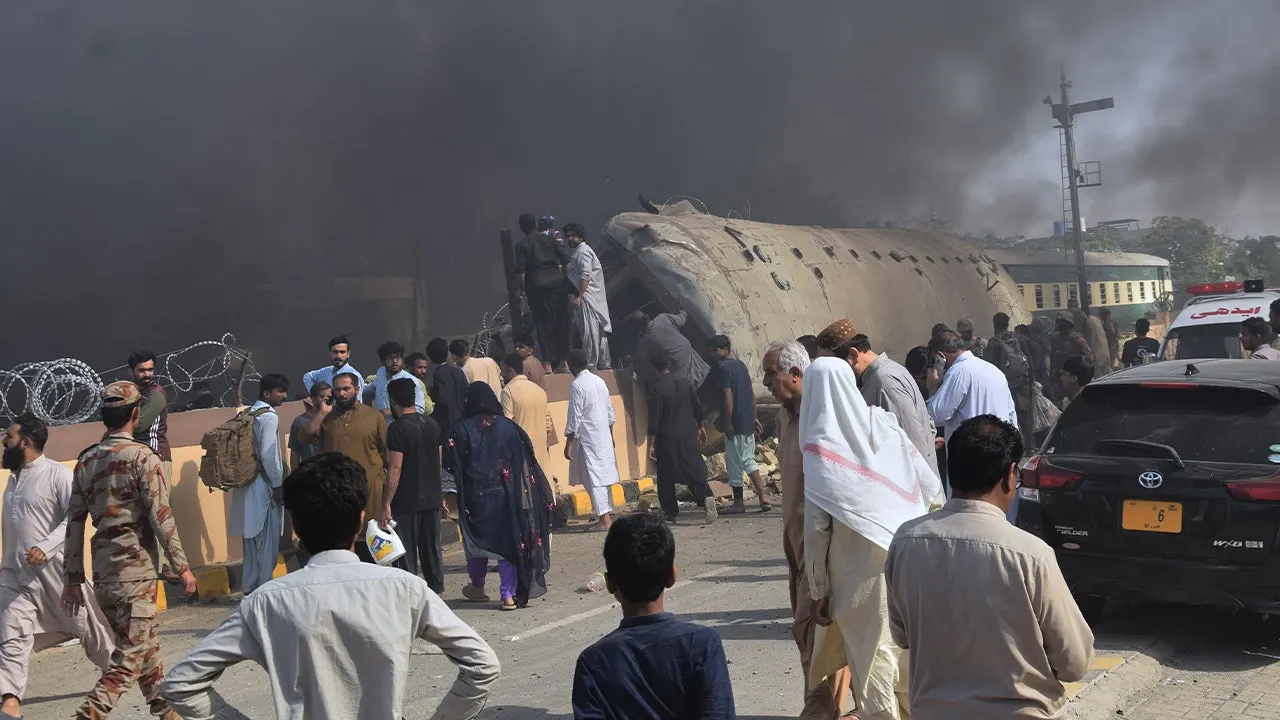
The act of boarding a train is a deeply human experience, one filled with the quiet rustle of luggage, the gentle hum of conversations, and the anticipation of arriving at a destination where loved ones wait with open arms. Yet, on a tragic Sunday morning in Quetta, the provincial capital of southwestern Balochistan, this simple, peaceful routine was shattered in an instant of unimaginable terror and violence. As a passenger train rumbled along its tracks near Chaman Phatak, a suicide bomber detonated an explosives-laden vehicle with catastrophic force, targeting the very heart of a community striving for normalcy. The blast tore through the quiet morning air, sending shockwaves that rattled nearby buildings, shattered windows, and severely damaged more than a dozen parked vehicles in the immediate vicinity. For those inside the train, the world violently turned upside down as two passenger carriages were thrown off the tracks, overturning and instantly bursting into a ferocious, consuming fire that trapped passengers within. Thick, suffocating waves of black smoke billoned into the clear sky, acting as a grim distress signal to a community suddenly plunged into absolute chaos and grief. The immediate human toll of this single, violent flash was devastatingly high: at least 23 people were killed on the spot, and approximately 70 others were left wounded, their bodies torn by shrapnel, bruised by the impact, and severely scarred by the sudden, intense fire. This horrific tragedy serves as a heartbreaking reminder of the fragility of human life in a region where geopolitical instability and persistent conflict continue to cast a dark, unpredictable shadow over the everyday lives of ordinary citizens who desire nothing more than safety.
Behind these stark numbers lie the deeply personal, agonizing stories of ordinary families who had been looking forward to nothing more than reuniting for the sacred Eid holidays, a time traditionally reserved for peace, forgiveness, and joy. The train was carrying a mix of civilian travelers and military personnel, accompanied by their spouses and children, all excited about returning home after spending long months away to celebrate these deeply meaningful holidays. Instead of arriving at their destinations to the warm embrace of their families, many entered local hospitals in Quetta on stretchers, screaming in pain, or completely silent with shock, as medical personnel scrambled to manage the overwhelming influx of casualties. The scene at the region’s medical centers quickly transformed into one of frantic desperation; doctors and nurses worked tirelessly through the night to stabilize victims, reporting that at least twenty of the wounded remained in critical condition, fighting for their very survival against severe burns and critical internal injuries. Emotionally distraught relatives arrived at the hospitals in waves, searching frantically through chaotic corridors, desperately checking victim lists, and hoping against hope to find their spouses, parents, or children alive, with many ultimately receiving the unbearable news of their family members’ demise. This stark contrast between the festive, joyful atmosphere of the upcoming holidays and the heavy, tear-soaked silence of the hospital waiting rooms underscores the profound cruelty of an attack that targeted some of society’s most vulnerable and hopeful moments, leaving a permanent scar on the hearts of the survivors.
To truly grasp the complex roots of such ongoing violence, one must look at the complicated and often painful history of Balochistan, Pakistan’s largest yet most impoverished and restive province. This vast territory is a geographic paradox; it is incredibly rich in natural resources, containing vast reserves of natural gas, minerals, and metals that are highly coveted by international investors, yet its local population remains among the poorest in the country, lacking basic public amenities, clean water, and access to proper education. This glaring economic and social inequality has fueled a low-level but relentless separatist insurgency that has persisted for decades, driving militant groups to demand local autonomy or complete secession from the state of Pakistan, which they accuse of exploiting their lands without returning benefits. Among these groups, the Balochistan Liberation Army (BLA) has emerged as one of the most active and organized, frequently carrying out guerrilla operations, targeted assassinations, and suicide bombings against those they view as representatives of state overreach. In claiming responsibility for this Sunday morning attack, the BLA asserted that their primary target was the security and military personnel traveling aboard the train, utilizing their standard nationalistic packaging to justify the horrific collateral damage of innocent civilian lives. This incident is far from an isolated event; rather, it represents a calculated escalation in the BLA’s strategic focus, which increasingly targets vital regional infrastructure, transportation hubs, and security forces to challenge the state’s sovereignty and disrupt foreign-funded development projects in the province.
Following the devastating explosion, a wave of profound sorrow and intense political condemnation swept across the nation, highlighting the collective grief of a country all too familiar with the pain and trauma of domestic terrorism. Prime Minister Shehbaz Sharif immediately issued a strongly worded statement condemning the blast, describing it as a “cowardly act of terrorism” that aimed to weaken the resolve of Pakistan but would ultimately fail to do so. In his address, he expressed deep, heartfelt condolences to the families forced to bury their loved ones, emphasizing that the entire nation stood in solidarity with the grieving population of Balochistan during this dark hour of national tragedy and unified grief. His feelings were echoed by various federal ministers and community leaders who promised that the perpetrators of this heinous crime would be hunted down and brought to justice with the full force of the law. However, for many citizens who have lived through decades of security crises, these official expressions of grief and promises of justice, while necessary, often feel deeply detached from the exhausting, daily reality of surviving in an unstable environment where safety is never guaranteed. There is a growing, palpable weariness among the public who seek long-term structural changes, sustainable peace initiatives, and real security reforms rather than the repetitive cycle of state condolences, national mourning, and ongoing military operations that have yet to secure lasting safety.
The political fallout of the Quetta bombing also reignited deep-seated geopolitical tensions in South Asia, as regional leaders quickly began pointing fingers across international borders, turning a humanitarian tragedy into a geopolitical blame game. Balochistan Chief Minister Sarfraz Bugti expressed his outrage not only by condemning the local perpetrators but also by laying the blame directly at the feet of foreign adversaries, accusing the BLA of acting as proxies sponsored by India to destabilize Pakistan. Referring to the attackers as “Fitna Al-Hindustan,” or the “evil originating from India,” Bugti asserted that these militants were targeting innocent civilians, women, and children to sow terror, fuel division, and derail regional economic progress. He vowed that the government of Pakistan would show absolutely no leniency to the terrorists, their facilitators, or the masterminds behind the tragedy, promising a relentless campaign until every last militant was eliminated from the soil of Balochistan. These accusations touch upon a historically volatile rivalry; Pakistan and India have been locked in a bitter territorial and political struggle since the partition of 1947, sharing a heavily militarized border and unresolved disputes over the Kashmir region. While India has consistently denied any involvement in sponsoring insurgent activities or supporting militant groups within Balochistan, the rapid assignment of foreign blame by Pakistani officials highlights how quickly localized tragedies are absorbed into the larger, complex framework of regional proxy warfare and national security rhetoric, often obscuring the localized issues at play.
As the dust settles over the charred railway tracks of Quetta, the path forward remains fraught with immense difficulty, highlighting the urgent need for a shift away from relentless conflict and toward genuine regional reconciliation and healing. This latest assault is a grim reminder of similar tragedies, such as the devastating 2024 suicide bombing at another train station in Balochistan that claimed the lives of 26 people, signaling a disturbing trend where public mass transit is increasingly weaponized by militants seeking maximum visibility and impact. The endless cycle of attack, political retaliation, and foreign finger-pointing has left the common people of Balochistan caught in a relentless crossfire, longing for a peaceful future where they can travel, work, and raise their families without the persistent fear of sudden annihilation. Ultimately, the survival and healing of this battered region will not be achieved solely through military dominance or aggressive cross-border rhetoric, but through addressing the deep socio-economic grievances of the Baloch people, investing in their well-being, and building inclusive, peaceful dialogue. Until the root causes of systemic poverty, youth alienation, and regional neglect are sincerely addressed by the state, the ghosts of past violence will continue to haunt the railway lines of southwestern Pakistan. The true tragedy remains that until a lasting peace is built, innocent travelers will continue to pay the ultimate price for geopolitical games, their dreams of returning home to their families cut short by the devastating blast of a suicide bomber.