





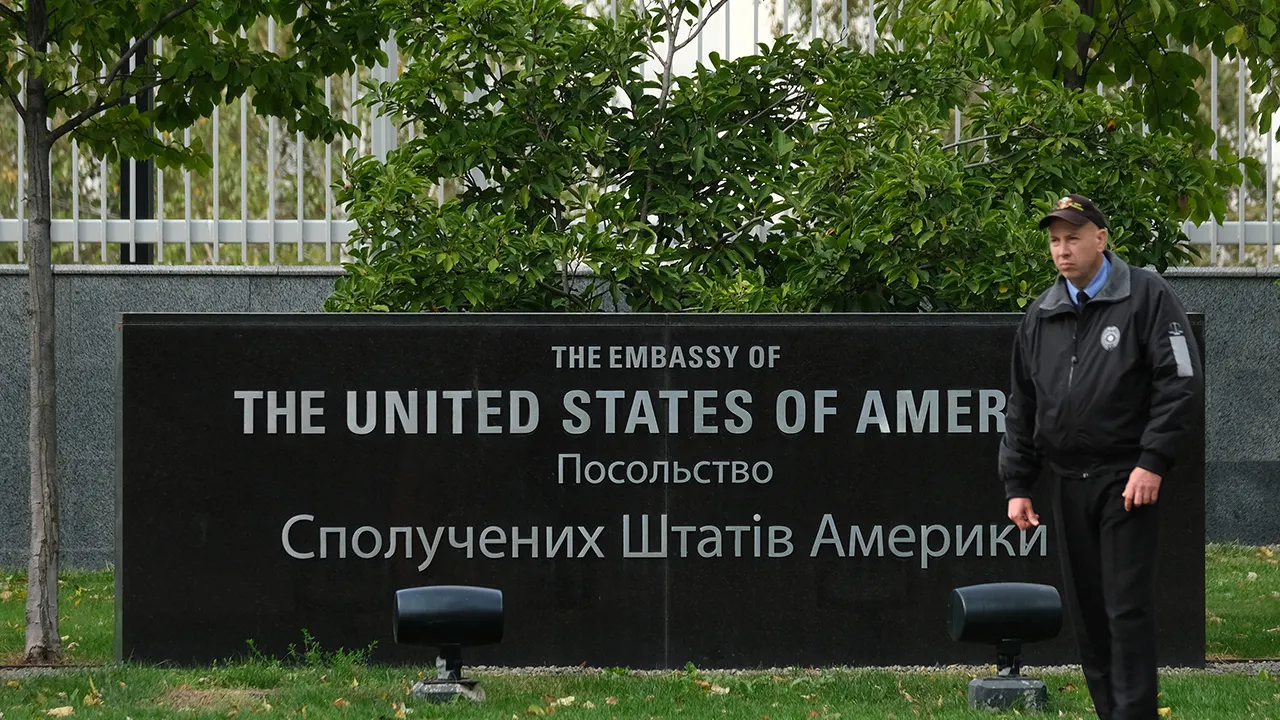
The heavy silence of a cold Saturday in Kyiv was abruptly shattered not by the physically destructive roar of an engine, but by the quiet, persistent chime of mobile phones casting a chilling blue glow across the faces of anxious citizens. The United States Embassy in Ukraine had just issued an urgent, high-stakes security alert, warning that a “potentially significant air attack” could strike the capital city at any moment within the next twenty-four hours. For the millions of ordinary human beings who call Kyiv home, this was not just another routine bureaucratic update or a far-off geopolitical headline to be passively consumed; it was an active, terrifying disruption to the fragile normalcy they sleepwalk through each day. Suddenly, plans for weekend family dinners, quiet walks in local parks, and simple moments of rest were instantly replaced by the exhausting, visceral scramble for survival. Families across the city began executing emergency plans, mapping out routes to the nearest cold concrete subway stations, underground cellars, or reinforced basement shelters that have become their temporary sanctuaries. Grocery store shelves quickly became battlegrounds of anxiety as people stocked up on basic human necessities: gallons of clean drinking water, shelf-stable canned goods, baby formula, and essential medications to sustain them through what could be a prolonged, devastating siege. In this modern age of digital warfare, survival also requires technological preparation; citizens quickly downloaded specialized warning systems like the “Air Raid Siren” or “Alarm App” onto their personal smartphones. These devices, which should be used to share photos of children, message loved ones, or organize community events, are instead transformed into desperate lifelines designed to scream out warnings of incoming metal and fire, emphasizing the profound psychological toll of living in a state of suspended animation, where every second is spent waiting for the heavens to fall.
Adding a layer of deep, existential dread to this imminent threat is the specific technological terror of the weapon looming on the horizon: Russia’s hypersonic Oreshnik missile. Ukrainian President Volodymyr Zelenskyy, pulling from highly coordinated, real-time intelligence shared by Ukrainian, American, and European security networks, confirmed that Moscow is preparing a massive, combined strike utilizing these incredibly advanced intermediate-range weapons. Hypersonic technology represents a terrifying leap forward in the machinery of modern warfare, traveling at multi-hypersonic speeds that can easily slip past conventional air defenses and reduce human reaction windows to mere fractions of a minute. When Zelenskyy grimly wrote on social media that “Russian madness truly knows no bounds,” he was not addressing abstract military theorists or foreign policy experts; he was speaking directly to the terrified hearts of mothers, fathers, and children who must hear the sudden, wailing rise of sirens and make life-or-death decisions in a heartbeat. This kind of calculated warfare is designed not just to destroy physical infrastructure, but to completely fracture the psychological resolve of a nation, forcing citizens to exist in a state of constant, paralyzing vulnerability. The sheer speed of these weapons strips away the natural human illusion of safety, leaving the security of millions of innocent lives balanced precariously on the razor-thin margin of air defense systems and the tireless crews who watch the dark, silent night skies, ready to intercept a threat engineered solely for maximum, catastrophic devastation.
President Zelenskyy’s distress call served as a profound warning to the broader global community, emphasizing that the ongoing tragedy in Ukraine is not an isolated border dispute, but a critical crucible for the future of international human rights and global stability. He argued with fierce conviction that if Vladimir Putin’s regime is permitted to utilize such devastating, state-of-the-art weaponry to terrorize civilian centers without facing massive, immediate consequences, the global rules-based order will be fundamentally broken. Such inaction would send a clear, encouraging signal to other aggressive, authoritarian regimes around the world that raw military power, digital escalation, and technological terror are acceptable and effective tools for achieving geopolitical dominance. Zelenskyy pleaded with international leaders to abandon passive, reactive diplomatic strategies—which only offer condolences long after the missiles have landed and the bodies have been pulled from the rubble—in favor of strong, “preventive” pressure designed to choke off Russia’s capacity to wage war before the destruction escalates further. His words remind us that global peace is not a passive state of being but an active, daily choice that requires courage, unity, and a collective refusal to let the brutal ambitions of a militaristic state redefine the value of human life on a global scale.
The agonizing anticipation of this impending assault is made infinitely more heartbreaking when contrasted against the fleeting, tantalizing taste of peace that occurred just weeks ago during a brief, three-day ceasefire brokered by President Donald Trump. On May 9th, as an unusual, heavy silence temporarily blanketed the war-torn battlefields, Russian President Vladimir Putin himself suggested to members of the press that the devastating, multi-year conflict might finally be drawing to a peaceful close. For seventy-two precious hours, the exhausted populace of Ukraine allowed themselves to breathe a collective sigh of relief, imagining a reality where sleep was uninterrupted by explosions, where children could play in sunny courtyards without watching the skies, and where the grinding anxiety of survival could finally give way to the slow, healing process of rebuilding. Yet, this brief moment of hope proved to be an incredibly cruel illusion, shattered almost as quickly as it had been established as diplomatic talks stalled and military postures hardened once again. The rapid, unceremonious descent back into the threat of total destruction highlights the profound psychological whiplash suffered by millions of civilians who must constantly navigate the emotional extremes of false hope and impending doom, showing how easily human lives are traded as bargaining chips in the cold, calculated game of global power politics.
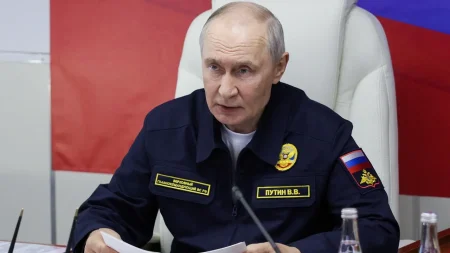
The catalyst for this sudden, terrifying escalation points directly to a deeply contested military incident in the occupied eastern town of Starobilsk, located within the Luhansk region, illustrating how localized conflicts can quickly spiral into threats of massive, widespread devastation. President Putin publicly vowed swift and merciless retaliation against Kyiv, claiming that Ukrainian forces had committed a horrific “terrorist” act by launching a deadly drone strike directly into a college dormitory filled with young people. In sharp contrast, Ukrainian military officials flatly denied targeting civilians, asserting with absolute clarity that their precision forces had successfully target-locked and destroyed a Russian military drone command unit that was actively operating from that specific location. This intense conflict of narratives highlights the tragic, murky reality of modern warfare, where civilian infrastructure and military operations are frequently and dangerously blurred, leaving ordinary people on both sides of the conflict to bear the physical and psychological costs of geopolitical maneuvers. As leaders exchange angry threats of retributive violence, the true human cost of these decisions is borne by the innocent citizens who must now wait in terror for the promised retaliatory strikes to rain down upon their homes.
Despite the dark shadow of impending destruction, the ultimate story emerging from Kyiv is one of profound, unyielding human resilience and a collective refusal to let terror define their future. Zelenskyy closed his national address with a poignant reflection, noting that while Ukraine was entirely willing to participate in a “parade” of peace during the brief ceasefire, Russia was never given permission to indulge in senseless “madness,” reminding the world that the protection of human life must prioritize over the pride of any single aggressor. As the chilly winter night falls over the capital and families huddle together in damp shelters, comforting their frightened children and checking their emergency supplies, their quiet solidarity serves as an inspiring testament to the strength of the human soul when confronted with high-tech hostility. The hope for a true, lasting peace—where the only sirens heard are those of emergency vehicles helping people rather than warning them of incoming hypersonic death—remains the guiding light keeping the community whole. By choosing to protect one another, stay vigilant, and refuse to surrender to fear, the people of Kyiv prove that even the most advanced hypersonic weapons cannot extinguish the fundamental human desire for freedom, dignity, and a peaceful tomorrow.