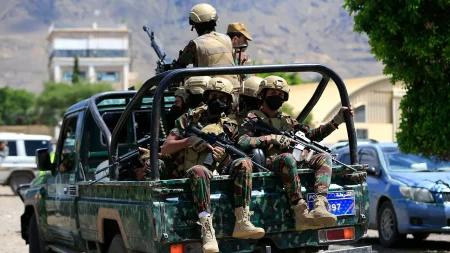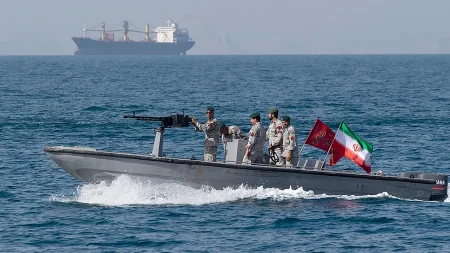







The fragile equilibrium of global trade and maritime security is once again being put to the test along one of the world’s most critical oceanic corridors. The United States and its international allies have issued a stern warning against the newest escalations by the Iranian-backed Houthi militant group in Yemen, who recently announced a sweeping, aggressive blockade on all Israeli-owned or operated vessels navigating the Red Sea. Labeling these commercial operations as “legitimate targets,” Houthi military spokesperson Yahya Saree went public with their intent to seal off the narrow Bab-el-Mandeb Strait. This strategic chokepoint has quietly transformed into the primary avenue for Middle Eastern oil bound for Asian markets, especially as persistent tensions have rendered the traditionally dominant Strait of Hormuz increasingly volatile and difficult to navigate. In response, a spokesperson for the U.S. State Department condemned these actions as unacceptably provocative, emphasizing that such reckless behavior from Iran and its regional proxies does nothing but fuel local conflicts and threaten the intricate, delicate supply chains that keep the global economy afloat. Washington has reiterated its unwavering commitment to preserving the international right to free navigation, working alongside domestic and foreign coalition partners to keep both the Red Sea and the Strait of Hormuz open for peaceful, global commerce. This latest flare-up underlines the human cost of modern geopolitical warfare, where civilian merchant sailors find themselves operating in a highly militarized zone, and everyday consumers worldwide are left to bear the financial burden of disrupted trade routes and skyrocketing shipping insurance costs.
To truly understand this maritime standoff, one must look beyond the immediate tactical maneuvers and analyze the psychological and political motivations driving the “Axis of Resistance,” a network of regional factions supported by Tehran. Edmund Fitton-Brown, a senior fellow at the Foundation for Defense of Democracies and former United Kingdom ambassador to Yemen, suggests that the Houthis’ bold declarations are primarily designed to exploit political sensitivities within Western democracies. By projecting an image of absolute defiance, the group seeks to generate market anxiety, drive up global energy prices, and purposely spark a diplomatic wedge between the United States and its closest Middle Eastern ally, Israel. While the rhetoric is fierce, Fitton-Brown argues that these tactics are unlikely to succeed in their broader strategic goals, provided that the U.S.-led coalition maintains unified communication and avoids falling into retaliatory traps. However, the stakes remain incredibly high; if the Houthis decide to fully commit to escalating their maritime campaign, they risk drawing intense international outrage. Such a scenario would almost certainly trigger devastating, high-impact counterstrikes from U.S. and Israeli forces targeting key military infrastructure in Yemeni hubs like Sana’a and Hodeida. While the allied coalition commands an overwhelming military advantage in any direct confrontation, the threat of a wider, uncontrollable regional conflict looms large, posing a direct danger to millions of innocent civilians trapped in the Middle Eastern and East African geographic crossfire.
As the maritime crisis intensifies on the water, an unexpected stabilizer is stepping forward on land directly across the Bab-el-Mandeb Strait: Ethiopia. As the most populous nation in the Horn of Africa, with a vibrant population exceeding 130 million people, this landlocked country is increasingly viewed by Washington as an indispensable, frontline counterterrorism partner. Despite having no direct coastline of its own, Ethiopia’s sheer demographic weight and geographic positioning make it a natural roadblock against the rapid spread of violent extremism. The nation, which boasts a deep-rooted historical identity and is approximately 60% Christian, occupies a unique space in a region increasingly fractured by religious and ideological strife. Ethiopian researcher Blen M. Diriba, executive director of the Horn Review, characterizes her nation as a vital “keystone state.” In her view, Ethiopia stands directly in the path of a dangerous, expansionist highway of extremist influence that threatens to link hostile destabilizing forces all the way from the Persian Gulf to the highly volatile regions of Sudan. By serving as an anchor of state authority amid a sea of fragile and failing governance, Ethiopia acts as a crucial barrier, ensuring that localized conflicts do not merge into a singular, destabilizing force capable of overwhelming East Africa and permanently shutting down access to the Red Sea.
This vital stabilizing role has become even more urgent as the security dynamics of the Red Sea and the Horn of Africa merge into a single, complex landscape of conflict. According to Diriba, the relentless threats posed by Iran and the Houthis have effectively transformed East Africa into a highly militarized frontline. Iranian strategic influence now radiates outward through interconnected conflict ecosystems, feeding civil instability in Sudan, building pressure points in Eritrea, and exploiting the security vacuum in Somalia. The resulting geopolitical landscape resembles a highly volatile arc of instability that stretches seamlessly from the volatile deserts of the Arabian Peninsula deep into the heart of East Africa. In this highly charged environment, Ethiopia’s domestic security and international relevance are deeply intertwined. Whether dealing with the ongoing fallout of maritime blockades in the Red Sea or containing the persistent, bloody insurgency of the al-Shabab terrorist network in Somalia, Ethiopia functions as a massive, indispensable inland safety buffer. For the United States and its Western allies, the preservation of Ethiopia’s internal stability is not just a diplomatic preference—it is a fundamental security imperative that directly determines whether these regional threats are successfully contained or allowed to spill across international borders.
Yet, Ethiopia’s path to stability is far from simple, forcing the nation to walk a incredibly complex diplomatic tightrope between global superpowers and regional adversaries. While maintaining its deep counterterrorism alliance with the United States, Addis Ababa has simultaneously cultivated pragmatic relations with Iran, illustrating the messy realities of survival in a fragmented global order. Fitton-Brown notes that Ethiopia has historically been open to receiving practical support from Tehran, which provided crucial military assistance and advanced drone technology to the Ethiopian government during the devastating domestic Tigray War. This tactical cooperation helped lay the groundwork for a broader memorandum of understanding, allowing Iran to gently expand its diplomatic footprint in the region while providing Ethiopia with the specialized military, police, and intelligence resources needed to manage its own complex ethnic insurgencies. Diriba clarifies, however, that Ethiopia’s interactions with Iran should not be misconstrued as an ideological alignment or shared values. Instead, it represents a highly calculated strategy of “multi-alignment”—a realistic diplomatic approach that allows the government to keep communication channels open with all major regional actors, selectively cooperating where necessary to preserve national security while firmly keeping its premier, long-term strategic partnership with the United States at the absolute center of its foreign policy.
This fluid, multi-dimensional diplomacy is vividly reflected in the way both Washington and Addis Ababa navigate highly sensitive regional issues, such as their shared, quiet security cooperation in the semi-autonomous territory of Somaliland. While neither country has taken the politically explosive step of officially recognizing Somaliland as an independent nation, both have successfully used the territory’s relative stability to enhance their counterterrorism operations and secure strategic footholds near the busy Gulf of Aden. This quiet collaboration stands as a testament to the highly pragmatic, results-oriented nature of modern international relations, where formal diplomatic status is often bypassed in favor of direct, actionable security benefits. As the United States and its allies work to counter Houthi aggression on the high seas, the quiet, ongoing stabilization efforts occurring on the African mainland remain just as vital to the long-term safety of the region. The silence from official defense departments regarding these strategic alignments only highlights the delicate and high-stakes nature of these negotiations. Ultimately, the defense of global shipping lanes in the Red Sea is not merely a battle fought with naval destroyers and missile defense systems; it is an ongoing, deeply complex human endeavor reliant on building resilient partnerships, supporting stabilizing anchored nations like Ethiopia, and ensuring that the vital arteries of global life and trade remain open to all.