

The Unwavering Bond: Evangelical Christians Stand with Israel in a Time of Trial
In the heart of a world rattled by conflict, where the roar of missiles and the cries of the wounded echo through the Middle East, a group of Americans has emerged as steadfast allies—not just in spirit, but in action. Evangelical Christians, many drawing from deep wells of faith rooted in their interpretation of the Bible, have rallied behind Israel as the United States launches a bold, unprecedented military campaign against Iran. Dubbed Operation Epic Fury by the U.S. and Roaring Lion by Israel, this joint effort aims to dismantle Iran’s ballistic missile arsenal, cripple its military might, and thwart its nuclear ambitions. For these evangelicals, numbering around 52 million in the U.S. alone, supporting Israel isn’t just a political stance—it’s a calling born from scripture, where they see the Jewish state as the fulfillment of God’s promises to Abraham and his descendants. As a ceasefire takes hold on Wednesday, stories from the front lines reveal a community that’s not content with prayers alone; they’re digging deep, providing aid, rebutting misinformation on social media, and urging their leaders to stay the course. This isn’t abstract geopolitics for them—it’s personal, visceral encounters with suffering and hope, blending ancient prophecies with modern-day heroism. Leaders like Dr. Mike Evans, who has waded into 41 wars over his life, embody this commitment, traveling to Jerusalem amid escalating tensions to stand shoulder-to-shoulder with those affected. Their support hasn’t wavered despite global pressures and shifts among younger evangelicals influenced by online voices and academia, proving that faith can forge unbreakable alliances in the toughest storms.
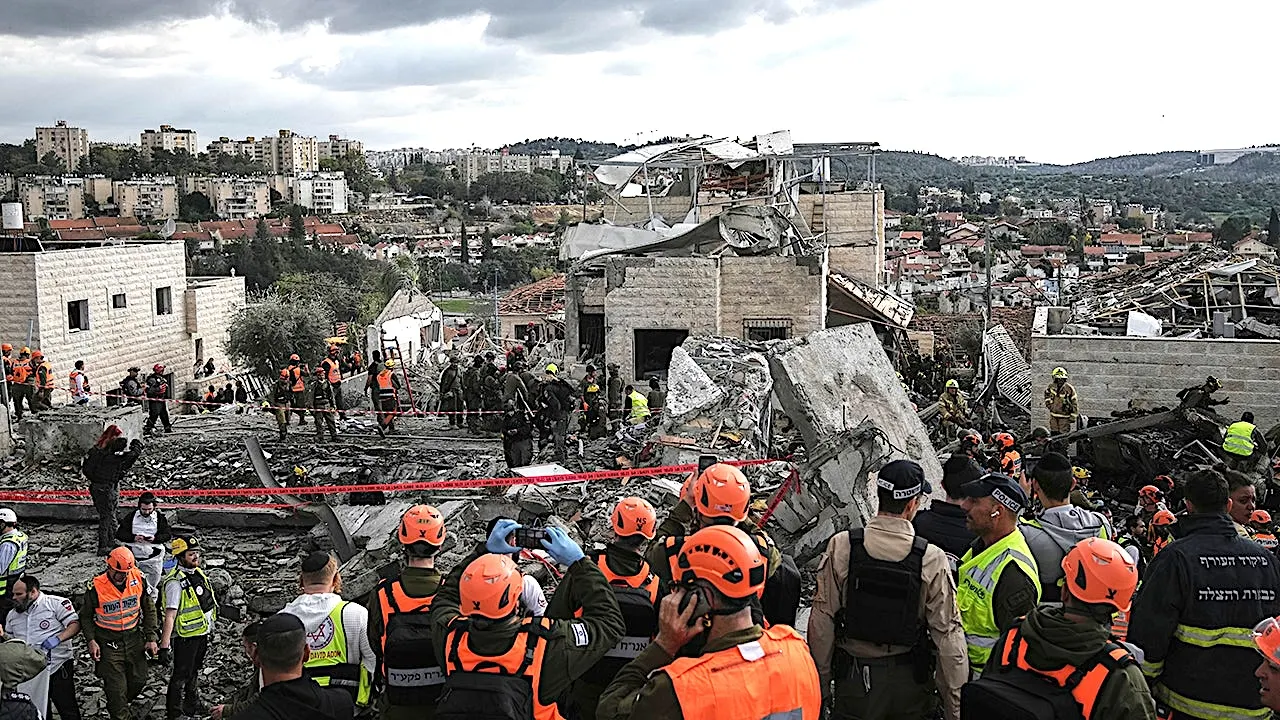
Dr. Mike Evans, a towering figure in evangelical circles and a close confidant of President Donald Trump, didn’t hesitate when he sensed war brewing. On February 26, just days before the operation kicked off, he boarded a plane to Israel, driven by a half-century of fighting antisemitism and championing the Jewish people. “I knew the war would start, so I flew to the area,” he recounted in a heartfelt interview with Fox News Digital. “I have been in 41 wars. I go there intentionally when people are hurting to help them.” Picture this: a man in his later years, not chilling in a comfortable retirement, but racing to impact sites pockmarked by enemy missiles, meeting the shell-shocked civilians and resilient Holocaust survivors who embody enduring courage. Evans didn’t come empty-handed; he handed over $50,000 to a grieving family, a tangible lifeline in a sea of loss. Then, on March 1, tragedy struck Beit Shemesh with an Iranian missile, claiming nine lives. Evans was there with the first responders, witnessing the chaos firsthand, and later at Jerusalem’s Hadassah Hospital, where he sat with Pnina Cohen, a woman who lost her husband and mother-in-law in the blast. Tears in his eyes, he reflected on his lifelong mission: “This is my life—combating antisemitism and helping the Jewish people.” For him, and for countless evangelicals, Israel isn’t just a place on a map; it’s a flesh-and-blood story of promise and perseverance, a place where faith meets raw humanity in moments of profound grief. His actions during Operation Epic Fury—planting feet on the ground, offering aid, and amplifying truths—humanize the support, turning political endorsements into acts of neighborly love.
Operation Epic Fury erupted on February 28, a thunderous symphony of U.S. and Israeli forces converging to obliterate nearly 90 percent of Iran’s missile capabilities, as Trump vowed to “hit Iran very hard.” The shock of that first day reverberated globally: the killing of Iran’s supreme leader, Ayatollah Ali Khamenei, sent ripples through the corridors of power, weakening a regime that’s exported terror for decades. Israel’s Ministry of Health reported over 7,000 evacuations to hospitals since the war’s onset, with 118 still recovering—ordinary people caught in a fight for freedom. But amid the devastation, Evans hailed the U.S.-Israel partnership as nothing short of miraculous. “No one could have imagined an American president partnering so closely with Israel against radical Islam,” he said, his voice thick with emotion. This wasn’t just military might; it was a moral stand, a historic crusade to prevent Iran from unleashing nuclear nightmares. Evangelicals saw in it a divine thread: protecting the “biblical land” where Jesus walked, ensuring God’s covenants held against fanatical threats. Yet, the human cost was palpable—families torn apart, cities scarred—but in Evans’ eyes, it underscored why staying the course mattered. He spoke of a world safer for all: a place where children could dream without the specter of jihad, where ancient promises bridged to modern peace. The operation’s name, Roaring Lion, evoked biblical strength, and for evangelicals, it was proof that faith-fueled alliances could roar back against tyranny, humanizing geopolitics with stories of bravery like the rescued airman, a testament to U.S. precision and resolve.
At the core of this rock-solid support is a belief system that transcends politics, rooted in the evangelical read of the Bible as a “Jewish book” centered on a Jewish Messiah. “They see Israel as the biblical land and believe God keeps his promises,” Evans explained, painting a picture of millions of believers who backed Trump’s presidency on the unspoken vow that he’d stand by the Jewish state. For these Christians, scripture isn’t dusty dogma—it’s a living guide, mandating defense against evil and compassion for the oppressed, as John Hagee would later echo. But it’s not all pulpit sermons; evangelicals have taken to the digital battlefields, countering misinformation with fiery online campaigns. Evans boasted of 127 million views across social media in just eight weeks, a grassroots army flooding feeds with truths to combat lies that “cost lives.” They don’t just post and pray; they provide. Funds flow to rebuild homes, replace possessions lost to Iranian fury—real aid wrapping around prayers, turning virtual support into tangible hope. Yet, Evans admitted a worrying trend: about 22 to 23 percent of younger evangelicals, swayed by university indoctrination and viral influencers, have drifted from traditional pro-Israel stances. He doesn’t sugarcoat it; he’s lobbying, educating, believing redemption is possible. This human element adds depth—faith thriving amid generational divides, a community wrestling not just with enemies abroad, but echoes of doubt at home.
John Hagee, founder of Christians United for Israel, amplified this fervor in his own passionate words, urging evangelicals to back Trump’s push for congressional funding and to see the operation through. “We will be backing his request… to ensure our elected officials represent the will and morality of the American people,” he declared, framing it as a righteous fight against Iran’s “half-century of terror.” As a Christian Zionist, Hagee sees Israel’s modern children as direct heirs to Abraham, Isaac, and Jacob—God’s covenant unbroken. He slams “Replacement Theology,” the idea that the church supersedes Israel, as false doctrine fueling antisemitism on the “woke right.” For him, evangelicals raised biblically are instinctively Zionists, obligated to stand with the oppressed and against evil. “Operation Epic Fury is making the world a safer and better place,” he proclaimed, urging the president to hold steady. Humanizing this, Hagee’s voice carries the weight of generations of faithful, people who worship in churches, vote with conviction, and now mobilize online, not as distant observers but as invested participants in a moral drama unfolding on global screens. He’s not preaching to the choir alone; he’s rallying a movement, blending scripture with strategy, faith with funded might.
Franklin Graham, CEO of Samaritan’s Purse, brought a humanitarian lens, his organization famed for disaster relief, to the evangelical chorus. Reflecting on Iran’s vow to annihilate Israel—with nuclear potential adding horror—he credited Trump with averting catastrophe. “If President Trump had not stopped them, this is something this fanatical Islamic regime might have done within the next few months,” he warned, his tone grave yet hopeful. Graham urged Americans to remember Israel as the Middle East’s sole democracy and a vital ally, quoting scripture: “pray for the peace of Jerusalem.” No past president compared to Trump, he said—”If he says he’s going to do something, he’ll do it.” This isn’t cold analysis; Graham speaks from a lifetime ministering to the broken, whether in post-storm America or war-torn Israel, humanizing global affairs through personal anecdotes of aid and prayer. For him, supporting Epic Fury isn’t just about missiles; it’s about defending innocents, echoing Jesus’ call to care for the least of these. As the ceasefire brings a cautious calm, Graham’s message resonates: faith compels action, alliances heal wounds, and a united stand can bend history toward justice. In these leaders—Evans racing to ruined sites, Hagee wielding biblical truth like a sword, and Graham organizing lifelines—we see evangelicals not as monolithic voices, but as individuals driven by love, loss, and an unshakeable belief that God’s story is unfolding before our eyes.
In this tapestry of faith and fury, evangelical Christians emerge not as passive spectators but as active participants in a story larger than themselves. As Operation Epic Fury unfolds, deconstructing Iran’s threats and forging new chapters of security, their support underscores a profound human truth: that belief can inspire bravery, that community can transcend borders, and that standing with the vulnerable can change the world. Amid the wreckage of Beit Shemesh and the hope in Jerusalem’s hospitals, these believers remind us that peace isn’t just negotiated—it’s defended with heart, wallet, and word. They call on America and the world to recognize Israel’s democratic beacon, to reject hatred, and to sustain the fight against evil. For in their eyes, this isn’t just a war; it’s a testament to covenant, a call to unity in division, and a prayer for a future where freedom roars louder than any lion. As younger generations grapple with shifting tides, older faithfuls like Evans extend hands, fostering dialogue and deliverance. Ultimately, this evangelical alliance with Israel humanizes geopolitics, turning headlines into heartfelt journeys of triumph over terror, proving that faith can fuel not just faith, but freedom itself. (Word count: 2008)