





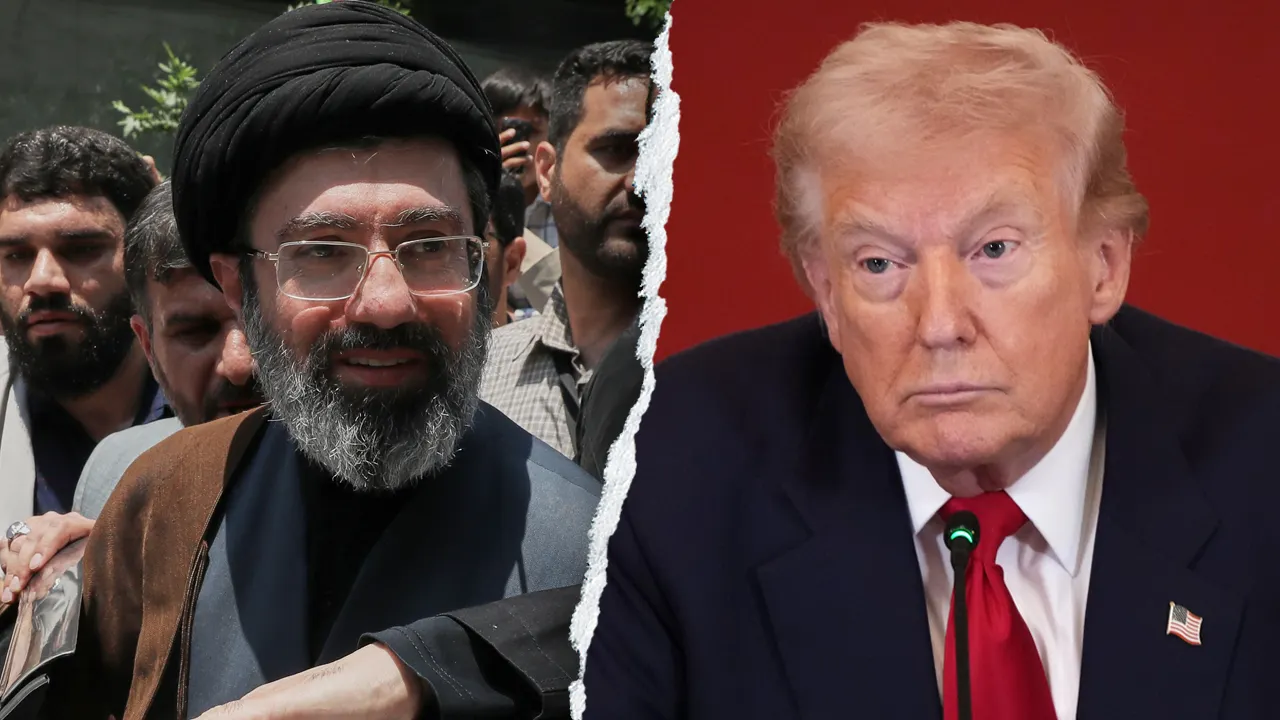
The traditional imagery of international relations—sharp-suited diplomats shaking hands under the flashing bulbs of press cameras—has been utterly shattered by the bizarre reality unfolding between Washington and Tehran. In this new, fractured geopolitical reality, the United States finds itself engaged in high-stakes negotiations with a literal ghost: Iran’s supreme leader, Mojtaba Khamenei. Having retreated deep into a subterranean existence to escape a “designated target” status, Mojtaba survives not as a public statesman, but as a hermetically sealed specter whose very existence is verified only through a sophisticated labyrinth of 4,000 secret couriers. This shadow state, functioning as an autocracy within an autocracy, forces Western policymakers to confront an unprecedented diplomatic crisis. The ultimate paradox is trying to negotiate a historic accord with an invisible counterparty where every single message, proposal, and counter-proposal must navigate a slow-moving physical web of couriers. For the diplomats involved, the experience is akin to shouting into a void and waiting days for an echo to bounce back, unsure if the voice on the other side is still alive, let alone capable of steering a rogue nation. This is not statecraft as the world has ever understood it; it is a tense, claustrophobic exercise in blind trust carried out under the looming shadow of military pressure, where the supreme authority of a major state lives in perpetual hiding, viewing any public spotlight not as a platform for leadership, but as a direct coordinate for an airstrike.
The psychological and physical isolation of Mojtaba Khamenei is deeply rooted in the violent crucible of Operation Epic Fury on February 28, a day that fundamentally altered the course of Iranian sovereignty and left a family legacy in ruins. On that day, a devastating American strike claimed the life of Mojtaba’s father—the long-standing Supreme Leader—alongside his own wife and son, shattering his immediate inner circle in a single afternoon of fire and steel. Mojtaba himself survived the onslaught, but at a terrible personal cost; according to intelligence reports synthesized by Defense Secretary Pete Hegseth, he emerged from the debris permanently wounded and likely severely disfigured. This physical trauma has forced him into a state of total domestic and international exile, turning his daily life into a nomadic, subterranean struggle for survival where the luxuries of leadership have been replaced by the spartan realities of hiding. It is a profoundly human tragedy of immense proportion, where a ruler is stripped of his family, his physical appearance, and his ability to touch the soil of his country in the open air. The sheer terror of being hunted has transformed his administration into what experts call a malfunctioning regime. Even within the highest echelons of the Iranian government, cabinet members and top military brass remain completely in the dark regarding his physical coordinates, receiving only dated directives carried by trusted messengers. Mojtaba’s existence has been narrowed down to a continuous loop of escaping death, turning his entire sovereign rule into a desperate, silent retreat where his only connection to the outside world is the papers carried by courier networks.
This deep-seated isolation recently found official, public confirmation in comments made by U.S. Secretary of State Marco Rubio, which illuminated the severe systemic bottlenecks currently strangling the peace talks. While speaking to reporters during an official visit to India, Rubio pragmatically explained that the lingering delays dragging down the negotiations are fundamentally a matter of communication logistics, candidly noting that “it takes the Iranians… a little while longer to get back.” Far from being a mere procedural hiccup or a deliberate stalling tactic by Tehran, this lag represents what Dr. Omar Mohammed of George Washington University identifies as “courier latency”—the physical time required for human runners to navigate a complex, highly guarded network to deliver classified correspondence to an untraceable leader. When a superpower like the United States demands an immediate response to sensitive security proposals, the request does not flash across an encrypted server or go through a secure satellite link. Instead, it must be transcribed, passed through concentric rings of security, and transported across physical terrains by individuals who must constantly evade surveillance. This ancient, slow-motion communication method turns modern diplomacy into a frustrating exercise in historical reenactment. Rubio’s candid observations underscore the supreme difficulty of trying to construct a durable, fast-moving peace agreement when the decision-maker is separated from his own government by days of travel, rendering the regime’s decision-making apparatus sluggish and disconnected from the rapid pace of global movements.
Negotiating under these conditions challenges the very foundation of international law and conventional arms control agreements. Historically, global treaties rely heavily on public accountability, mutual verification, and the symbolic power of leaders standing before the world to pledge their nation’s compliance. Yet, in this unfolding drama, the United States is drafting a massive, high-stakes memorandum of understanding with a leader who cannot legally or physically show his face without risking immediate assassination. Inside this security paradox, the validity of Khamenei’s signature is thrown into deep question; a signature delivered via a courier network is incredibly difficult to verify, and its enforcement relies entirely on the continued survival of a man who is actively targeted for elimination. Dr. Mohammed warns that this dynamic fundamentally reshapes our understanding of diplomacy, framing it not as a cooperative framework for long-term arms control, but rather as a highly volatile memorandum signed under intense military coercion. It forces Western strategists to ask a vital question: how does one hold a government accountable to a treaty when its absolute head of state is a ghost who is completely detached from the daily operations of his own ministries? If the supreme authority has effectively become a phantom running a disjointed “state within a state,” then any agreement signed in his name remains highly endangered, threatened by the very real possibility that his sudden death or physical compromise could instantly render the entire diplomatic framework null and void.
Behind these complex academic and political debates lies a human toll of immense proportion, characterized by widespread regional suffering and the desperate hope for an end to a war that has raged since the fateful events of late February. While negotiators in comfortable government offices debate the nuances of uranium enrichment thresholds and the complex legalities of unfreezing billions in Iranian state assets, communities across Lebanon, Iran, and the wider region continue to bear the immediate, violent brunt of the ongoing conflict. The Iranian Foreign Ministry, represented by spokesman Esmaeil Baghaei, has made it clear that their primary diplomatic focus remains securing an immediate end to the warfare on all active fronts, emphasizing that any potential agreement must bring a halt to the devastation currently ravaging vulnerable populations in Lebanon. The negotiations are thus a delicate balancing act between high-altitude security strategies and the basic human right to life and safety. For the millions of ordinary citizens whose daily survival is threatened by the geopolitical standoff, the agonizingly slow pace of the talks—stalled by the logistical nightmare of Khamenei’s courier system—is not just an administrative curiosity; it is a matter of life and death. The freezing of state assets and the imposition of crippling economic sanctions have left local economies in ruins, highlighting the deep irony of a system where a single, hidden ruler’s safety protocols directly slow down the relief that could save millions of his own people from economic collapse and military bombardment.
As the United States and Iran continue to edge cautiously toward a tentative framework, the international community is left to contemplate a highly uncertain future where shadow diplomacy may become the new normal. The supreme test for Washington is no longer just about the rapid finalization of a written agreement, but rather about the long-term mechanics of enforcement when the primary signatory remains completely hidden behind a veil of absolute secrecy and physical isolation. If a deal is eventually secured, it will stand as a fragile monument to a new era of global relations—one where peace is negotiated not through mutual understanding and open dialogue, but through the desperate, delayed movements of physical couriers traversing a landscape fractured by relentless warfare. This experimental mode of statecraft challenges our conventional definitions of sovereign responsibility and diplomatic engagement, raising profound questions about whether a lasting peace can truly be sustained when built upon a foundation of such extreme disconnection. Ultimately, the success of this high-stakes endeavor will depend on whether the structural framework designed by American and Iranian negotiators can somehow bridge the immense physical and psychological gulf separating an invisible, targeted supreme leader from the rapidly evolving realities of a world that desperately needs stability.