


Paragraph 1: The Sudden Fall into Darkness
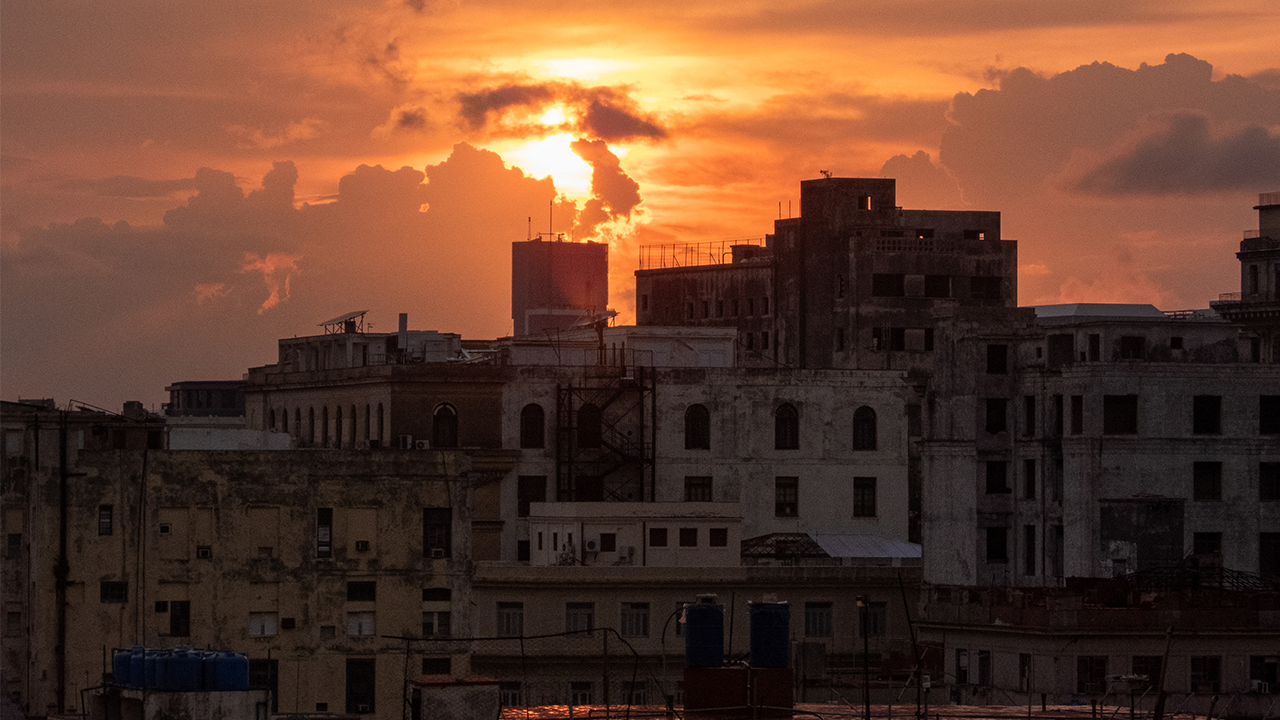
The darkness fell over Cuba not as a gradual sunset, but as a violent, mechanical gasp. On Friday, the entire nation was plunged into a total blackout, a comprehensive failure of the electrical grid that silenced the hum of air conditioners, froze the flicker of televisions, and rendered millions of smartphones into useless, glowing bricks of dead glass. The U.S. Embassy in Havana, the watchful eyes of American interests on the island, issued an urgent alert confirming that the collapse was complete, a direct result of the catastrophic failure of Cuba’s national power system. For the average Cuban, the meaning was immediate and visceral: the apartment turned into a sweltering oven within minutes, the refrigerator began to sweat, and the absolute silence of a disconnected world settled in. The embassy’s advisory, aimed at U.S. citizens, was a stark warning—plan accordingly—but for Cubans, there is no “plan” for such a comprehensive collapse. They are the ones trapped in the sticky heat of Havana’s colonial streets or the dense high-rises of Santiago, staring at the pitch black expanse of a city that has lost its pulse. While official state media lapsed into the usual vague rhetoric, claiming an investigation was underway with no timeline for restoration, the embassy grounded the situation in irrefutable reality: communication is down, cell towers are dead, and the internet has vanished. Consider the tired mother who returns home from a long shift at a state-run clinic only to find the elevator dead and eleven flights of stairs stretching before her. Imagine the elderly diabetic who cannot power his small refrigerator, watching his insulin warm to the point of uselessness. The darkness is not romantic; it is a cruel interference in the simple, sacred routine of life. It separates neighbors, isolates the sick, and turns basic chores into exhausting marathons. This is the true face of Friday’s collapse: not a single headline, but a thousand private emergencies unfolding simultaneously, hidden by the absence of any light or signal to report them.
Paragraph 2: An Increasingly Unstable Foundation
Beyond the shock of Friday’s specific event lies the grim, grinding reality of an infrastructure in its final death throes. The U.S. Embassy’s characterization of the grid as “increasingly unstable” is almost an understatement; it is a fragile, patched-together web of aging Soviet-era generators, decaying transmission lines, and a chronic lack of maintenance that has been eroding for decades. The embassy added that the electrical system remains vulnerable, and additional regular outages have been occurring more frequently and for longer periods. Even in the absence of a total national collapse, scheduled power cuts occur daily, and unscheduled outages persist with alarming regularity across the island. For a nation of over 11 million, this has morphed into a permanent state of high alert. Families must carefully ration every hour of electricity they are given, timing the washing of clothes to the brief window of power, boiling water in the morning before the grid vanishes. The psychological toll is immense; anxiety hangs in the air like the tropical humidity. Parents cannot guarantee that their children can complete homework, students cannot access online classes, and the sick cannot power ventilators or refrigerate insulin. The nation has been forced to adapt to a medieval pace of life within a modern geopolitical context. The fact that the last national outage occurred just last month, and that this one marks the seventh this year, underscores a terrifying acceleration of decay. What was once a rare, dramatic failure has now become a grim monthly ritual, a lottery where the entire country can lose at any moment. The scheduled cuts are announced, though often with little lead time, turning daily life into a game of chance: will the power last through dinner? Will the morning shower have hot water? This constant uncertainty erodes the mental resilience of a population already battered by shortages, creating a chronic state of low-grade panic that simmers beneath the surface of everyday interactions.
Paragraph 3: The Root Causes of Systemic Collapse
The root causes of this systemic collapse are as complex as they are devastating. The Cuban government cites the U.S. economic blockade—what Washington calls an embargo—as the primary suppressor of its ability to secure fuel and spare parts. It is a valid point masked by a broader reality. For decades, Cuba has relied on subsidized oil from Venezuela, but that lifeline has dried to a trickle as Venezuela itself faces a catastrophic economic depression. Lacking hard currency due to the embargo and a stagnant command economy, Cuba simply cannot purchase crude oil on the open market at current prices. Furthermore, the country’s power plants themselves are relics of a bygone era—steel giants bolted together in the 1970s or 80s, reliant on components that are no longer manufactured anywhere on Earth. They break down constantly, and the engineering expertise to fix them has either fled the island or aged into retirement. The energy ministry’s terse social media post confirming the outage is a testament to their helplessness; they have no magic solution to summon a grid back to life without fuel and equipment. Even when power is present, it is often the grim result of burning expensive diesel obtained through murky intermediary deals, a temporary patch on a leaky dam. For the Cuban engineer, this is akin to watching a beloved car rust away in the yard—you know every bolt, you have the electrician’s tape and prayer, but you lack the tires, the battery, and the gas, and the blockade means you cannot walk to the store to buy alternatives. The crumbling infrastructure is not just a matter of old wires; it is a reflection of a decades-long inability to invest in the future, a stagnation that leaves the entire nation vulnerable to the whims of a single failing generator or a missed fuel shipment. The investigation announced by Cuban authorities will likely find the obvious culprits—overloaded circuits, transformer failures—but it cannot address the deep, structural starvation of resources that makes such failures inevitable.
Paragraph 4: Daily Life Under the Rolling Blackouts
The human cost of these rolling blackouts and total outages cannot be overstated; it is an invisible war waged against the basic needs of a population. When the power cuts are scheduled, which happens daily, neighborhoods become ghost towns as businesses shutter their metal gates, unable to operate cash registers or keep refrigerated goods cold. Small business owners, the backbone of the struggling private sector, watch their inventory of thawing chicken or spoiled milk in despair, their life savings literally dissolving into a puddle on the counter. Bars and restaurants that once hummed with tourists now sit in sultry darkness, their owners lighting candles that no longer feel romantic but merely symbolic of a last-ditch effort to keep overhead low. On the streets, people gather in swarms around pockets of light—a bakery running a generator, a neighbor with a solar panel—not for socializing but for survival, to charge a single phone that will allow one family member to receive a call about a job, a medical appointment, or a message from a relative in Miami. The unscheduled outages, however, are the cruelest, cutting power in the middle of a surgical procedure, causing traffic lights to die and turning intersections into chaotic free-for-alls, or freezing a grandmother’s oxygen concentrator mid-cycle. In the absence of reliable electricity, the nation has reverted to a barter of favors and a dependency on the black market for diesel fuel, where a single gallon can cost a week’s salary. The heat is the constant companion—a wet, suffocating blanket that accelerates restlessness and exhaustion, making sleep impossible and tempers flaring. Parents pour tepid water over their babies’ heads to stave off heatstroke, and the elderly, the most vulnerable, are disproportionately affected by the lack of cooling and medical support. The source article rightly notes that even when there isn’t a national outage, millions are still without power for hours at a time, meaning that the daily grind of cooking on charcoal stoves, using flashlights to navigate hallways, and preserving perishables in coolers is simply the new normal.
Paragraph 5: The Political and Geopolitical Shadow
This crisis does not exist in a political vacuum; it is the ticking clock of a nation’s geopolitical isolation and economic freefall. As reported, Cuba’s economic freefall is hiding a national security threat just miles from Florida, a statement that hints at the broader implications of a failed state on America’s doorstep. The U.S. embargo, in place for over six decades, aims to force regime change by choking the economy, yet it simultaneously punishes the Cuban people, who have no control over their leadership. The embassy’s advisory serves as a stark reminder to U.S. citizens planning to travel: the romanticized images of classic cars and vintage architecture are starkly contrasted by the grim reality of a nation without stable energy. The psychological strain is compounded by the feeling of being abandoned by the international community, aside from political theater in the United Nations. For the older generation, they remember the chaos of the Special Period in the 1990s after the Soviet Union fell, remembering the emptiness of the markets and the darkness. But now, the collapse feels different—more systemic, more permanent. The nation is not just starving for food; it is starving for the very energy that powers modern civilization. The left-wing influencer downplaying the blackouts as “people are partying” is a grotesque distortion of the truth. When the lights go out, there is no party—there is the silent, shared anxiety of a society watching its own connective tissue sever. The political message from Havana is one of resilience and blame directed outward at Washington, but the lived experience is one of profound internal isolation. Being cut off from the internet, as the embassy warned, is the final stroke—Cubans are not just physically in the dark but digitally amputated from the global community, unable to share their story, seek help, or simply escape into the distraction of the digital world. This abandonment breeds a deep, simmering desperation that transcends mere annoyance; it is a gnawing sense of uncertainty about whether tomorrow will bring water, light, or a semblance of safety.
Paragraph 6: An Uncertain Future and an Enduring Spirit
Looking forward, the timeline for restoration remains a ghost—a nebulous promise from a government that has consistently seen its promises evaporate with each passing day. Cuban regime media states that the reason for the collapse is under investigation, but for a nation where the history of investigation is a bureaucratic shuffle lacking transparency, this provides no comfort. The U.S. Embassy’s statement that the electrical system “remains vulnerable” and that “additional regular outages” will occur “more frequently and for longer periods” is a foreboding forecast. It signals that Friday’s collapse is not an anomaly but a harbinger of a permanent state of decay. The Cuban people, however, have an incredible capacity for survival, a resilience forged in the crucible of adversity. As the lights flicker back on in the coming days, perhaps for a few hours, they will go about their routines—queuing for bread, working in fields, or teaching in unlit classrooms—driven by a stubborn will to live. Yet, this resilience is being severely tested. The emotional exhaustion is visible in the tired eyes of taxi drivers who can’t afford gas, in the stoic faces of nurses carrying out procedures by flashlight, and in the quiet tears of a mother washing laundry by hand in a bucket. The blackout is more than an engineering failure; it is a daily referendum on the viability of a nation, a constant reminder of the chasm between the political rhetoric of sovereignty and the physical reality of dependence. As the sun rises over the Malecón in Havana, the light will reveal a beautiful, crumbling city, its grandeur overshadowed by the specter of darkness. The world watches, but for the Cuban people, Friday’s collapse was just another night in a long, exhausting war against entropy. They wait, not for a miracle, but for the next few precious hours of electricity that might allow them to feel, once again, like they belong to the twenty-first century. The uncertainty of when—or if—the grid will stabilize hangs over every family gathering, every business transaction, and every moment of rest, yet the indomitable spirit of the people endures, illuminating the darkest corners with a quiet, unyielding determination to survive.