


In the quiet, unassuming community of Schwanheim, a stone’s throw from the roaring runways of Frankfurt Airport, a tragedy has unfolded that has left residents shaken and health officials scrambling for answers. Three people have now died after contracting malaria, a tropical disease that most Germans would never expect to encounter on their own soil. The first death came in August, when an airport worker lost their life to the illness despite never having traveled to a region where malaria is common. Now, a third person—a resident of Schwanheim—has also died, and several others have been rushed to hospitals amid a rare and deeply unsettling outbreak. According to reports from The Sun, the infections are believed to have been caused by an infected mosquito that was transported aboard a flight into Germany, hitching a ride across continents in the warm, dark confines of an airplane cabin or luggage hold. The news has sent ripples of concern through the Frankfurt area, because those affected did not journey to a malaria-endemic country. They simply lived their lives near an international airport, and that proximity proved enough to expose them to a potentially fatal parasite.
The deaths have been traced back to a specific period in early July, when the first cases began to emerge. Germany’s Robert Koch Institute, the federal agency responsible for disease control and public health, confirmed that airport workers became ill after contracting malaria between July 4 and July 6. In total, six employees at Frankfurt Airport contracted the disease, according to Fraport, the company that operates the airport. What is perhaps most alarming is that the infection was caused by Plasmodium falciparum, the deadliest strain of the malaria parasite. This particular species is known for its rapid multiplication in the human bloodstream and its ability to cause severe complications, including cerebral malaria, organ failure, and death, if not treated promptly. City officials noted that two of the infected individuals had neither traveled to a malaria-endemic region nor worked at the airport itself, which made the outbreak all the more mysterious and terrifying. The second non-airport employee to fall ill was a resident of Schwanheim, a suburban community located near the airport. Health authorities were initially baffled: how could people with no exposure to tropical regions contract a mosquito-borne disease that is typically found in sub-Saharan Africa and parts of South Asia? The answer lies in a phenomenon known as “airport malaria,” a rare but documented occurrence in which an infected mosquito is inadvertently transported aboard an airplane, survives the journey, and then bites someone in or around the airport after the aircraft lands.
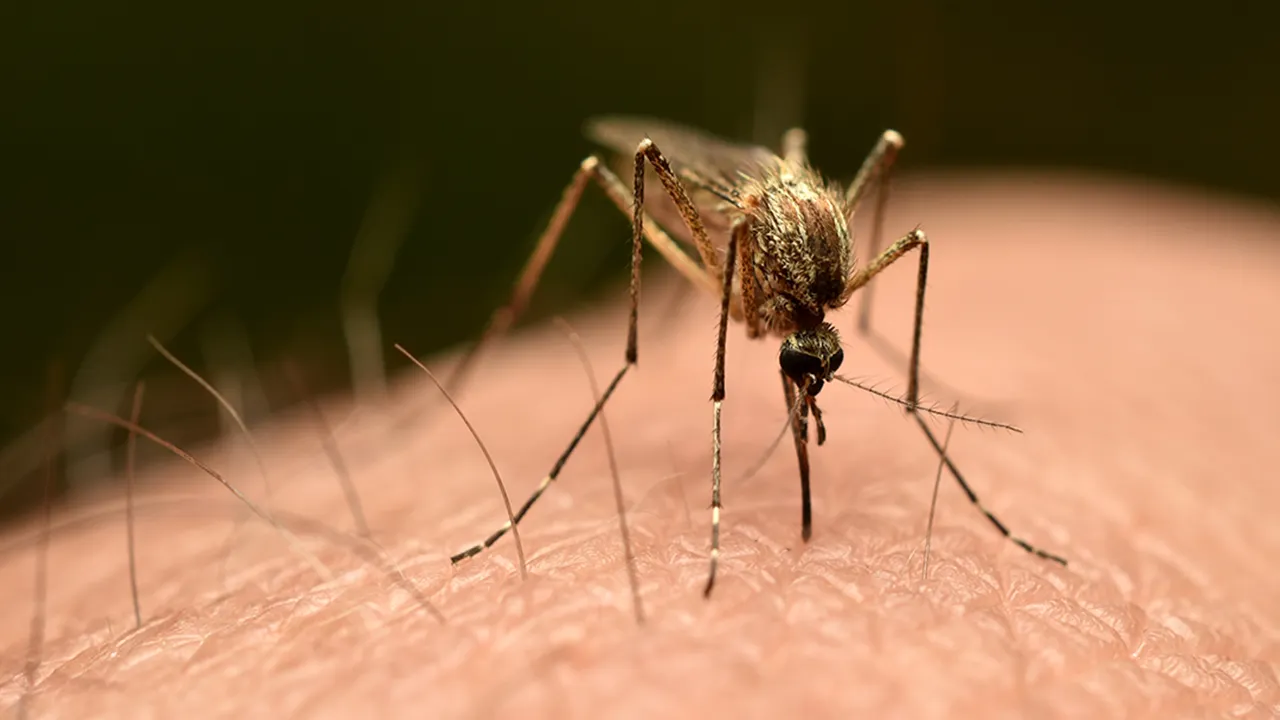
Malaria is a disease that is almost exclusively transmitted through the bite of an infected female Anopheles mosquito. It cannot be spread from person to person through casual contact, coughing, or sneezing, and it is not sexually transmitted. The parasite has a complex life cycle, beginning in the mosquito, which injects sporozoites into the human bloodstream as it feeds. These parasites travel to the liver, where they mature and multiply, eventually bursting back into the bloodstream to invade red blood cells and cause the fever, chills, and flu-like symptoms that characterize the illness. In the case of airport malaria, the usual chain of events is interrupted by human travel. An infected mosquito in a tropical region boards an aircraft, often through cargo holds, landing gear, or the passenger cabin while the plane is parked or loading. If conditions are right—warmth, darkness, and available hosts—the mosquito can survive a long-haul flight and then escape after the doors open at its destination. Once free in an unfamiliar climate, it seeks a blood meal from the first available person, which may be an airport worker, a traveler in the terminal, or even a resident living close to the flight path. This is how a disease typically associated with equatorial latitudes ends up in places like Frankfurt, far beyond its usual geographic boundaries.
For the people of Schwanheim, the news has been both frightening and deeply personal. This is not a distant headline about a faraway epidemic; it is a neighbor, a colleague, a familiar face from the community who has been struck down by a disease that many locals had never given much thought to. The third known victim, a resident of Schwanheim, reportedly passed away recently, adding to the sense of urgency and unease. Another German citizen, also without any history of travel to tropical regions, has come down with malaria as well, though their condition has not been fully disclosed. The emotional weight of these cases cannot be overstated. Imagine living your entire life in a quiet suburban neighborhood, walking your dog, shopping at local markets, commuting to work—and then suddenly contracting a life-threatening illness carried by a mosquito that hitched a ride on an airplane. The randomness of it all is what unsettles people the most. There is no exotic vacation to explain it, no risky behavior to blame. It simply happened, and that makes it feel as though no one is truly safe. Health officials have tried to reassure the public by explaining that the risk still remains extremely low, but the trauma of a deadly mosquito biting someone in residential Germany has opened the door to broader questions about global connectedness and hidden dangers.
In response to the outbreak, authorities took swift action to reduce the risk of further infections. In July, airport officials set traps around the property to monitor and contain any mosquitoes that might be present, hoping to catch any additional stowaway insects before they could bite again. The traps were part of a coordinated effort to map the boundaries of the outbreak and ensure that no other cases would slip through undetected. Fraport, the company that runs Frankfurt Airport, also launched an internal awareness campaign aimed at its thousands of employees. “We have provided comprehensive information to all employees and encourage them to consult a doctor if they experience any symptoms,” the firm said in a statement. This level of vigilance is crucial, because early diagnosis and treatment can mean the difference between recovery and death. Malaria can be cured with antimalarial medications if caught quickly, but delays in treatment allow the Plasmodium parasites to multiply unchecked, leading to severe anemia, respiratory distress, and cerebral complications. The workers who fell ill likely faced an additional challenge: the symptoms of malaria—fever, headache, muscle aches—are easily mistaken for the flu or a common cold, especially in a country where malaria is virtually unheard of. That lack of awareness can lead to dangerous delays in seeking medical help, which may have contributed to the severity of some cases in this outbreak.
This incident at Frankfurt Airport is part of a larger, sobering pattern. As global air travel continues to shrink the distance between continents, diseases that were once confined to tropical zones are appearing in unexpected places. Mosquito-borne illnesses such as West Nile virus, dengue fever, and chikungunya have steadily expanded their range, and climate change is making many regions warmer and more hospitable to mosquito populations that previously could not survive there. Just this year, health officials in the United States warned about the first death from a deadly mosquito-borne virus in a major city as cases began to spread, and travelers were urged to be cautious after potential measles exposures at airports and hotels. These incidents are reminders that public health threats are no longer a simple matter of geography. The malaria cases in Germany are not a reason for panic, but they are a reason for reflection. They demonstrate how fragile our assumptions of safety can be, and how much we depend on the diligence of airports, health agencies, and travelers themselves to prevent the silent movement of pathogens across the world. For the families of those who died, the tragedy is not an abstract lesson in epidemiology; it is the loss of a loved one, a life cut short by a chance encounter with a stowaway insect. Their deaths should prompt deeper investment in mosquito control measures, enhanced screening of aircraft coming from tropical regions, and greater public awareness of the signs and symptoms of rare infections. In the end, this outbreak is not just a German story. It is a global story, a human story, and a powerful reminder that no country is an island—especially in an age where a mosquito can cross an ocean on a silver plane and change the lives of strangers in a place it was never meant to call home.