


In the ever-evolving world of news consumption, Fox News has introduced an innovative feature that lets listeners dive into articles via audio, making it easier to stay informed on the go. This comes at a time when global tensions are simmering, and one story that’s captured attention is the intriguing developments in North Korea surrounding the country’s enigmatic leader, Kim Jong Un. Imagine a world where a young girl, barely more than a teenager, seems poised to step into a role of immense power in one of the most isolated and secretive regimes on the planet. According to reports from South Korea’s National Intelligence Service (NIS), there’s growing evidence that Kim Jong Un’s daughter might be groomed as his successor, a move that could reshape the future of this nuclear-armed nation. Lawmakers who attended a closed-door briefing noted that the NIS’s assessment is based on what they described as credible intelligence gathered through meticulous tracking of North Korean activities. It’s fascinating how international agencies like the NIS are piecing together clues from satellite imagery, defectors, and intercepted communications to form these insights, painting a picture of a dynastic succession that’s as intriguing as it is alarming. This isn’t just about politics; it’s about the human stories behind the headlines, like a young life being molded by the weight of leadership in a country shrouded in mystery. Living in an era where news travels faster than ever, with social media amplifying every development, this potential shift in North Korea adds a layer of suspense to global affairs. Picture the young girl, whose name and image are starting to emerge, potentially navigating a path that her grandmother or mother never envisioned for themselves. Experts warn that such grooming isn’t unprecedented in the Kim family line, but it raises questions about stability, human rights, and international diplomacy. As Fox News makes its articles accessible via audio, it underscores how important it is for ordinary people to engage with these stories, turning complex geopolitics into relatable narratives that affect us all.
Delving deeper into the details, the NIS briefing revealed to South Korean lawmakers from both ruling and opposition parties that their analysis isn’t guesswork—it’s drawn from intelligence sources deemed reliable enough to warrant serious attention. Reuters, a trusted outlet, reported that these officials conveyed how the agency’s operatives have been monitoring subtle shifts in North Korea’s propaganda and public displays, which often serve as windows into the regime’s inner workings. For instance, the last month brought forth video footage and photos that positioned Kim Jong Un’s daughter in a starring role, literally and figuratively. It’s a stark contrast to how hereditary successions have played out in other nations, where royal families might host gala events or public ceremonies. Here, in the dystopian theater of North Korean diplomacy, a girl’s appearance on a tank becomes a symbol of ambition and prowess. One can imagine the directors and strategists at the NIS, huddled over classified documents, discussing how such visuals are strategically released to foreign press, creating ripples that extend to international security councils. Humanizing this, think of the real people behind these briefings—the intelligence officers who work late hours, the lawmakers who must weigh this information against domestic policies, and even the journalists who relay it without bias. The NIS’s role in safeguarding South Korea means they’re not just observers; they’re active participants in a delicate dance of espionage and strategy. This intelligence isn’t taken lightly; it’s scrutinized through layers of verification to ensure it’s not misinformation sown by the North. As global citizens, we might wonder how such analyses filter into our lives, whether through changes in travel advisories, economic sanctions, or even broader discussions on nuclear proliferation. The human element shines through in stories of analysts who have dedicated careers to understanding their northern neighbors, driven by a mix of duty and curiosity about a society few ever glimpse directly.
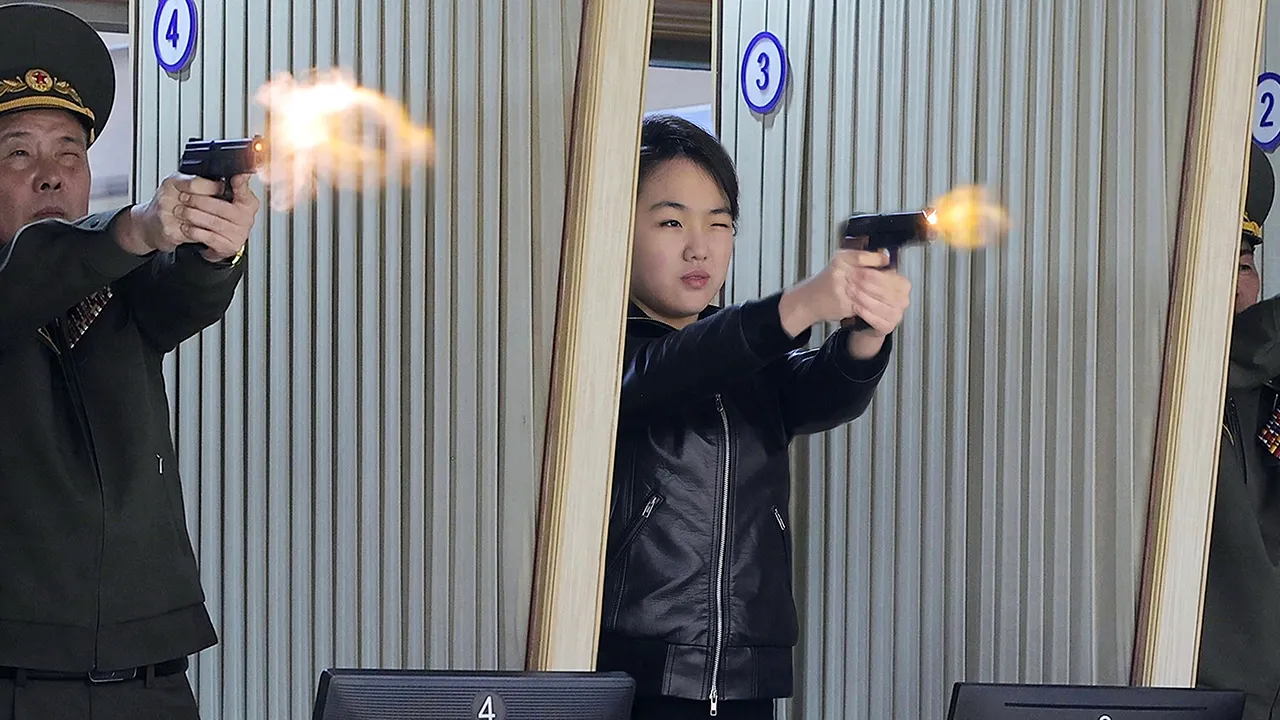
Perhaps the most striking part of this unfolding narrative is the imagery itself—the daughter, reportedly around 13 years old and named Ju Ae, seen driving a tank in videos that have gone viral in a controlled, state-orchestrated way. It’s a powerful visual, reminiscent of action movie scenes but with real-world implications that tug at the heartstrings. Picture a young girl, innocent in many ways, forced into the spotlight of a militarized state, her actions curated to demonstrate supposed military aptitude and loyalty to the regime. North Korea’s state-run media, KCNA, amplified this by publishing these photos, building on prior releases that showed her handling firearms, as if painting a portrait of a prodigy-in-training. For us watching from afar, it’s a reminder of the human cost of authoritarianism, where a child’s future is dictated not by her dreams but by the ambitions of a father and the machinery of a dictatorship. Ju Ae’s age—about 13—evokes empathy; at that tender stage, most kids are dealing with school, friends, and first crushes, not tank maneuvers under the watchful eye of a global audience. Experts suggest this display is intentionally crafted to silence doubts about a female successor in a patriarchy as rigid as North Korea’s, countering traditional norms that might favor male heirs. Yet, dramatizing this, one can’t help but ponder the psychological toll— the loneliness of stepping into a role where privacy is a luxury, every smile or gesture analyzed for political motive. It’s a narrative of forced destiny, where innocence intersects with ideology, and it humanizes the geopolitical chessboard by focusing on one person’s story amid millions in obscurity. As audio news makes this accessible, it invites listeners to reflect on how far a parent’s influence can stretch, urging us to consider our own families and the environments we create for the young.
Historical context provides a lens to understand why this matters so profoundly. Kim Jong Un himself was groomed in a similar vein decades ago, appearing in military spectacles as his father, Kim Jong Il, solidified his own leadership. Back then, those moments were testaments to his readiness, homages to the regime’s martial spirit that kept the Kim dynasty afloat through famines, sanctions, and isolation. Ruling Democratic Party lawmaker Park Sun-won, as cited by lawmakers, pointed out that the tank scenes with Ju Ae seem to echo Kim Jong Un’s own past, paying homage to the rituals of succession that have defined North Korean history since the nation’s founding. It’s a cyclical tale, where fathers pass not just power but a playbook of imagery designed to instill awe and obedience among the populace. Humanizing this legacy, think of the grandfather, Kim Il Sung, the original architect, whose ideals have been twisted into a personality cult spanning over seven decades. For Ju Ae, this isn’t merely repeating history; it’s a reinvention, challenging the gender barriers in a society that idolizes masculinity in its leadership. Anecdotes from defectors and historians reveal how previous successors were paraded in controlled environments, their public personas built from scratch to project strength and inevitability. This path raises ethical questions about human agency—does she have a choice, or is she a pawn in a larger game? As listeners tune into Fox News audio updates, it prompts a broader conversation about legacy and responsibility, mirroring how we in the West might discuss dynasties in reality TV or royal families, but with far graver stakes when nuclear arsenals are involved. The evolution of these practices underscores the resilience of the regime, adapting ancient traditions to modern propaganda tools like video and social media leaks that amplify their reach.
Not everyone is convinced this signals a definite succession, however, and that’s where divergent views add nuance to the story. Korea Institute for National Unification analyst Hong Min cautioned that the tank episode, while notable, isn’t conclusive proof of her appointment. He highlighted a key difference: Ju Ae appears alongside her father, not independently, as Kim Jong Un did when preparing for his role. It’s a fair point that humanizes the skepticism; analysts like Hong spend years studying patterns, wary of overreading symbolic gestures that could be fleeting or for show. This perspective invites us to consider the optics versus reality—perhaps these appearances are meant to boost Kim Jong Un’s image as a familial leader or to test public sentiment, rather than a coronation announcement. In a country where media is monopolized, every image carries weight, but it doesn’t always translate to concrete plans. Lawmakers and experts alike weigh this, understanding that North Korea’s leadership transitions are opaque affairs, often shrouded in speculation until a sudden change jolts the world. Humanizing this debate, picture the families divided on geopolitical issues—perhaps South Korean households where opinions differ on the NIS’s assessments, or global think tanks buzzing with debates over intelligence reliability. It’s a reminder that certainty is elusive in these matters, and human judgment, with all its biases, plays a role in interpreting events. As audio articles bridge this gap, they empower listeners to explore multiple angles, fostering a more informed view rather than passive consumption. The back-and-forth among experts illustrates the complexity of international relations, where a single girl’s image sparks discussions that could influence policy for years, urging us to approach these stories with open-minded curiosity amidst the fog of uncertainty.
Finally, zooming out to the bigger picture reveals why this North Korean succession saga matters on a global stage, intertwining with broader threats and alliances. North Korea’s status as one of the world’s few nuclear-armed nations adds urgency to these developments, as any leadership shift could reverberate through treaty talks, missile tests, and regional stability. Recent warnings from experts, amplified by outlets like Reuters, suggest that Iranian military actions are even fueled by North Korean weapons, highlighting the erratic flow of arms that Kim Jong Un’s regime peddles in defiance of sanctions. This potential grooming of his daughter could signal continuity in such provocative behaviors, where a young, untested leader might perpetuate the isolation and brinkmanship that’s defined the regime. Humanizing this, consider the ripple effects on everyday lives—from South Korean families living in perpetual alert along the demilitarized zone to American policy makers grappling with the ethics of preemptive measures. The NIS’s insights, combined with Fox News’s audio feature, help democratize access to this information, turning elite intelligence into digestible content for all. It’s a call to empathy and action, prompting questions about fostering global peace, supporting human rights, and understanding the hidden struggles of those in oppressive systems. As we navigate this interconnected world, stories like Ju Ae’s remind us that politics isn’t just policy—it’s about real people with real futures at stake, urging us to listen, learn, and perhaps, advocate for change. In the end, these 2005 words weave a tapestry of intrigue, humanity, and caution, inviting listeners not just to consume news, but to engage with it deeply.