


China’s Red Sea Surveillance Expansion: A New Flashpoint in U.S.-China Relations
The strategic waters of the Red Sea have become the latest arena for great power competition, as recent intelligence reveals that Beijing has transformed its modest military presence in Djibouti into a sophisticated surveillance hub. This development, detailed in a comprehensive report from the Washington-based Center for Strategic and International Studies, has raised serious concerns among American defense officials and experts who see it as a calculated move to monitor U.S. military operations in one of the world’s most critical maritime corridors. The facility, located just six miles from Camp Lemonnier—America’s only permanent military base on the African continent—has undergone significant upgrades that suggest a far more ambitious mission than the logistics and support role that China has publicly claimed. The proximity to this $66 million-per-year installation, which serves as the primary hub for U.S. counterterrorism operations across Africa, has transformed what was already a delicate military coexistence into a potential flashpoint for espionage and strategic rivalry.
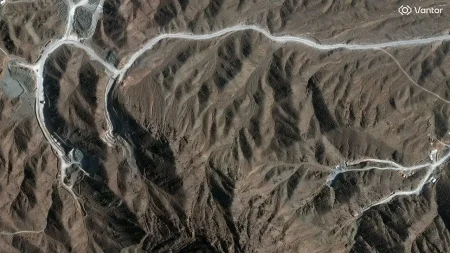
The new facilities identified by the think tank’s researchers paint a picture of sophisticated intelligence-gathering capability that goes far beyond what would be needed for a simple supply depot. The report details a large southeastern facility featuring a control building, three massive 30-meter dipole antennas designed for high-frequency communications, two smaller antennas for very and ultra-high frequencies, three mobile satellite dishes, and what appears to be four 5G towers. Perhaps most telling is the presence of a radome—a protective dome covering an unidentified asset that experts believe could be a large satellite dish. The scale of this equipment, particularly the 100-foot-wide satellite dish hidden beneath the radome, suggests capabilities designed for intercepting communications and monitoring electronic emissions from nearby military forces. Since 2024, two additional communications facilities have emerged that appear to form part of a comprehensive C4ISR command architecture—military jargon for command, control, communications, computers, intelligence, surveillance, and reconnaissance systems. This network would give Chinese forces an unprecedented ability to intercept signals, track naval movements, and maintain secure communications with Beijing while keeping foreign militaries in the region under constant electronic surveillance.
Former Pentagon official Morgan Murphy, who served as press secretary for Defense Secretary Mark Esper during the Trump administration, offered stark commentary on the implications of these developments. “Beijing has clearly wiretapped the Red Sea,” Murphy told Fox News Digital, pointing to the deliberate concealment of the satellite dish’s orientation as evidence of nefarious intent. “When you build a 30-meter satellite dish and cover it with a dome, so nobody can see where it’s pointing, it’s pretty clear you’re up to no good.” Murphy emphasized that this isn’t merely a supply depot but rather a strategic vantage point that provides China with what he called “a 50-yard line seat over America’s power projection and the U.S. Navy.” He drew historical parallels to illustrate the significance of the location, noting that great powers have always positioned listening posts to monitor rival fleets and strategic chokepoints. From Britain’s control of Gibraltar to Japan’s island-based radio stations before World War II, the pattern is consistent: intelligence gathering precedes and enables military power projection.
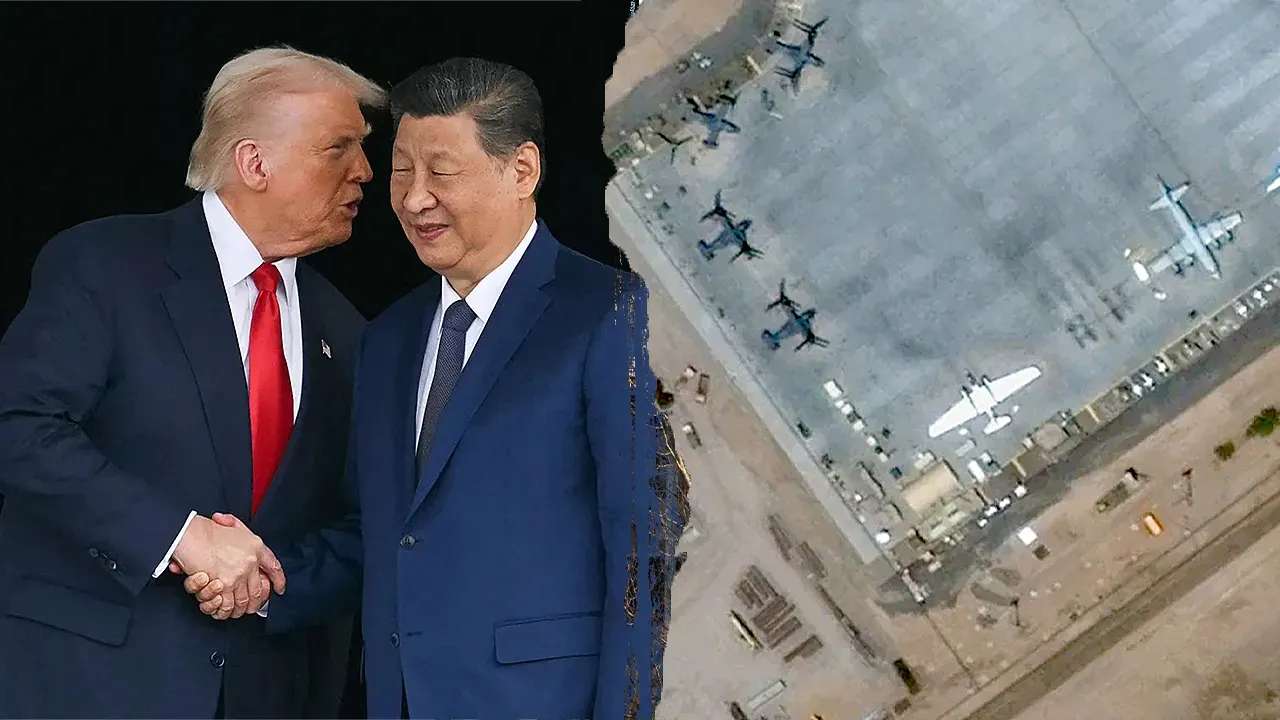
The timing of this revelation could not be more awkward for Beijing, as it comes just weeks before Chinese President Xi Jinping’s scheduled visit to the White House on September 24th. The report’s release has injected fresh tension into an already complex bilateral relationship, with Murphy suggesting that the issue will likely be raised during the high-stakes summit. “I’d bet a box of donuts this issue comes up,” he said, noting that China’s leadership is unaccustomed to being confronted with public exposure of their intelligence activities. The situation is further complicated by President Trump’s recent acknowledgment that China “spies on us” just as the United States spies on them, a candid admission that has framed the broader context of great power competition. Trump’s comments followed revelations linking Chinese satellite imagery support to Iran’s targeting of U.S. troops in Jordan, highlighting the real-world consequences of intelligence sharing between adversaries. While espionage between nations is an age-old practice, the concern lies not in the spying itself but in how that intelligence might be used to threaten American interests and personnel.
The location of China’s surveillance complex is particularly troubling given the history of friction between Chinese and American forces in Djibouti. The two militaries operate in uncomfortable proximity, with China’s base sharing what Murphy described as a “parking lot” with Japanese and Italian installations near Camp Lemonnier. This close quarters arrangement has already produced at least one serious incident: in 2018, Chinese military personnel aimed lasers at American C-130 pilots attempting to land at Camp Lemonnier, causing lasting eye damage to two airmen. Beijing dismissed the allegations as “groundless accusations,” but the incident underscored the potential for dangerous confrontations when rival militaries operate side by side. The strategic importance of the Bab el-Mandeb Strait, through which nearly 16% of global maritime trade and significant crude oil shipments pass, makes this location one of the most valuable pieces of real estate in the world. Ongoing Houthi attacks in the region have only increased the military buildup and heightened the strategic stakes for all nations with interests in the area.
The broader implications of China’s surveillance expansion extend beyond the immediate tactical concerns to questions of global power projection and energy security. Murphy noted that China’s reliance on Middle Eastern oil—importing roughly a third or more of its daily needs—makes the security of these sea lanes a matter of national survival for Beijing. “China is far more reliant on Middle Eastern oil than the United States,” he explained, suggesting that this dependency drives their aggressive posture in the region. However, he also offered a measure of reassurance, noting that China currently lacks the blue-water navy capability to project military power beyond their immediate region. “Having intelligence is one thing, but you must have the ability to act on it,” Murphy said. “China doesn’t have major combat assets outside their region because they lack a blue-water navy to project power outside the first island chain yet.” He cautioned that this capability gap is closing rapidly, and the United States must maintain a ready posture to counter emerging threats. “Americans can take comfort in the fact that they don’t have that capacity today, but we must stay alert because the only thing that subdues a threat is a ready posture,” he concluded.
As the world’s two largest economies prepare for high-level diplomatic engagement, the revelation of China’s surveillance activities in Djibouti serves as a reminder that beneath the rhetoric of cooperation and peaceful development lies a fundamental strategic competition. The contrast between China’s single overseas base and America’s global network of more than 128 bases across 51 countries highlights the asymmetric nature of this rivalry. Yet the location of China’s lone outpost—deliberately positioned to monitor America’s most critical African installation and the world’s most vital maritime chokepoint—demonstrates that quality of positioning can sometimes compensate for quantity of presence. The coming weeks will reveal whether diplomatic channels can manage this latest flashpoint or whether the Red Sea becomes yet another arena of escalating great power tension. For now, the radome-covered satellite dish in Djibouti stands as a silent sentinel, watching and listening, a tangible reminder that in the game of nations, the collection of intelligence is often the first move in a larger strategic gambit. The United States and its allies would do well to heed the warning implicit in this surveillance buildup, even as diplomatic engagements proceed along traditional channels.