


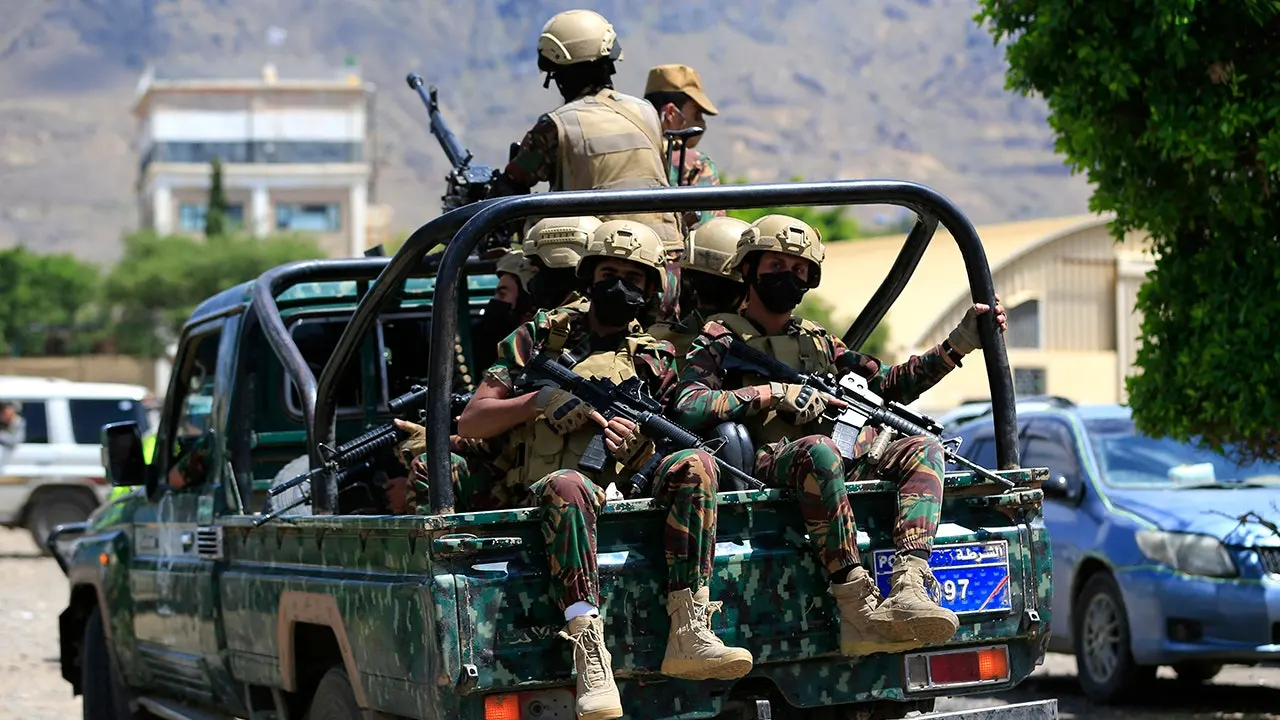
Imagine standing on the shores of the Red Sea, watching the world’s most vital energy lifeline turn into a pressure cooker. That’s the reality for Saudi Arabia right now. The kingdom, which has been an oil superpower since its founding in 1932, is facing what one security expert calls the biggest threat ever to its oil production. The source of that threat? The Iran-backed Houthi rebels in Yemen. They’re not just lobbing missiles across the border; they’re seizing territory near a narrow stretch of water called the Bab el-Mandeb Strait—a choke point through which a huge portion of the world’s oil tankers must pass. For Saudis, this isn’t just a geopolitical headache. It’s a matter of survival. When your entire economy and national identity are built on oil, someone blocking your ability to ship it is like cutting the air supply to a diver. Hussain Abdul-Hussain, a research fellow at the Foundation for Defense of Democracies, told Fox News Digital that the situation is precarious. He believes Iran likely pushed the Houthis into action to force a blockade on Saudi Arabia. In his words, this is “almost existential.” And while the Saudis are desperately looking for someone—anyone—to fight this battle for them, including reaching out to President Trump, Abdul-Hussain doubts Washington will jump in. The United States might offer advice and support, but a full-blown American war over Bab el-Mandeb? Probably not.
To understand why this is such a big deal, you have to look at the geography and the chain of events that led here. Saudi Arabia usually ships its oil eastward through the Strait of Hormuz, another narrow waterway near Iran. But when Iran started threatening to shut down Hormuz—a move that would have strangled global oil supplies—the Saudis pivoted. They shifted their oil production westward, sending tankers from the Red Sea port of Yanbu, down through the Bab el-Mandeb Strait, and onward to Asian markets. It was a clever workaround, at least for a while. But Iran didn’t like it. Their whole strategy, according to Abdul-Hussain, is “either we export, all of us export oil, or none of us will export oil.” If Iran can’t sell its oil because of U.S. sanctions and blockades, then why should Saudi Arabia be allowed to? So Iran likely whispered into the Houthis’ ears and encouraged them to become the spoiler. The Houthis, who are already fighting a brutal war against a Saudi-led coalition in Yemen, were more than willing to comply. Before all this, there were other warning signs. The Saudis had to temporarily shut down their East-West oil pipeline last week after a drone attack launched from Iraq—an attack President Trump said he believes Iran was behind. Then, on Tuesday, Saudi forces destroyed a Houthi drone that tried to enter airspace near Mecca, one of Islam’s holiest cities. These are not random acts of violence. They are deliberate attempts to disrupt Saudi life, security, and economic stability, all while sending a message to the world that the Red Sea is no longer a safe highway.
Now, here’s where it gets even more complicated. According to Fox News Digital, Saudi Crown Prince Mohammed bin Salman urged President Trump to take military action against the Houthis. The crown prince essentially asked the United States to come in and bomb the rebels into submission. But Trump’s response was curious, to say the least. During a visit to Ireland, Trump told reporters that “the Houthis called us and they don’t want to fight with us.” He said they had communicated that they didn’t want the U.S. involved, and that they would much prefer not having us go after them. It’s a strange situation: a non-state militia group in Yemen, which has been launching missiles at Saudi cities and now threatening a crucial shipping lane, is apparently in direct contact with the President of the United States. Is this diplomacy? Is it an attempt to de-escalate? Or is it just confusion on the ground? The expert, Abdul-Hussain, suggests that the Houthis are being very strategic. They announced that they are only targeting Saudi ships and Saudi navigation, and they made it clear they are not going after international shipping—neither U.S. ships nor European ships. That’s a clever move. It forces the United States into a difficult choice: Do we go to war with the Houthis even though they haven’t attacked our ships? Or do we step back and tell the Saudis, “This is your fight—you’ve got the weapons and the money, so handle it yourself”? The problem is, the Saudis don’t seem able to handle it. Despite purchasing billions of dollars’ worth of American weapons, despite years of training and support, Saudi Arabia has not been able to defeat a ragtag rebel group that lives in the mountains of Yemen. That’s an uncomfortable truth for the kingdom, and it’s a huge embarrassment for a nation that presents itself as the leader of the Arab world.
Let’s zoom out for a moment and think about what this means for ordinary people. Oil isn’t just a geopolitical chess piece; it’s the reason your car starts in the morning, the reason the price of groceries changes, the reason entire economies can falter overnight. The Bab el-Mandeb Strait is one of those tiny spots on the map that somehow holds the global economy together. If it gets blocked, even for a few days, the ripple effects are enormous. Tankers would have to reroute around the southern tip of Africa, adding weeks to journeys and billions to shipping costs. Energy prices would spike. Markets would panic. And in the middle of all this are human beings—Yemeni families caught in one of the world’s worst humanitarian crises, Saudi citizens worried about drones flying over their holy sites, and American soldiers who might be asked to risk their lives in a conflict that doesn’t directly threaten U.S. soil. The human side of this story is often lost in the strategic analysis, but it’s the most important part. When leaders talk about “freedom of navigation” and “regional stability,” they’re talking about food being able to reach ports, about hospitals getting medicine, about people being able to live their lives without the fear of a missile strike. The Houthis, whatever their grievances against Saudi Arabia and its allies, are playing a dangerous game that could push millions closer to starvation. And Iran, by backing them, is showing that it’s willing to risk a regional war to break its own international isolation.
So where does the United States stand? A senior administration official told Fox News Digital that the U.S. remains focused on protecting core national security interests, especially the freedom of navigation in the Red Sea. At the same time, the official said, Washington wants to empower allies in the region to manage and resolve security challenges themselves. That’s a delicate balancing act. On one hand, the U.S. doesn’t want to abandon the world’s most important shipping lane. On the other, it doesn’t want to be the permanent policeman for every crisis in the Middle East. The Trump administration also said it remains in continuous dialogue with Saudi Arabia and Yemen over regional stability. But dialogue can only do so much when the other side is a non-state actor with its own agenda and a patron in Tehran. Abdul-Hussain’s point is sharp: “Our expectation as Washington is that the Saudis, with all these arms that we’ve sold them over the past few decades, with all the military support and advice we give them, that they should be able to protect their own tankers and ships in this waterway and keep it open.” It’s a fair expectation. You don’t spend hundreds of billions of dollars on the world’s most advanced military hardware and then ask someone else to guard your coastline. Yet that’s exactly what’s happening. The Saudis are effectively saying, “We can’t do this alone,” while the Americans are saying, “We’ve given you everything you need—why can’t you?” Meanwhile, the Houthis are watching all of this and pressing their advantage, seizing territory near the Bab el-Mandeb and pushing the region closer to the brink.
In the end, this is a story about interdependence, pride, and the dangerous gap between strength and capability. Saudi Arabia has every material advantage in this fight, yet it finds itself threatened by a group that operates from caves and mountains. Iran, despite being choked by sanctions, is still able to project power through proxies and create chaos thousands of miles away. And the United States, the world’s most powerful military, is caught between a desire to protect global commerce and a deep reluctance to get dragged into another Middle Eastern war. There are no easy answers. For the Saudi leadership, this is not just about oil; it’s about sovereignty, about the safety of their people, about proving that they can defend their own land. For the Houthis, it’s about survival, leverage, and forcing a larger enemy to negotiate on their terms. And for the rest of us, it’s a reminder of how fragile our modern world really is. The next time you fill up your tank or buy something that was shipped across the ocean, think about the unseen battle lines stretching across the Red Sea. The conflict over Bab el-Mandeb is not just a story about Yemen or Saudi Arabia or Iran. It’s a story about all of us, because global oil flows through these narrow waterways, and when someone threatens them, the whole world feels it. Whether the Houthis will actually follow through on their threats, whether Saudi Arabia will find a way to stand stronger, and whether the U.S. will eventually be pulled back in—these are the questions that will define the coming months. For now, the people of the region remain on edge, and the world watches with bated breath, hoping that this time, wisdom and diplomacy will win out over brinkmanship and war.