



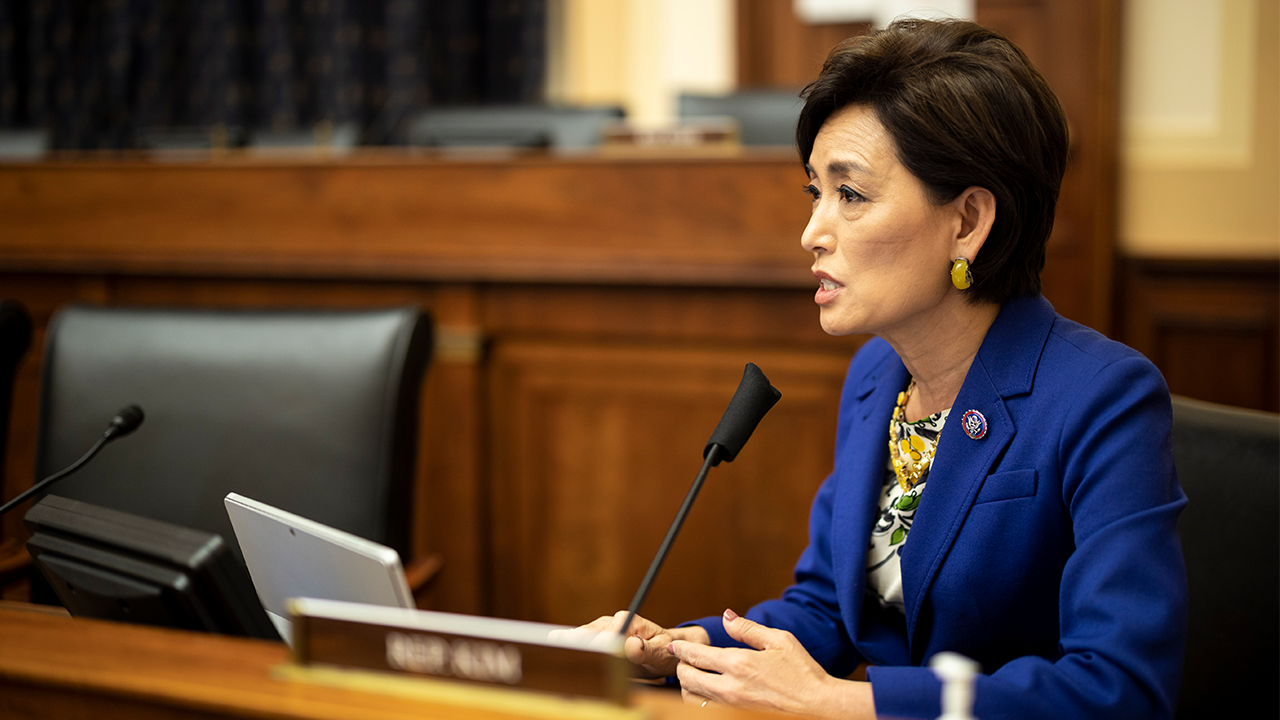
There is a quiet anger simmering across America, a frustration that has little to do with any single policy debate and everything to do with a simple, uncomfortable question: Why do so many politicians leave Washington far wealthier than when they arrived? It is a question that has fueled populist outrage from both the left and the right, and it has finally forced Congress to confront its own culture of self-enrichment. Earlier this year, the House took a historic step by imposing restrictions on lawmakers’ stock trading, requiring them to give advance notice before selling securities and barring certain purchases altogether. But for Rep. Young Kim, a California Republican, that was only the beginning. In an exclusive interview with Fox News Digital, Kim unveiled a new legislative push aimed at closing what she calls another avenue for congressional self-dealing: the quiet, often overlooked world of earmarks. Her “Stop Congressional Self-Enrichment Resolution” would expand the definition of a financial conflict of interest far beyond what current ethics rules cover, targeting the subtle ways that lawmakers can use taxpayer dollars to enrich themselves, their families, and their property without ever technically breaking the rules. It is a bold, long-overdue attempt to restore faith in a institution that many Americans have come to see as a playground for the privileged.
Kim’s proposal is rooted in the uncomfortable reality that the current system has loopholes big enough to drive a bulldozer through. Under existing House rules, a member requesting an earmark—a designated pot of federal money for a specific project in their district—must certify that neither they nor their spouse have a direct financial interest in the recipient. But that requirement says nothing about indirect benefits, and it says nothing about the broader family. Kim wants to change that. Her resolution would extend the prohibition to immediate family members and would cover indirect financial interests, such as an earmark that boosts the value of property owned by a lawmaker or their relatives. She described a scenario that is all too common: a member of Congress earmarks funds for a nonprofit organization where their spouse sits on the board of directors, allowing the family to benefit indirectly through salaries, influence, or prestige. Or consider a lawmaker who secures federal money to build a park or community center next to an apartment building they own—suddenly, the property value skyrockets, and the member’s personal wealth grows on the taxpayer’s dime. Even more brazenly, a member might request a road to be built leading directly to rural land they own, transforming worthless acreage into prime real estate. “It could be earmarking a nonprofit organization where a member’s spouse sits on the board of directors or board of trustees, so it will indirectly benefit the family,” Kim explained. “Or it could earmark for a park at, let’s say, an apartment building that a member or member’s spouse or member’s children owns. And with the federal funds that the member brings and build the park nearby or community center nearby, it could increase the property value and therefore indirectly benefiting the member and their family members.” These are not hypothetical musings; they are the kinds of arrangements that have quietly enriched members of both parties for decades, eroding public trust and feeding the perception that Washington is a rigged game.
The history of earmark abuse is long and sordid, and Kim’s resolution is in many ways a direct response to the ghosts of scandals past. Perhaps the most infamous symbol of earmark excess was Alaska’s “Bridge to Nowhere,” a $223 million project in the early 2000s that connected a tiny island to the mainland, serving a population of just 50 people. The public outcry was so intense that Congress imposed a decade-long moratorium on earmarks, and for a time, it seemed the practice might be dead. But earmarks never truly disappeared—they were rebranded as “community project funding” and brought back under new rules designed to prevent the worst abuses. Kim acknowledges that those safeguards have helped, but she argues they are insufficient. Members can still provide themselves with indirect benefits, and the current certification process is too narrow to catch the many creative ways that federal dollars can be funneled toward a lawmaker’s personal interests. “The days of members thinking that ‘I can use the community project funding request or bringing the earmarks for my district and get filthy rich off of it’— those days are numbered,” Kim said. She stressed that her resolution is not aimed at any specific colleague, but rather at a culture that has allowed too many career politicians to line their pockets while pretending to serve the public. “This is a good time because we see Americans are sick and tired of watching politicians getting filthy rich while average Americans are worrying about making ends meet and stretch every dollar that they earn,” she added. It is a sentiment that resonates far beyond the halls of Congress, in every diner, kitchen table, and town hall where voters wonder if their representatives are working for them or for themselves.
The need for such reform is underscored by a long trail of real-world examples, some of which have become cautionary tales. In 2006, then-House Speaker Dennis Hastert, a Republican from Illinois, faced intense criticism over a $207 million earmark to build a parkway near property he owned. At the time, Hastert’s attorney dismissed the allegations as “libelous,” arguing that criticizing the project was akin to “complaining about a purchase in Alexandria based on renovations at the Capitol.” But the optics were devastating, and the episode became a rallying cry for earmark reform. More recently, in 2023, the Boston Globe reported that earmarks secured by Rep. Stephen Lynch, a Massachusetts Democrat, benefited a health center in Boston where his wife was employed. Two million dollars went to the South Boston Community Health Center, and another $1 million went to a foundation where Lynch’s wife served as an unpaid director. Fox News Digital reached out to Lynch for comment, but the story added another layer of public cynicism. Then there is Sen. Tim Kaine, a Virginia Democrat, who previously secured earmarks totaling $3.5 million for George Mason University, where his wife, Anne Holton, had served as interim president and later as a professor. A Kaine spokesperson insisted that the earmarks “are in no way influenced by Secretary Holton,” noting that she had no involvement in the congressional directed spending process. “Senator Kaine and Secretary Holton have not discussed the requests,” the spokesperson added. Whether or not any of these cases crossed an ethical line, they illustrate exactly why Kim’s resolution is necessary: the appearance of impropriety can be just as damaging as actual corruption, and the current rules are too weak to prevent even the appearance of self-dealing.
Kim is careful to emphasize that her resolution is not an attack on the legitimate use of earmarks, which many lawmakers see as a vital tool for bringing federal dollars back to their districts. She herself has secured funding for important projects in Orange County, including money to prevent and recover from recent wildfires—a critical priority for her constituents. “That is what we are sent to do, fight for our district, but not at the expense of, you know, enriching. I mean, not at the expense of hurting our very constituents that we are trying to support while we are lining our pockets, because there are too many career politicians in Washington looking out for no one but themselves,” she said. Her message is aimed squarely at the culture of entitlement that has come to define so much of Washington, where a seat in Congress is often seen as a path to personal wealth rather than a call to public service. The rise of apps like the “Pelosi Stock Tracker,” which allows retail investors to follow the trades of members of Congress, has only intensified public scrutiny. While Kim’s resolution does not target any one colleague, it is impossible to ignore the broader context: Americans are watching, and they are increasingly disgusted by what they see. The fact that both Republicans and Democrats have found common cause on this issue—from stock trading restrictions to the quiet Senate ban on lawmakers betting on prediction markets—suggests that the political winds are finally shifting toward accountability.
In the end, Kim’s resolution is about more than just ethics reform; it is about the fundamental contract between the governed and those who govern. When lawmakers enter public office, they make a promise to serve the common good, not to enrich themselves at the expense of the people who sent them there. But for too long, that promise has been broken by a system that rewards connections, insider knowledge, and the ability to manipulate the levers of power for personal gain. Kim’s proposal would close the loopholes that allow members to benefit indirectly from earmarks, extending the conflict-of-interest rules to immediate family members and indirect financial interests. It would send a clear message that public office is not a get-rich-quick scheme, and that the days of using federal funds to boost property values, reward family members, or line one’s own pockets are over. The road ahead will not be easy—earmark reform has always faced fierce resistance from those who benefit from the status quo—but Kim is undeterred. She knows that the American people are watching, and she knows that they deserve better. “This is a good time,” she said, “because we see Americans are sick and tired of watching politicians getting filthy rich while average Americans are worrying about making ends meet.” With her resolution, Kim is offering a chance to restore a little bit of faith in a system that has lost so much of it. Whether her colleagues have the courage to take that chance remains to be seen, but one thing is certain: the days of silent, self-serving enrichment in Congress are numbered, and the sunlight of accountability is finally beginning to break through.