

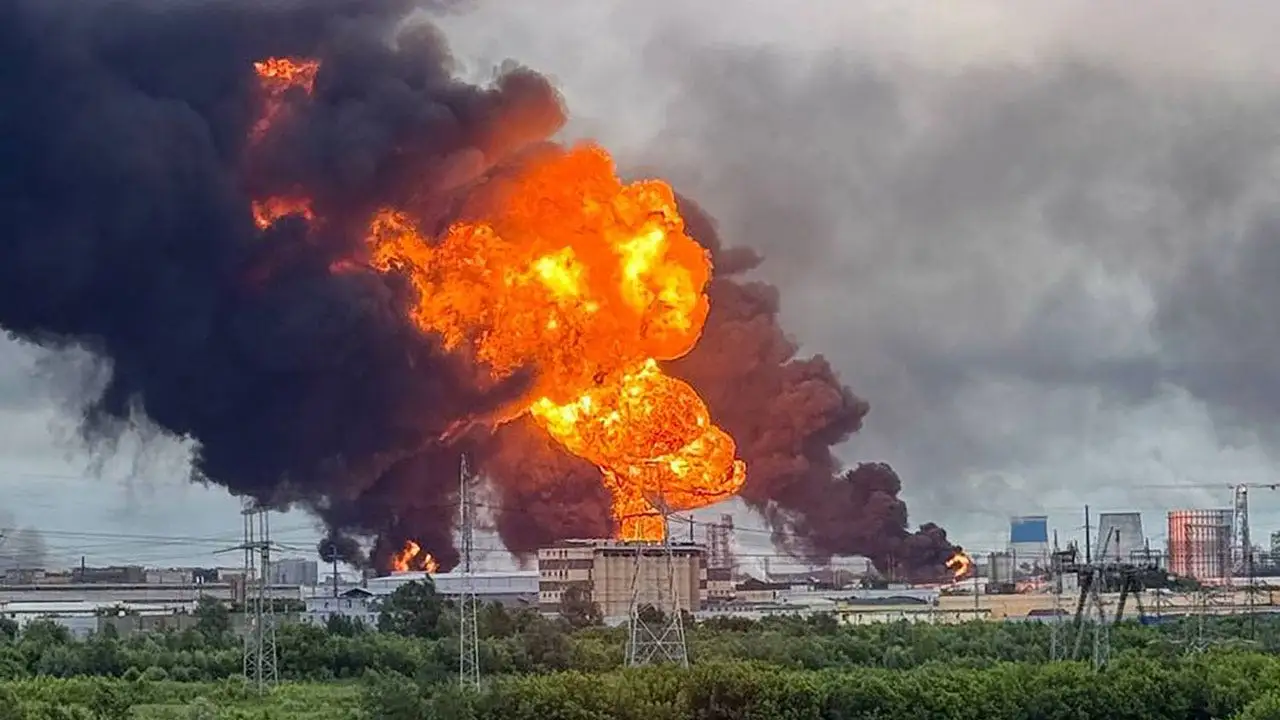
Ukraine’s intensifying drone campaign against Vladimir Putin’s oil industry is striking at the heart of Russia’s economic engine, bringing the harsh realities of the war directly to the Russian public. For the first time since the invasion began, ordinary citizens from occupied Crimea to cities deep inside the country are experiencing severe fuel shortages, price hikes, and empty gas stations. Historically one of the world’s most dominant oil exporters, Russia has been forced to ban diesel exports, ration domestic supplies, and take the humiliating step of negotiating fuel imports from neighboring Kazakhstan. This systemic disruption represents a major shift in the conflict, shattering the Kremlin’s carefully crafted illusion that daily life in Russia could remain entirely untouched by the war.
According to Maxim Katz, an exiled Russian opposition politician, these shortages present a unique and sensitive political challenge for Putin, especially with State Duma elections on the horizon. While Russian elections are strictly controlled, they serve as a crucial barometer of public support designed to project strength to regional elites and military leaders. If the public’s frustration over dry gas pumps translates to visibly low approval, Putin’s authority could begin to erode from within. “Putin tried to convince everybody that Moscow would continue to live its regular life… but when the war comes home, this is a completely different story,” Katz noted. He emphasized that while Putin will always prioritize fuel for his military tanks, the real threat lies in his weakening grip on domestic stability.
The operational scale of Ukraine’s drone offensive has stunned military analysts, highlighted by a recent high-profile strike on the Omsk refinery—Russia’s largest processing facility—located an astonishing 1,700 miles from Ukrainian territory. Retired U.S. Air Force Gen. Philip M. Breedlove, former NATO Supreme Allied Commander, observed that these deep-penetration strikes are forcing Moscow into an impossible logistical dilemma. Russia simply cannot defend every critical energy asset across its vast geography. Consequently, every air defense system deployed to protect domestic refineries is one less asset available to defend Russian positions on the front lines in Ukraine, shifting the strategic equation heavily in Kyiv’s favor.
This pressure is exacerbating a growing divide within the Kremlin itself. Ukrainian Ambassador to Israel Yevgen Korniychuk revealed that while the broader Russian leadership increasingly views the fuel crisis as a critical systemic threat, Putin remains insulated and dismissive of the danger. This cognitive dissonance is widening the chasm between the president and his long-time allies. Helping fuel this campaign is sophisticated Western intelligence support; reports indicate that U.S. intelligence has been vital in helping Ukrainian drones map out pathways to bypass Russia’s dense air-defense networks, giving Kyiv the precision needed to strike high-value targets deep inside the Russian homeland.
Despite these tactical victories, Ukraine’s campaign faces a stubborn economic reality: Russia’s energy sector remains highly lucrative. While domestic refining is crippled, Russia continues to generate billions of dollars by exporting raw energy products, such as Liquefied Natural Gas (LNG), to global markets—including the European Union. Analysis from the environmental group Urgewald revealed that the EU received approximately 97% of the cargo shipped from Russia’s Yamal LNG project in early 2026, totaling billions of dollars in revenue. These continuous financial inflows actively back Russian military operations, demonstrating the limits of Ukraine’s physical sabotage against a globally connected economic powerhouse.
Ultimately, the escalating energy crisis has transformed the psychological landscape of the war. While the strikes have not yet forced Putin to the negotiating table, they have stripped away the sanctuary of the Russian homeland, turning the conflict into a shared domestic burden for the Russian populace. Analysts and observers are left watching a highly volatile situation. As Maxim Katz pointed out, authoritarian regimes like Putin’s often project absolute stability right up until the moment they suddenly collapse, much like the Soviet Union did decades ago. The critical question going forward is no longer whether Ukraine can damage Putin’s economic engine, but how much internal pressure that engine—and the Kremlin’s political system—can take before it begins to fracture.