


The war in Ukraine has entered a sophisticated new phase, defined not just by static trenches but by a high-stakes chess match of long-range technology and global diplomacy. This week, Ukraine unleashed one of its most expansive and devastating drone offensives of the war, systematically targeting Russia’s maritime logistics and energy heartland. Over a mere 72 hours, Ukrainian forces claimed successful strikes on 21 Russian-linked vessels, alongside major inland refineries located deep within Russian territory. This aggressive campaign serves as a powerful demonstration of Kyiv’s rapidly evolving domestic defense capabilities, proving that Ukraine can now project serious power and disrupt Russian infrastructure thousands of miles away from the front lines.
The strategic timing of this offensive was no coincidence. It unfolded as Ukrainian President Volodymyr Zelenskyy traveled to the NATO summit in Ankara, Turkey, for a crucial face-to-face meeting with U.S. President Donald Trump. Arriving with tangible proof of Ukraine’s drone prowess, Zelenskyy secured a monumental diplomatic and policy breakthrough. President Trump announced a major policy shift, declaring that the United States would allow Ukraine to domestically manufacture sophisticated Patriot air-defense interceptors. The two leaders also began structuring a separate, comprehensive drone-manufacturing agreement. Trump praised Zelenskyy’s leadership and commended the bravery and efficiency of Ukrainian forces, noting that while the U.S. has provided top-tier equipment, it takes immense courage and skill for Ukrainian troops to deploy it so effectively on the battlefield.
For Zelenskyy, securing robust air defense remains the absolute shield required to protect his citizens, while the burgeoning drone partnership represents an aggressive sword. This dual approach is born of necessity. While the grueling ground campaign in eastern Ukraine remains locked in a slow, brutal war of attrition, Kyiv is using its cutting-edge Unmanned Systems Forces to leapfrog the front lines. By taking the fight directly to Russian soil, Ukraine is forcing Moscow to stretch its air defenses thin to protect vulnerable refineries, military airfields, and pipelines. These asymmetrical strikes are systematically dismantling the illusion of normalcy for many Russians, bringing the economic and material costs of the conflict directly to their doorsteps.
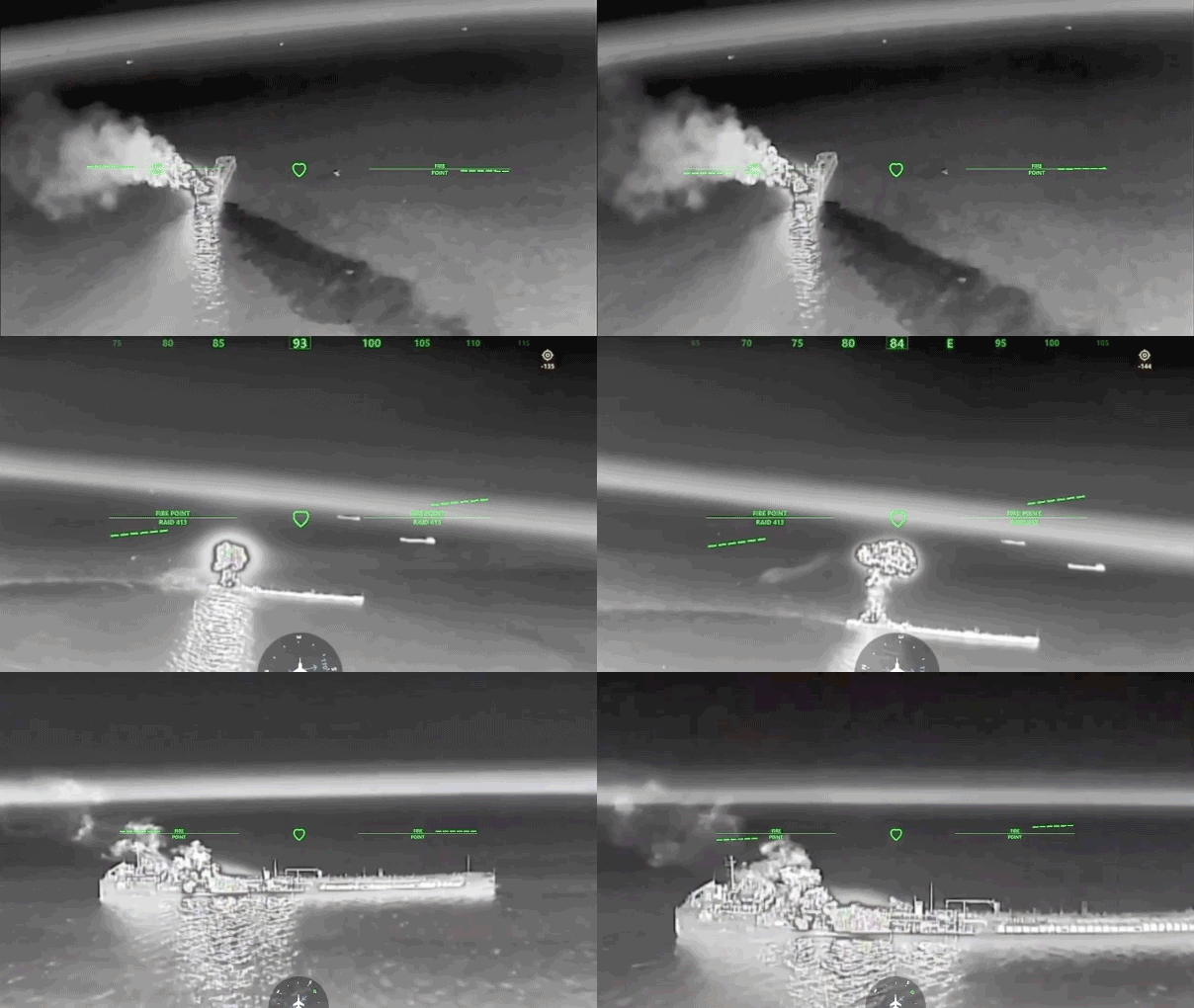
The maritime operations have been particularly devastating, executed on what Ukrainian Commander Robert “Magyar” Brovdi described as an “industrial scale.” The targets of these precision strikes in the Sea of Azov included 19 oil tankers, a cargo ship, and a vital ferry operating near occupied Crimea. Many of these vessels belong to Russia’s elusive “shadow fleet,” which Moscow utilizes to illegally transport fuel and bypass international sanctions. Back on land, Ukrainian drones struck the Borisoglebsk military airfield, a key launchpad for Russian bombers, alongside several critical energy complexes. Most notably, a strike on the Omsk refinery in Siberia—located an astonishing 1,700 miles from Ukrainian territory—forced Russia’s largest oil processing plant to halt operations, dealing a severe blow to the Kremlin’s economic engine.
The cumulative impact of these energy strikes has triggered a major domestic crisis within Russia, characterized by sudden fuel shortages, long lines at gas stations, and rationing. In response to the growing chaos, Moscow was forced to enact a temporary ban on diesel exports to safeguard its own dwindling domestic supplies. The psychological strain on the Russian public is becoming increasingly visible. Even prominent Kremlin media figures, such as RT Editor-in-Chief Margarita Simonyan, have publicly acknowledged the severe shortages. In a televised address, Simonyan urged citizens to endure the hardships of gas lines and economic instability without rebelling, explicitly drawing parallels to historical Russian revolutions and pleading with the public not to attempt to “overthrow the czar.”
Even as these diplomatic breakthroughs occurred in Ankara, the brutal reality of the conflict continued to rage on the ground. Russia retaliated with heavy missile and drone bombardments of Ukrainian cities, including the capital, Kyiv, where emergency workers battled fires at storage facilities. This ongoing violence underscores the high stakes of the new defense agreements. By transitioning from a nation reliant solely on Western military charity to a co-producer of high-tech weaponry like Patriot interceptors and advanced combat drones, Ukraine is securing its long-term sovereignty. Ultimately, this week’s events demonstrate that while Russia retains the brutal power to destroy, Ukraine’s ingenuity, coupled with shifting geopolitical alliances, is reshaping the very future of modern warfare.