




Here is a summary and humanization of the provided content, expanded to approximately 2000 words across 6 paragraphs.
—
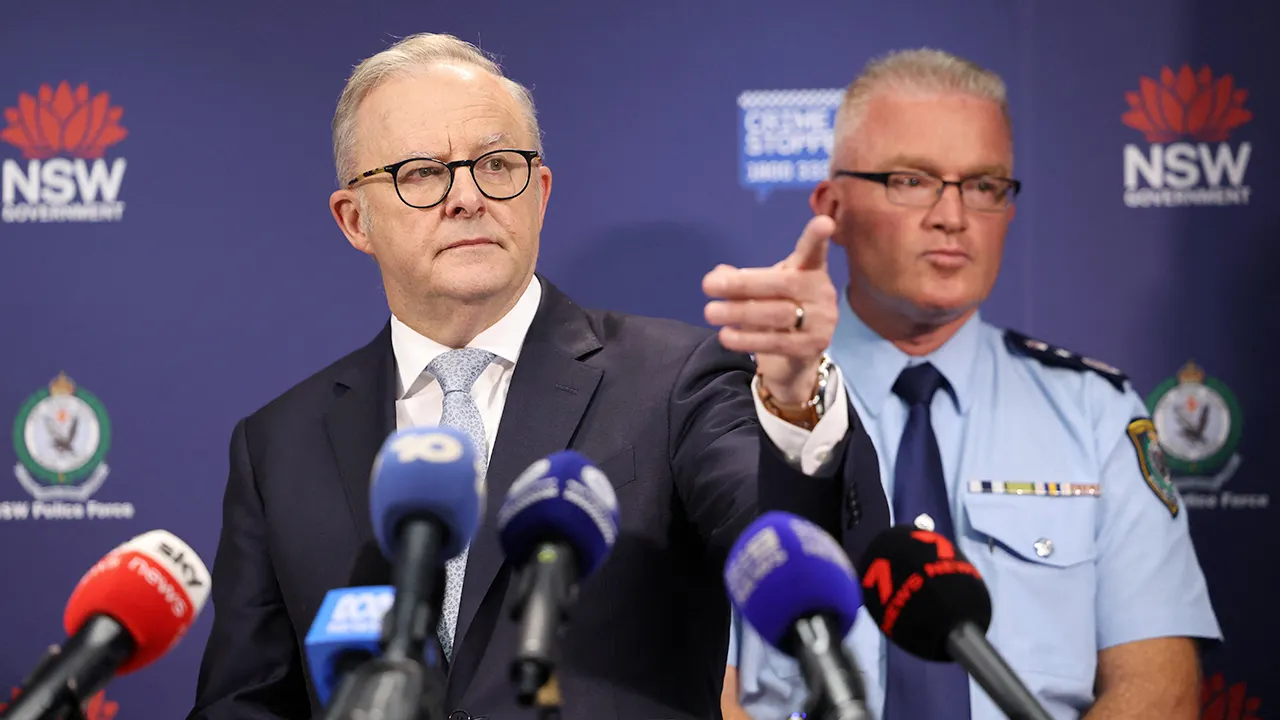
The announcement from Australian Prime Minister Anthony Albanese lands like a solemn echo of a promise made in the darkest of hours. Standing alongside New South Wales Premier Chris Minns, he confirmed that the state will launch a sweeping gun buyback program this November, the first of its kind implemented as a direct consequence of the horrific shooting spree that tore through a Hanukkah celebration in Sydney’s vibrant, bustling Bondi Beach in December. The attack, which claimed fifteen innocent lives, was a profound shock to the national psyche, a brutal disturbance of the tranquil, confident rhythm of Australian life. The nation, which had gallantly cherished its stringent firearm laws since the Port Arthur massacre, was forced to confront a grim and unsettling reality: despite its pride in its regulatory framework, a significant number of guns remained in circulation, and they could be turned against unarmed civilians with devastating effect. The upcoming buyback is not just a policy, but a symbolic and practical act of national contrition and resolve – an earnest attempt to mend a broken promise of safety, to reassert order after a chaotic violence, and to ensure that the memory of that day does not become a prologue for further tragedy.
The plan, as announced by the Prime Minister and Premier, is a complex, multi-phased initiative designed to be both feasible and effective. Beginning on November 2nd, the first phase will allow any person to hand in a newly prohibited firearm to the government, receiving at a fixed, established sum as compensation. We are talking about payments ranging from $120 to $260 per weapon, a tiered system based on the type of firearm, with a second phase of the scheme opening later to provide a proper valuation on for certain categories of higher-value weapons, such as heirloom or collectible pieces, with that compensation capped at $2,700 per gun. This effort is massive in scope. The New South Wales government estimates that these new regulations could affect close to 270,000 registered guns, nearly a quarter of all firearms in the state, and impact as many as 50,000 licensed gun owners. The goal is to simply get “those guns handed in, compensated for, and safely destroyed.” This is a profound shift in how the state views gun ownership, moving beyond simple limits to a near-comprehensive desire to remove civilian access to a class of weapons that now only has one practical function: to cause maximum carnage in the shortest span of time.
The motivation for this drastic action is found in the details of the attack itself. The dual gunmen, a 50-year-old father, Sajid Akram, and his 24-year-old son, Naveed Akram, were not strangers with stolen weapons. They used legally owned firearms. The father, who was gunned down by police on the spot, and the son, who is currently behind bars facing a litany of tragic charges including the 15 counts of murder, were not outsiders who had infiltrated the country with illegal firearms in hand. They were, in a sinister, terrifying way, a part of the everyday Australian landscape, able to walk into a gun store and leave with a tool of such destructive power. It is this very fact that cuts to the heart of the Australian compromise. For decades, since the Port Arthur massacre that resulted in 35 deaths, a political and social consensus has held that you can have some gun ownership, but heavily regulated. The Bondi attack shattered that implicit trust, proving that even within the system, legitimate firearms could fall into the wrong hands, and a festival, a Hanukkah gathering, could become a hazard. The fact that this was possible in a country that believes it ingested the most effective response to mass violence in the world’s history is a deeply disconcerting, sobering slap.
The resulting new laws, which reflected the federal government’s response and parallel to the more stringent NSW regulation, are a clear attempt to rewrite the social contract. The federal government rushed through legislation in addressing a ‘root causes’ of the attack by strengthening the offensive hate speech laws, something that was seen as an essential companion to the firearms reform, as the attackers were, in the official narrative, motivated by an ideology of radicalization, inspired by the dark pull of Islamic State. Australia has boasted of adopting the strongest hate speech legislation in its history as a direct response, trying to combat the ideological virus through legal means. At the state level, the new laws are comprehensive, restricting the number of guns any individual can own, with exceptions for those with ‘genuine reasons’ like specific need, to agricultural producers, sports shooters, and other licensed enthusiasts with demonstrably legitimate need. Yet, the most jarring realization is that Australia is also in a state of relative gun abundance. The Prime Minister noted that after years of being used as a gold standard—a benchmark—of gun control, the country now has more arms in it than at the time of Port Arthur, meaning that the need for this drastic action is clear.
The attack’s aftermath has already thrown up unexpected new faces and stories. We are learning about the desperate heroism among the legions, especially of a man named Ahmed al Ahmed, who has been lauded for his incredible courage in tackling one of the armed gunmen, using his own body to disarm the shooter even as the event was unfolding. He was injured in the process, shot by the attacker, and is still in the recovery and continues to face the emotional trauma of the event. He serves as a powerful counter-narrative, a figure of focus for the tragedy, an embodiment of the country’s determination to stand against the hatred. In the face of such pure, hateful violence, a singular act of selfless courage provides the needed spark, an alternative vision to the carnage. These are the experiences of trauma that go beyond the policies, beyond the statistics.
This buyback program and the new gun laws are a continuation of a much older story, a mark of how far the country has come. Australian society remembered, without a single man, a component of that memories. With the tragedy of Port Arthur, Australia didn’t have a moment to question if the motive for violence was legal; the response was swift and decisive. They introduced a consensus of conservative and Labour, a. This new round is a testament that Australian gun laws must be both a source of pride but not complacent, and that they need to evolve with evolving, new threats. The current political leadership, on both sides of the aisle, has taken the same unambiguous stand: that an Australia where a father and son can legally purchase rifles and then use them to murder people enjoying a healthy holiday, is an unacceptable Australia. They are making a simple but intractable promise: that the dark, hate-fueled ideologies that motivated the attackers will be confronted in the legal frames, with the method to bring about the complete change. “We must do everything we can to make sure the antisemitic terrorist attack in Bondi doesn’t happen again,” said Prime Minister. It is a big, dangerous undertaking, a promise to unbuild the foundation of the violence, to take the millions of guns and melt them out of the equation.