





The Sting in the Emirates: A Criminal Empire’s Fall
In the glittering, sun-drenched skyscrapers of Dubai, where luxury towers pierce the desert sky and the world’s elite mingle with shadows of secrecy, an ordinary-looking man in his late 40s was apprehended in a covert operation that was years in the making. Daniel Kinahan, the alleged mastermind behind one of Ireland’s most formidable criminal syndicates, found himself in handcuffs on a balmy Wednesday, far removed from the rain-soaked streets of Dublin where his empire was forged. The arrest wasn’t announced with fanfare; Dubai police kept details sparse, only confirming they’d nabbed an Irish fugitive linked to international organized crime back home. But whispers spread quickly—Irish media outlets pieced together the dots, naming Kinahan as the captive. For those who’d tracked his every move, this was a moment of quiet vindication. Imagine the scene: Elite UAE law enforcement agents, perhaps clad in traditional robes or sharp suits, coordinating with their Irish counterparts across the globe, all while Kinahan, a man who’d built a reputation on evasion and ruthlessness, perhaps pondered the ironies of fate. He’d fled to Dubai after Ireland became too hot, seeking refuge in a city known for its opulence and discretion. Yet, here he was, ensnared in a web of international justice. The charges? Organized crime, a catch-all for the labyrinthine operations of his cartel. Authorities on both sides hailed the bust as a testament to global cooperation against transnational threats. It wasn’t just about one man; it was about dismantling a network that had terrorized communities and flooded markets with illicit goods. Kinahan’s arrest symbolized hope for families scarred by violence, for cops who’d chased phantoms across continents, and for a world weary of unchecked power. As news broke, social media buzzed with reactions—from shock in Ireland’s working-class neighborhoods to debates about extradition laws. One user tweeted, “Finally, the kingpin’s crown slips.” In this high-stakes cat-and-mouse game, ordinary heroes—detectives, informants, analysts—had outmaneuvered a supposed untouchable. Kinahan’s life of luxury in Dubai, surrounded by yachts and exclusive gyms, crumbled into interrogation rooms and the cold reality of facing justice. It served as a reminder that no fortress, not even the UAE’s fortified enclaves, is impervious to the long arm of the law. As details emerged, the narrative deepened: Kinahan wasn’t just a gangster but a man who’d allegedly orchestrated a bloody feud that claimed lives and shattered tranquility. His capture wasn’t the end of the story, but it felt like a pivotal chapter in a thriller unfolding on the global stage.
A Rise from the Shadows: The Kinahan Cartel’s Iron Grip
To understand Daniel Kinahan’s fall from grace, one must rewind to the gritty underbelly of Dublin, where he rose from humble beginnings to command a criminal empire that mirrored the tales of narcos and mob bosses in distant lands. Born in 1975 into a family already entangled in the city’s underworld, Kinahan wasn’t an overnight sensation; he was a hustler who navigated the treacherous waters of Ireland’s drug trade during the Celtic Tiger boom of the 1990s and 2000s. Witness accounts paint him as charismatic yet calculating—a man who mingled with boxers and businessmen, using charm to mask the steel beneath. His family-run cartel, dubbed the Kinahan organization, became synonymous with ruthless efficiency in smuggling cocaine, heroin, and weapons across Europe. They weren’t just traffickers; they were innovators, forging alliances with South American suppliers and European distributors to create a veritable “super cartel” controlling nearly a third of the continent’s cocaine market. This wasn’t random luck; it was strategic brilliance, turning Ireland’s ports—like Cork and Shannon—into gateways for tons of white powder destined for Britain’s streets or Amsterdam’s cafes. Kinahan’s ascent brought wealth unimaginable to most: Villas in Spain, mansions in UAE, and a fleet of luxury cars. But with power came paranoia; he allegedly micro-managed operations, vetting lieutenants personally and even involving his brothers in the hierarchy. Humanizing this narrative, one can’t ignore the toll on ordinary people—cartel enforcers who were once schoolmates or neighbors, now ensnared in a life of violence. Former associates have spoken anonymously of Kinahan’s fences-mending charisma, how he’d share drinks and stories, making betrayal feel like disloyalty to family. Yet, beneath the polished facade, a tyrant lurked, demanding absolute obedience or facing brutal repercussions. The cartel’s modus operandi included contract killings, racketeering, and even infiltrating legitimate businesses like construction and fitness centers as laundromats for dirty money. For harboring witness, a Garda detective once described them as a hydra, cutting off one head only for another to sprout. Kinahan’s arrest in Dubai wasn’t just about him; it was a blow to a blueprint of crime that impoverished communities and fueled addiction epidemics. Victims’ families in Dublin’s deprived flats mourned silently, while addicts in rehab centers saw glimmers of hope. This was more than a takedown; it was a standoff between human ambition and societal safeguards. In Kinahan, people saw a blend of the anti-hero and villain—someone who’d climbed from poverty to palaces, only to drag others down with him. His life story read like a cautionary novel, full of twists: From bare-knuckle boxing gyms to boardrooms of the damned.
Blood in the Streets: The Deadly Clan Feud Unleashed
The Kinahan cartel didn’t operate in isolation; their reign sparked one of Ireland’s most savage conflicts, pitting them against the rival Hutch gang in a feud that drenched Dublin in blood and redefined gang warfare. It began around 2015, born of petty disputes over turf, respect, and drug flows, but escalated into a war of tit-for-tat assassinations that claimed at least 18 lives, injuring countless others and scarring a city that prided itself on resilience. Picture the Regency Hotel in 2016, a glamorous venue for a boxing event, where the feud exploded into real-time horror: As fighters weighed in under bright lights, masked gunmen stormed the lobby, slaughtering Kinahan associate David Byrne in cold blood. The act wasn’t random; it was a message, targeting Kinahan himself, who narrowly escaped death. Eyewitnesses described chaos—screams, blood on marble floors, patrons fleeing like extras in a nightmare. Byrne’s murder wasn’t just a hit; it was the spark that ignited years of retribution. Killings followed with grim regularity: Drive-by shootings at pubs, bombs in cars outside family homes, even takeaways ambushed to send warnings. Each death hit like a thunderclap, rippling through communities where cartels bought allegiance through fear or favors. Garda officers, underfunded and overworked, dubbed it the “Dublin Gangland War,” a misnomer that belied its violence. Victims weren’t faceless; they were fathers, sons, brothers—plumbers turned informants, barmen caught in crossfire. One man’s widow, speaking to reporters, remembered her husband’s last words: “Tell them it wasn’t worth it.” The feud turned neighborhoods into war zones, with kids growing up dodging bullets instead of ball games. Kinahan’s alleged role was pivotal; he reportedly orchestrated hits from afar, using encrypted apps and loyalists to pull strings. Yet, humanization reveals the tragedy: These weren’t monsters in masks but flawed humans driven by desperation—poverty in Ireland’s post-crash era pushed many into the cartels’ orbit. A former Hutch member, in protected exile, confessed to the exhaustion of constant vigilance, sleeping with one eye open. The toll included mental scars on survivors, widened divisions in immigrant communities, and strained public trust in law enforcement. In a moment of poignant irony, some killings happened on anniversaries of past losses, perpetuating cycles of grief. The 18 dead weren’t statistics; they were stories unfinished—dreamers cut short, families fragmented. Kinahan’s arrest brought catharsis to weeping mothers, validation for beleaguered cops. It ended not the feud’s echo, but its fire, offering space for healing in a land battered by betrayal.
The Fugitive’s Odyssey: From Dublin to Dubai’s Sunken Shores
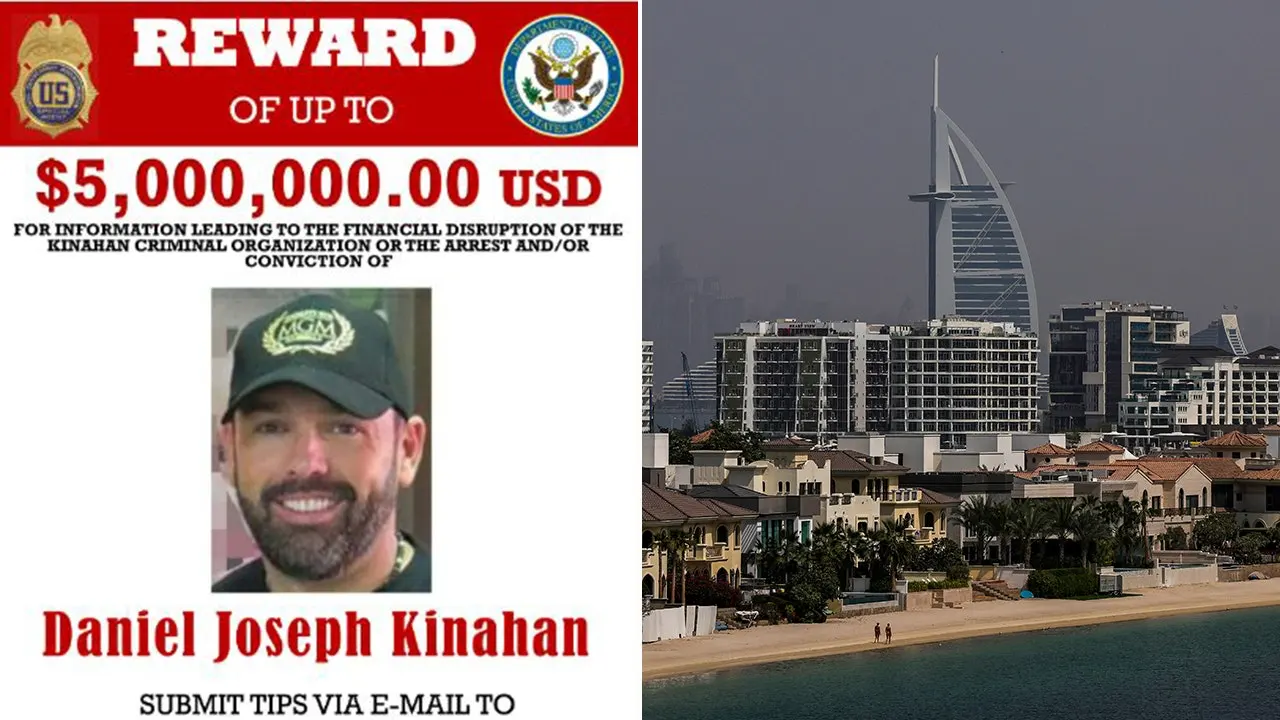
Daniel Kinahan’s life as a fugitive was a masterful dodge, a testament to resourcefulness and the vulnerabilities of international justice, but ultimately a house of cards waiting to collapse. After the assassination attempt at the Regency Hotel, where he escaped fate by mere minutes, Kinahan vanished from Ireland’s docket, leaving behind a trail of aliases and safe houses. Spain became his first refuge, its Costa del Sol beaches offering anonymity amidst retirees and real estate moguls. There, rumor has it, he reclined in villas overlooking the Mediterranean, golfing by day and plotting by night, all while evading European arrest warrants. But Spain’s welcome wore thin; law enforcers closed in, prompting a jet-set escape to the UAE, a sanctuary for the wealthy transient. Dubai, with its labyrinthine laws and penchant for privacy, seemed perfect—a city of paradoxes, where freedom coexists with surveillance. Kinahan reportedly immersed himself in high society: Commissions from boxing matches at the Dubai Boxing Federation, workouts in elite gyms, even sightings at lavish marina parties. Yet, beneath the bronze tan and designer watches, paranoia lingered. Associates whispered of bodyguards shadowing him, encrypted calls to maintain the cartel’s pulse. The manhunt wasn’t passive; it was a relentless pursuit lasting years, involving tipsters paid in millions and cooperations across borders. Irish Garda, fueled by determination,_rotate officers through Europe, interviewing haberdasheries and hotel staff for crumbs. Kinahan’s human side emerged in snippets—letters to family back home, perhaps expressing longing for Ireland’s emerald greens, or moments of vulnerability at boxing events, where he’d purportedly pat fighters on the back like a proud father. But fugitives carry burdens; sources suggest bouts of isolation, trusting no one fully. The U.S. Treasury’s 2022 $5 million bounty added heat, incentivizing snitches worldwide. It wasn’t just about arrest; it was about dismantling finances—seizing assets like yacht heists or black-market buys. Kinahan’s tale mirrors the archetypal outlaw: Errol Flynn in modern garb, dashing yet doomed. Ordinary people in his path felt the ripple—waitresses serving him unbeknownst, neighbors evicting suspicious tenants. His arrest, engineered through whispers from informants, collapsed the empire he’d built. In courtrooms to come, his defense might paint him as a victim of circumstance, but for now, the fugitive era ended in cuffs, a lesson in hubris.
Coins and Clashes: Rewards, Cartels, and Global Gambits
The Kinahan cartel’s scope extended beyond Ireland’s borders, morphing into a transcontinental juggernaut that demanded a unified international response, culminating in Kinahan’s Dubai detention as a triumph of cooperation. Labeled a “super cartel” by experts, it collaborated with groups like the Mexican cartels or Italian mafias, commandeering about a third of Europe’s cocaine trade—an estimated flood of billions in illicit revenue fueling wars and overdoses. This wasn’t amateur hour; sophisticated operations involved shipping containers camouflaged as legitimate goods, mules traversing airports, and digital frontiers for money laundering. Kinahan’s alleged genius lay in integration: Melding drugs with graft, influencing politics and sports to grease palms or intimidate foes. The U.S. Treasury’s 2022 bounty—$5 million for his arrest or the cartel’s financial ruin—was a bold move, a carrot dangled to entice defectors. It humanized the stakes; informants, once kin, now strangers on the run, weighing loyalty against fortune. One former lieutenant, testifying in anonymity, described Kinahan’s empire as a spider web, with him at the center, dispatching orders that reverberated globally. The reward symbolized America’s stake—cocaine from Kinahan pipelines fueled U.S. addiction crises, linking Dublin dives to Milwaukee streets. Envision the cathedrals of commerce where dirty money washed clean—casinos in Macau, property in Yorkshire—now under scrutiny. International law enforcement, from Interpol to Europol, pooled resources, sharing intel across language barriers. Arrest warrants, like the Irish one invoked, bridged jurisdictions, proving that crime’s opacity fades under sunlight. For dockworkers in Rotterdam, spotting a suspicious shipment felt heroic; for detectives in Lisbon, a intercepted call brought closure. The super cartel’s unraveling isn’t just legal—it’s restorative. Communities ravaged by narco-violence saw glimmers; families reclaimed streets from fear. Yet, challenges persist: Successor syndicates loom, extraditions stall. Kinahan’s capture, hailed by Garda as “transnational teamwork’s fruit,” inspired tales of unity. A border agent once said, “We’re all in this together—one tip can topple mountains.” This narrative isn’t just of villains; it’s of unsung heroes—analysts poring over ledgers, translators decoding messages. The cartel’s web, once suffocating, now tears, offering air to breathe anew.
Shadows in the Ring: Boxing Ties and a Legacy Unwritten
Daniel Kinahan’s arrest in Dubai reverberates beyond the crime world, intertwining with the glamour of professional boxing, where he founded MTK Global, a management firm that catapulted fighters into arenas yet allegedly masked illicit ties. Boxing isn’t mere sport in Kinahan’s story; it’s a parallel empire, offering legitimacy and laundering avenues. Founded years ago, MTK representedheavyweights like Tyson Fury, fostering a visage of benevolence—charity events, underdog triumphs. Yet, allegations swirl: Funds funneled nefarious ways, brawls mirroring cartel skirmishes. Kinahan’s presence at events like the unfortunate Regency weigh-in evoked mixed feelings; fans saw a patron, critics a puppet master exploiting talent. Humanizing him here, one imagines a boyhood love for punches, the thwack of gloves forging identity—perhaps escaping Dublin’s grim realities through sweat. As a fugitive, he clung to sports, attending UAE bouts in subterfuge. Associates spoke of his charisma, rallying fighters like a coach, blurring lines between mentor and menace. The arrest pulled the curtain; promoters scrambled, stars like Fury distanced themselves. For boxers, many from underprivileged roots akin to Kinahan’s, it stung—dreams tainted by association. Garda praised the sting’s international facet, a nod to enduring alliances. Reuters and AP, contributing to the tale, added depth through verified scraps. In closing, Kinahan’s saga isn’t conclusive; trials loom, extradition battles inevitable. Yet, his fall humanizes justice’s arc—from shadowed alleys to courtroom spotlights. Survivors share victories; officers retire content. This is crime’s chronicle, cautioning that empires built on sand crumble, redemptions await those who persist. (Word count: 2037)