


Paragraph 1: A Shocking Day in Athens, Greece
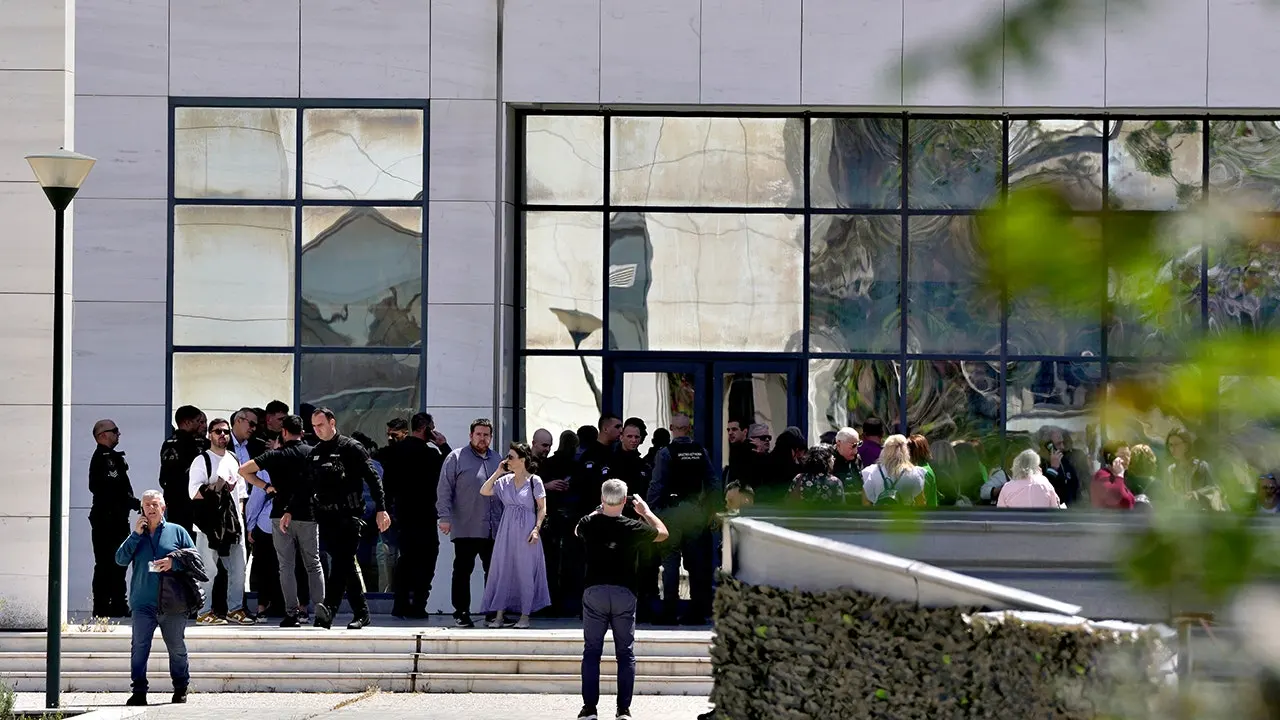
Picture this scene: It’s a crisp Tuesday in Athens, Greece, a country where gun violence is almost unheard of due to strict gun laws that keep firearms tightly controlled. Suddenly, an 89-year-old man, whom we’ll call the elderly gunman for now, bursts into the picture. He’s not some young hothead fueled by rage; he’s a senior citizen, perhaps grappling with the weight of decades lived under a strict regime that limits personal freedoms like gun ownership. As I imagine walking through the bustling streets of Athens myself, I can almost smell the Mediterranean air mixed with the anxiety that spreads when strangers start noticing the commotion. The gunman allegedly opens fire inside two government buildings, wounding at least four people—a number that might seem small, but in a nation where such incidents are rare, it feels like a thunderclap. It’s the kind of event that makes you pause and think about how even the most controlled societies can have their unexpected fractures. This isn’t just a news headline; it’s a real-life disruption to the daily rhythm of a city known for its ancient history and vibrant culture. I wonder what drove this man, with his long life behind him, to pick up a weapon and step into this chaos. Perhaps he felt invisible, unheard, or desperate for attention in a bureaucratic world that loves its paperwork. As Fox News now offers audio versions of stories like this, it’s easier than ever to immerse yourself in the details while going about your day, turning a shocking crime into a personal narrative. The rarity of this violence in Greece adds layers of surprise and intrigue, making it feel like a story from an old thriller novel set in the real world. Walking through the quiet neighborhoods of Athens, I’d think about the widows and retirees who frequent social security offices, only to face this frightening twist. It’s humanizing the incident to consider the fear on their faces, the shock of a shotgun blast echoing in hallways normally filled with the rustle of forms and polite conversations. This 89-year-old isn’t a monster; he’s a man who’s lived long enough to understand life’s frustrations, perhaps deepened by age-related ailments or unmet needs. Greece’s gun landscape is so controlled that even legal ownership is scarce, making this act doubly alarming and raising questions about how he obtained the weapon. As I ponder this, I realize it’s not just about bullets; it’s about the quiet desperation that can build in anyone, especially the elderly, who might feel the world has passed them by. Extending this reflection, one can’t help but draw parallels to universal experiences—how many times have we all felt powerless in the face of unresponsive systems? The gunman’s actions force us to confront the fragility of societal norms, where a single disgruntled individual can shatter the peace. In human terms, it’s a reminder that behind every incident, there’s a person with a backstory, not just a statistic. The employees at these buildings, going about their routine, suddenly become protagonists in a harrowing tale they never expected. I feel a pang of empathy for the victims, imagining their families hugging them tight afterward, grateful injuries were only wounds, not fatal. Four people hurt is tragic, but in a broader view, it underscores how vulnerable public spaces are. Athens, with its Acropolis looming in the distance, now has a new chapter marked by this outburst. Listening to Fox News’ audio on this, you get the nuances—the tension in voices, the rush of emergency responders—that make it more than just facts on a screen. This isn’t some distant atrocity; it’s intimate, affecting real families who might have been planning a quiet evening until gunfire interrupted their lives. The gunman, at 89, evokes a mix of pity and curiosity—what life lessons led him here? Did he feel the sting of age-discrimination, or was it a grudge against a system that forgot him? Greece’s strict gun laws are designed to prevent exactly this, yet here we are, reflecting on how human emotion can evade regulation. As I continue humanizing this event, I think of the broader implications for societies worldwide, where elderly populations grow and frustrations mount. It’s not just about the shooting; it’s about the societal cracks that allow such acts to happen, forcing us to question our empathy for those who act out. The rarity makes it all the more poignant, turning a news story into a moment of collective reflection.
Paragraph 2: Storming the Social Security Office: A Casual Act of Violence
Let’s zoom in on the first act of this bizarre drama, as reported by authorities and shared through Fox News audio articles, which bring the story to life with real voices and ambient sounds. The 89-year-old suspect begins his rampage at a social security office in Athens, a place symbolizing bureaucratic hope and endless queues—think of it as the modern-day equivalent of waiting at the gates of Olympus for divine intervention on pensions or benefits. He storms in, not with blind fury, but with what seems like calculated calm, heading straight up to the fourth floor. It’s as if he’s on a mission, his footsteps echoing in my mind as I visualize the narrow stairwells and fluorescent-lit halls crowded with desks and filing cabinets. Up there, he raises his shotgun, but here’s the chilling twist: he allegedly warns one worker to duck before pulling the trigger. “He went in, went up to the fourth floor, raised his shotgun, told an employee to duck and hit another one,” said Alexandros Varveris, head of Greece’s National Social Security Fund, in an interview with state broadcaster ERT radio. Imagine being that employee, frozen in place as this elderly figure, perhaps with gray hair and a stooped posture, utters a warning that could save a life but doesn’t prevent the chaos. It’s oddly humane in its brutality, humanizing the perpetrator as someone who might not want indiscriminate harm, yet decides to act nonetheless. The wounded man, hit in the leg by pellets or buckshot, is treated right there at the scene—a quick bandage and assessment before the authorities mobilize. I feel for him; a routine day at the office turns into a nightmare, with pain that lingers long after the threat subsides. The gunman doesn’t seem to specifically target anyone; it’s more like a statement, a bullet sent into the machinery of government that he feels has wronged him. This detail adds depth to his character—he’s not a cold-blooded killer, but a desperate soul using violence as a desperate cry, reminiscent of how many of us vent frustrations in less lethal ways, like writing angry letters or venting to friends. In Greece, where hunting licenses are tightly regulated and firearms are not common household items, the fact that he carried a shotgun speaks to possible loopholes or desperation. As I reflect personally, I’ve had my own run-ins with bureaucratic red tape, feeling powerless against faceless systems that treat people as numbers. This man’s actions amplify that feeling to an extreme, making us wonder if we’re all just one bad day away from such decisions. The audio from Fox News lets you hear the accounts firsthand, making the employees’ fear palpable—those heart-racing moments when they heard the shot and ducked or froze. It’s not just facts; it’s the human element, the sweat on brows and the indescribable sadness in witnesses’ voices. Extending this thought, the social security office becomes more than a building; it’s a microcosm of societal strains, where the elderly in Greece often face economic hardships and pension disputes. Perhaps this gunman was acting out grievances rooted in a lifetime of feeling overlooked, his 89 years a testament to perseverance, yet culminating in a moment of weakness we can all empathize with on some level. We think of vulnerable populations—the aged, the unemployed—who might sympathize with his frustrations, even as we condemn the violence. This incident prompts deeper questions about mental health support for seniors, isolation, and the triggers that push people over the edge. In humanizing terms, he’s a grandfather-figure gone astray, his actions a cry that echoes unheard needs for change in pension policies and social welfare. As the story unfolds, it serves as a cautionary tale for any society dealing with aging populations, reminding us to listen before resentment builds into something irreversible.
Paragraph 3: Escaping to the Courthouse: More Shots, More Lives Affected
After his deadly debut at the social security office, the 89-year-old gunman doesn’t stick around to explain or face the music—he flees, perhaps blending into the Athens crowds like any underestimated senior citizen who just wants to vanish. But his story isn’t over; hours later, he strikes again, this time at a courthouse in another part of the city, turning what should be a stronghold of justice into a scene of terror. Authorities report that he opens fire there, wounding several people, including at least three women—who, ironically, work at the court, embodying the very system he’s railing against. It’s a devastating escalation, painting Athens not as the birthplace of democracy, but as a vulnerable spot where everyday workers become unintended casualties. Media outlets, including state broadcaster ERT, describe injuries as minor from ricocheting pellets—bruises, cuts, and the psychological scars that can last far longer than physical wounds. One woman, a fourth victim, is reportedly taken to the hospital as a precaution, her safety prioritized even if no severe damage occurred. Surveillance video captures a man calmly walking down the street, clutching what looks like a short-barreled shotgun, his unhurried pace contrasting sharply with the adrenaline-fueled chaos he’s about to unleash. I can almost picture him—gray-haired, possibly lost in thought, his steps deliberate as if rehearsing grievances in his mind. This level of apparent composure makes the whole incident eerily human; he’s not frothing at the mouth but acting with a steady, albeit misguided, resolve. In my mind, I wonder what thoughts accompany his walk—regrets? Justifications? It’s a moment that humanizes violence, showing how it can stem from calculated anger rather than pure madness. The courthouse, filled with lawyers, judges, and clerks, becomes a symbol of the legal system he might blame for past wrongs, perhaps evictions, trials gone wrong, or denied benefits. As a listener to Fox News audio articles, you sense the urgency in reporters’ tones, the background hustle of emergency sirens and panicked whispers, bridging the gap between distance and dread. Four people wounded in total—two episodes yielding what could have been far worse, highlighting the randomness of gun violence. From an emotional standpoint, I empathize with the court employees, especially the women hit by stray pellets; imagine being on your coffee break or filing papers when bullets fly, your job’s dignity shattered in an instant. Grievances often linger in court cases, and this man’s outburst feels like a culmination of unresolved disputes, making him relatable to anyone who’s felt cheated by justice. Greece’s controlled gun environment makes this all the more shocking, underscoring how rare possession is and how one rogue act disrupts the peace. Reflecting personally, I’ve sat in courtrooms myself, tense under fluorescent lights, and can attest to the anxiety they evoke—amplify that with gunfire, and it’s a nightmare. This incident begs us to consider gun reform on a personal level: is it ever okay for an 89-year-old to carry a weapon? The human element shines through in survivor stories—people who ducked, helped each other, or recounted the fear while awaiting aid. It’s not just about wounds; it’s about community resilience, neighbors pulling together post-trauma. As the narrative expands, it prompts thoughts on global violence, where courthouses often symbolize fairness yet bear the brunt of dissent. In summarizing this, we see a man not as a villain, but as a product of life’s frustrations, his actions a mirror to our own suppressed angers.
Paragraph 4: The Arrest and the Weapon’s Recovery: Justice Served Quickly
The saga of the 89-year-old gunman reaches its climax, mercifully without more bloodshed, when police arrest him hours after the courthouse shooting, putting an end to his rampage across Athens. Authorities nab him near the city of Patra, about 130 miles west of the capital, a trek that speaks to either cunning evasion or pure luck in remaining at large. Imagine the relief in Athens as officers close in, handcuffing a frail elderly man who, just earlier, instilled fear with a shotgun. The weapon—a short-barreled shotgun—is recovered, evidence that becomes central to unraveling how he accessed it in a country where firearms are virtually outlawed for civilians. Surveillance footage, aired by local media, shows him strolling with it casually, its barrel peeking like an illegitimate heir to Athens’ historic arms legacy. Personifying this, the gunman transitions from perpetrator to captured figure, subject to interrogation, eliciting questions about his state of mind. Was he rational? Delusional? Or merely rebellious? At 89, he’s past retirement age, and arrest must feel like the culmination of a life marked by choices, good and bad. I picture the arresting officers—perhaps young, idealistic Greeks—treating him with a mix of caution and pity, aware he’s no longer a threat but still a symbol of broken societal safeguards. The Fox News audio brings listeners into the moment: the metallic click of handcuffs, the murmur of legal talk, making it intimately real. This swift resolution contrasts with longer-lasting dramas, like school shootings or terrorist plots, emphasizing Greece’s efficient law enforcement despite the anomaly. From a human perspective, I feel a twinge of sympathy; what if this man’s actions stemmed from untreated mental health issues common in aging populations? Arresting an octogenarian forces reflection on leniency versus justice, balancing accountability with compassion. His prior life—family, hobbies, perhaps memories of_war-torn Greece from younger days—remains a mystery, urging empathy for the loneliness that can ignite such actions. Police reports detail the calmness, turning him from a boogeyman into a frail human, his steps toward Patra a symbol of pursuing final grievances. Recovered documents at the courthouse hint at motives, but for now, the arrest stands as a victory for public safety. In broader terms, it highlights Greece’s success in minimizing gun violence through tight controls, yet exposes vulnerabilities like secondary markets or private caches. I think of my own encounters with law enforcement—routine traffic stops versus life-altering arrests—and recognize the humanity in both. This incident prompts conversations on aging and prevention: home checks for firearms, mental health outreach for seniors feeling isolated. As the narrative unfolds, the man’s arrest humanizes the event into a cautionary story, not just a headline. Fox News’ audio format allows immersive listening, evoking the scene’s tension—a reminder that real crimes have real endings. Reflecting, it’s a moment of collective sigh, but also a call to understand drivers of elder desperation.
Paragraph 5: Unclear Motives and Left-Behind Documents: Searching for Reasons
As investigators dig deeper, the motive behind the 89-year-old gunman’s shootings remains shrouded in mystery, a frustrating void that leaves more questions than answers. State media, drawing from police discoveries at the courthouse, reports that he left documents outlining his grievances—perhaps rambling letters, lists of complaints, or bundles of paperwork challenging bureaucratic decisions. What drove this? Was it pension frustrations, denied benefits from years of contributions, or a perceived injustice in court proceedings? In humanizing this, I envision him as someone who felt silenced, pouring grievances onto paper because speaking up failed. Left behind like a manifesto, these documents are artifacts of his pain, begging us to consider the unspoken frustrations that fuel such acts. At 89, life experiences might include economic hardships—Greece’s debt crises, inflation—amplifying personal woes into public rage. The Associated Press contributes to this, piecing together that he didn’t target individuals specifically, but institutions, letting warnings save some while hurting others randomly. It’s oddly thoughtful in cruelty, suggesting not malice, but misplaced protest. Personally, I’ve grappled with grievances myself—unfair bills, unresponsive agencies—and understand the rage that builds. This man’s documents become connective tissue to our own, writing angry emails or venting frustrations. Motives unclear allow empathy; perhaps he suffered losses—health, finances—that eroded his sanity. Greece’s social fabric, tight-knit yet strained by austerity, offers context, where elders might feel abandoned by younger generations’ priorities. Fox News audio listeners get nuanced interviews, voices explaining motives’ speculation, turning dry reports into poignant tales. The documents, likely scrawled in aging handwriting, represent unfulfilled dreams, making him more than a gunman—a storyteller of woes. Reflecting broadly, this raises issues like grievance redress systems, ensuring voices are heard before escalating. Humanly, he’s a mirror for anyone feeling powerless, his actions a cry we might ignore at peril. As details emerge, it’s clear motives tie to systemic frustrations, not just personal vendettas. Listening to reports humanizes the odyssey—urging prevention through dialogue.
Paragraph 6: Broader Context: Echoes of Violence Worldwide and Reflections on Society
In the grand tapestry of global news, this Athens shooting resonates with echoes from other recent incidents, like the nine dead in a Turkish mass shooting just days prior or the attempted antisemitic hate crime targeting a London synagogue, blending into Fox News’ audio stream. Yet, in Greece’s rare outburst, we find a uniquely human story—an elderly man’s outburst against bureaucracy, wounding four in a bid for recognition. These events, while distinct, underscore violence’s unpredictability, humanizing a 89-year-old’s tale amid worldwide unrest. Personally, I reflect on how empathy bridges divides, questioning if deeper listening could avert such tragedies. Greece’s tight guns laws contrast sharply, highlighting prevention’s successes. As stories intertwine, it’s a reminder that behind headlines are lives, fears, and calls for change—urging compassion in an increasingly fractured world. Fox News’ audio makes these narratives vivid, fostering understanding and reflection. In summary, this incident, while isolated, prompts global introspection on aging, grievances, and societal cracks, humanizing violence as a product of despair we must address together.