


The premature end of a human life is a quiet tragedy that reverberates far beyond the cold boundaries of a police report or a brief headline. When thirty-eight-year-old Corey Ruiz was shot and killed on a warm July afternoon in Madison, Wisconsin, he ceased to be just a name in an database and instead became a permanent void in the lives of those who loved him. To his family and friends, Corey was a living, breathing person with a unique history, personal struggles, quiet hopes, and a future that was abruptly stolen from him. The suddenness of his death on July 22 shattered the peace of his loved ones, plunging them into an agonizing state of grief that is all too familiar to families of Black men who have lost their lives during encounters with law enforcement. In the public eye, Ruiz’s name quickly became a rallying cry for justice, but in the private sphere, his death represents an irreparable fracture—an empty chair at the family table, a voice that will never be heard again, and a life cut short at a time when he still had so much road left to travel. The tragedy of his passing highlights the profound human cost of these fatal encounters, reminding us that behind every statistic is a human being whose life possessed immeasurable value and whose absence leaves a wound that time may never fully heal.
The fateful chain of events began on a seemingly ordinary Monday when Madison police officers responded to calls regarding a suspicious individual on a bicycle who was allegedly checking out parked vehicles and attempting a burglary. What started as a routine response to a low-level property complaint quickly escalated into a chaotic, multi-officer confrontation that would end in bloodshed. According to a statement released by the Wisconsin Department of Justice’s Division of Criminal Investigation, four officers surrounded Ruiz, who was still on his bicycle. The situation rapidly deteriorated, transitioning from a tense standoff into a physical struggle. In an attempt to subdue Ruiz without resorting to lethal force, two officers deployed their Tasers, but the less-lethal devices failed to stop him. The state’s official account asserts that during the ensuing physical altercation, Ruiz brandished a fixed-blade knife, injuring Officer Kiel Baitinger-Peterson—an eleven-year veteran of the force—and another officer. In those fleeting, high-stress seconds of confusion and fear, Baitinger-Peterson discharged his firearm, striking Ruiz multiple times. The thirty-eight-year-old was rushed to a local hospital, but the medical staff could not save him, and he was pronounced dead, leaving behind a scene littered with police tape, a recovered knife, and the heavy silence of a life lost.
For the family of Corey Ruiz, the official police narrative did little to ease their overwhelming pain or answer the agonizing questions surrounding his final moments. Seeking answers and accountability, they retained the services of prominent civil rights attorney Ben Crump, who quickly brought national attention to the case. Crump did not mince words, publicly characterizing the fatal shooting as an “execution” and calling for an immediate, independent investigation into the incident, as well as criminal charges against Officer Baitinger-Peterson. The family’s grief was compounded by the frustratingly sterile language used by state investigators, which they felt sought to demonize Corey rather than understand the circumstances that led to his death. To his loved ones, the idea of Corey being surrounded by four armed officers while on a bicycle painted a terrifying picture of a man cornered and overwhelmed. They refuse to let Corey’s legacy be defined solely by the final, chaotic minutes of his life, demanding that the public see him as a victim of a system that too often defaults to lethal force when dealing with Black men in crisis, rather than seeking paths of de-escalation and compassion.
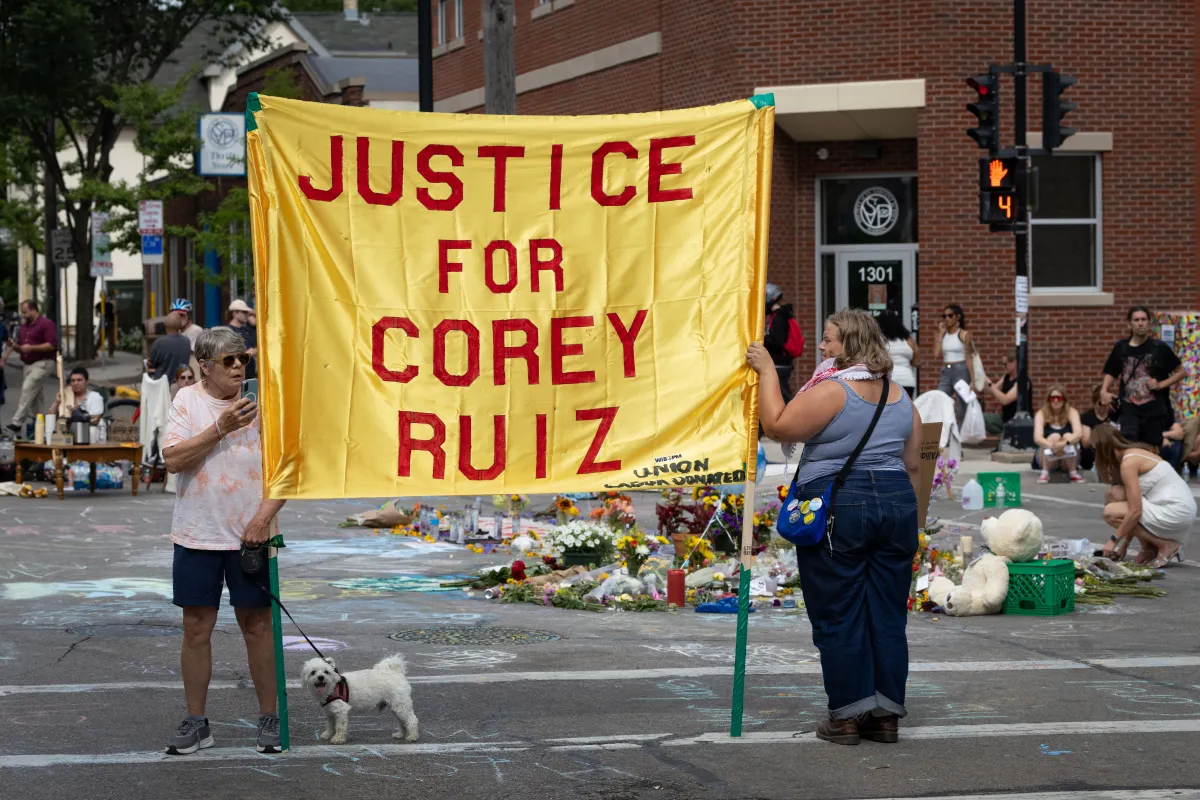
The anger and sorrow surrounding Ruiz’s death quickly spilled over into the streets of Madison, sparking days of passionate protests and community-led demonstrations. Activists and residents gathered to voice their exhaustion with systemic racism and the recurring trauma of police-involved killings, demanding transparency and systemic changes within the Madison Police Department. The public’s frustration was further exacerbated by a glaring technological gap: Madison police officers do not wear body-worn cameras, meaning there was no official, first-person video recording of the shooting. While bystander videos captured fragments of the encounter, the absence of body camera footage created a profound crisis of trust between the community and the police department. To many residents, the lack of this basic modern accountability tool felt like a barrier to discovering the truth, forcing a grieving community to rely on the word of the department that had just taken one of their own. The protests served as a powerful reminder that Corey’s death did not occur in a vacuum, but rather within a historical context of distrust and systemic inequality that continues to plague communities of color across the nation.
At the center of the investigation is Officer Kiel Baitinger-Peterson, whose life and career have also been irrevocably altered by the split-second decision he made that afternoon. With nearly eleven years of experience in law enforcement, Baitinger-Peterson was a seasoned officer who had dedicated over a decade to public service, a role that inherently carries the risk of encountering volatile and dangerous situations. The physical reality of the job was made clear by the injuries both he and his colleague sustained during the struggle with Ruiz, injuries that required medical treatment at a local hospital before they were released. The physical scars of the encounter may heal, but the psychological burden of having taken a human life is a heavy cross that the officer will carry for the rest of his days. This aspect of the tragedy underscores the complex and perilous nature of policing, where officers are routinely asked to make life-or-death decisions under extreme duress. Yet, the incident also invites critical scrutiny into how law enforcement is trained, raising tough questions about why four trained officers were unable to safely de-escalate a situation involving a single man on a bicycle without resorting to the ultimate and irreversible use of deadly force.
As the Division of Criminal Investigation continues its probe into the shooting of Corey Ruiz, the city of Madison stands at a painful but necessary crossroads of self-reflection and reform. The healing process for the Ruiz family, the involved officers, and the broader community cannot truly begin until there is a transparent, honest, and independent accounting of the facts. This tragedy must serve as a catalyst for meaningful change, prompting local leaders to address the urgent calls for police accountability, the implementation of body cameras, and a complete reevaluation of how officers respond to non-violent calls in communities of color. True justice for Corey Ruiz lies not just in the legal outcomes of an investigation, but in a collective commitment to creating a society where every individual, regardless of their race or circumstances, is treated with dignity and where human life is preserved above all else. Until those systemic changes are realized, the memory of Corey Ruiz will remain a solemn reminder of the work that lies ahead, urging us to strive for a future where no more families have to endure the devastating heartbreak of losing a loved one to a preventable tragedy.