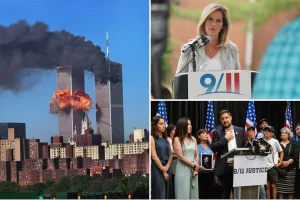


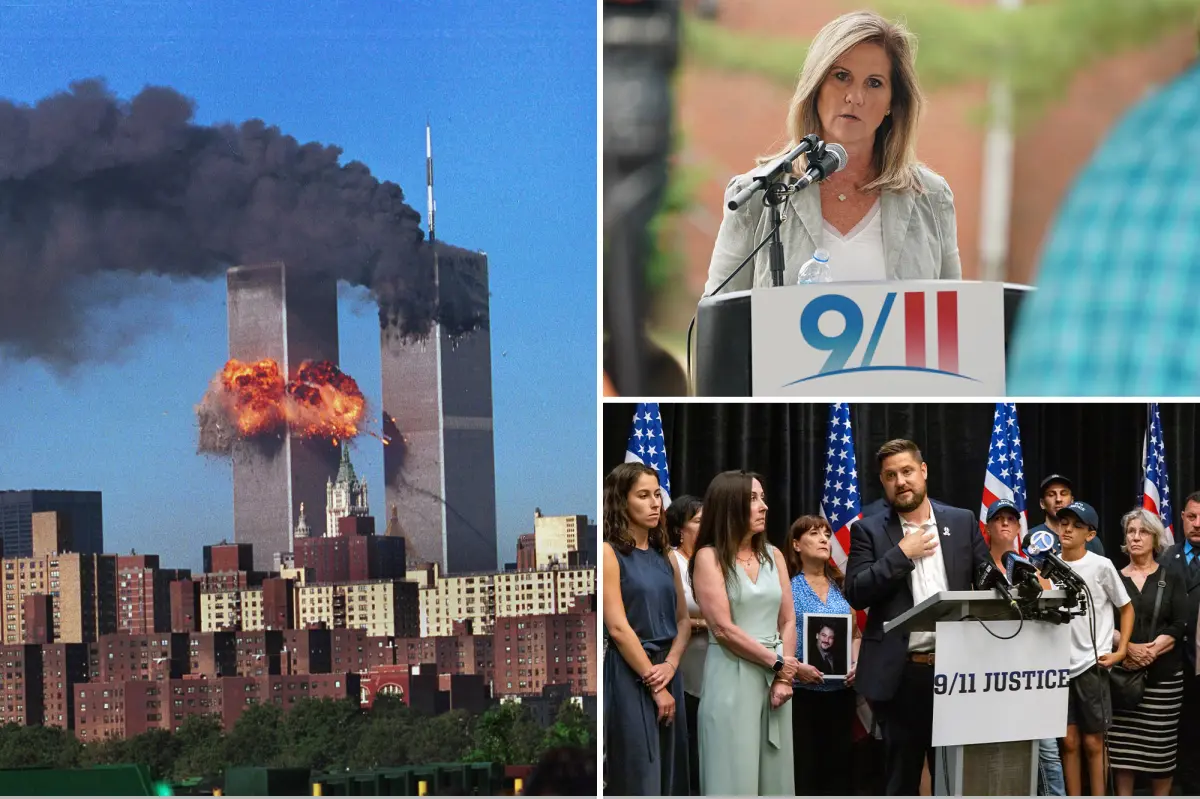
On a Wednesday morning in lower Manhattan, inside the 2nd Circuit Court of Appeals, a legal battle more than two decades in the making reached another critical point. Three federal judges—Guido Calabresi, William Nardini, and Eunice Lee—heard arguments over whether Saudi Arabia can be forced to face a civil lawsuit accusing it of helping the 9/11 hijackers. For the relatives of those murdered in the attacks, the moment was charged with grief, frustration, and a weary kind of hope. More than 25 years after terrorists flew planes into the World Trade Center, the case remains tangled in procedural fights, but a lower court’s August 2025 ruling gave families a rare sense of progress. Judge George Daniels found that the plaintiffs had uncovered enough evidence to allow the case to move forward. The judges listened as lawyers for the kingdom argued that Saudi Arabia should be shielded by sovereign immunity, while attorneys for the victims pressed ahead with allegations that Saudi officials had run a support network for the hijackers. The legal question was narrow, but the human meaning was enormous: Should a foreign government be allowed to avoid accountability in an American courtroom? For the families, the answer should have been obvious long ago. Yet there they were, still waiting, still watching, still hoping that someone in power would finally hear them and act. The courtroom itself was a quiet place for such a loud, unresolved wound.
The evidence that brought the case back to life is not new in every detail, but it has taken on new weight. Judge Daniels, the district judge who refused to dismiss the lawsuit, said the families had presented “reasonable evidence” that the Saudi government had a hand in supporting the hijackers—strong words after years of official denials from Riyadh. Much of that evidence revolves around Omar al-Bayoumi, a Saudi national with mysterious ties to the kingdom’s government. According to court filings, al-Bayoumi helped two of the men who would later crash American Airlines Flight 77 into the Pentagon find an apartment in California. He was suspected by U.S. intelligence of being a Saudi spy, and his behavior around the hijackers raised eyebrows from the start. He threw a welcome party for them, appeared to have flight calculations that could be used to steer a plane into a building, and was even captured on video casing the U.S. Capitol—a chilling image that suggests not just coincidence but coordination. None of this proves that Saudi Arabia formally ordered the attacks, and the kingdom still insists it played no role in 9/11. But the judge concluded that a jury could reasonably infer that al-Bayoumi was not acting alone, and that his connections to the Saudi government were part of a broader effort to aid the men who turned planes into weapons. For the families, this is exactly the kind of evidence they have spent years trying to bring to light, and it is why they refuse to let the case die.
Saudi Arabia’s lawyers are expected to offer a familiar defense: the kingdom is a sovereign state, and as such, it cannot be hauled into U.S. courts to answer for the actions of its citizens, at least not without its consent. Sovereign immunity has long protected foreign governments from lawsuits in American courts, and courts have often been reluctant to carve out exceptions. But the families argue that this case is different—that when a government allegedly provides support to terrorists who murder thousands of civilians, immunity should not become a shield for complicity. The appeal has infuriated the victims’ relatives, who see the legal strategy as another form of delay. Terry Strada, whose husband Tom worked as a bond broker at Cantor Fitzgerald and died in the north tower, spoke for many when she accused the kingdom of lying under oath. “The Kingdom continues to lie in court and deny any culpability, when the evidence shows that their agents were directly involved in the attacks,” she said. Her words carried the weight of two decades of frustration. She and other family members have attended hearings, spoken to reporters, and pushed lawmakers, always hitting the same wall: a foreign government with money, power, and legal defenses at its disposal. And every time the case seems to move forward, something slows it down again. This appeal is just the latest chapter in a long, exhausting story that has tested the patience and resolve of people who are already carrying an unbearable loss. They are not asking for sympathy, but they are asking for justice. To them, the courtroom is one of the few places where the truth might finally be told.
The raw emotion of the day was not hard to find after the arguments began. Brett Eagleson, whose father Bruce was killed in the attacks, summed up the feelings of many survivors and family members when he pointed out the contradiction at the heart of the diplomatic relationship between the United States and Saudi Arabia. “Saudi Arabia is a supposed ally and a friend of ours. Friends don’t treat friends like that,” he said. That sense of betrayal is widespread among 9/11 families, who have watched for years as the U.S. government balanced its military, economic, and intelligence ties to the kingdom with the search for accountability over the deadliest terrorist attack in American history. The human context of the case is staggering: On September 11, 2001, 2,977 civilians were murdered when 19 al-Qaeda operatives hijacked four airliners and crashed them into the Twin Towers, the Pentagon, and a field in Shanksville, Pennsylvania. Fifteen of the 19 hijackers were Saudi citizens. Osama bin Laden, the mastermind of the attacks, was born into one of Saudi Arabia’s most prominent families, though the kingdom stripped him of his citizenship after he became a vocal critic of both the U.S. and Riyadh. The numbers are well-known, but for the families, they are not statistics. Each number is a father, mother, son, daughter, husband, wife, or friend. The lawsuit is their attempt to keep those names alive and to force a reckoning that has never fully come. For them, this case is not about geopolitics or diplomatic convenience; it is about whether the people responsible for the worst attack on U.S. soil can ever be held to account.
The legal road here has been long and twisted. The families first filed their lawsuit in 2004, just a few years after the attacks, but it took many detours through courts and Congress. For years, the case was bogged down by questions of jurisdiction, immunity, and evidence—some of it classified, some of it incomplete. Then came a landmark move by Congress: a law designed to make it easier for victims of terrorism to sue countries accused of supporting terrorism. That law, passed after years of lobbying by the families, opened the door for the current litigation. Dozens of separate lawsuits were consolidated, and the accusations sharpened into a single, powerful claim: Saudi officials cooperated with the hijackers when they arrived in the United States in early 2000, providing assistance that made the attacks possible. The families say this was not a random encounter. It was a support network, involving money, logistics, and contacts, and it stretched from Saudi Arabia to San Diego to Washington, D.C. The kingdom has consistently denied these allegations, arguing that the evidence is circumstantial and that the people accused, like al-Bayoumi, were not acting on behalf of the government. But legal analysts have noted that the August 2025 ruling was significant because it allowed the case to move past the threshold question of immunity and into the merits, where the evidence can be examined in full. That is exactly what the families want: a chance to present their case to a jury, to call witnesses, to subpoena documents, and to force answers to questions the government has never fully addressed. The appeal threatens to push that moment further away, but the families say they will not give up.
For now, the immediate focus is on Wednesday’s oral arguments, which are expected to last about 45 minutes. The three judges will listen, ask questions, and then take the case under advisement, issuing a written ruling at some future date. That means more waiting. But the families have shown time and again that they are willing to wait—for years, for decades, for as long as it takes. They have traveled to hearings, held vigils, published books, and lobbied lawmakers, all in pursuit of a truth that has been denied to them for too long. They know that even a victory at the appeals court will not bring back the dead or undo the horrors of that September morning. They know that money damages, if ever awarded, cannot fill the gap left by a lost father, a lost mother, a lost sibling. What they want is something different: an acknowledgment that the victims matter, that the evidence matters, and that no government, however powerful, should be able to hide behind legal technicalities when there is reason to believe it helped murder innocent people. The judges on the 2nd Circuit will decide the next chapter, but the larger story belongs to the families—to people like Tom Strada and Bruce Eagleson, who left for work on a bright Tuesday morning and never came home. The legal battle may be complex, but the human need behind it is simple. And as long as the families remain determined, the case will not fade away quietly. Whatever happens next, they have already made something important clear: after 25 years, they are still here, still watching, still demanding justice. That is not a legal statement. It is a human one.