


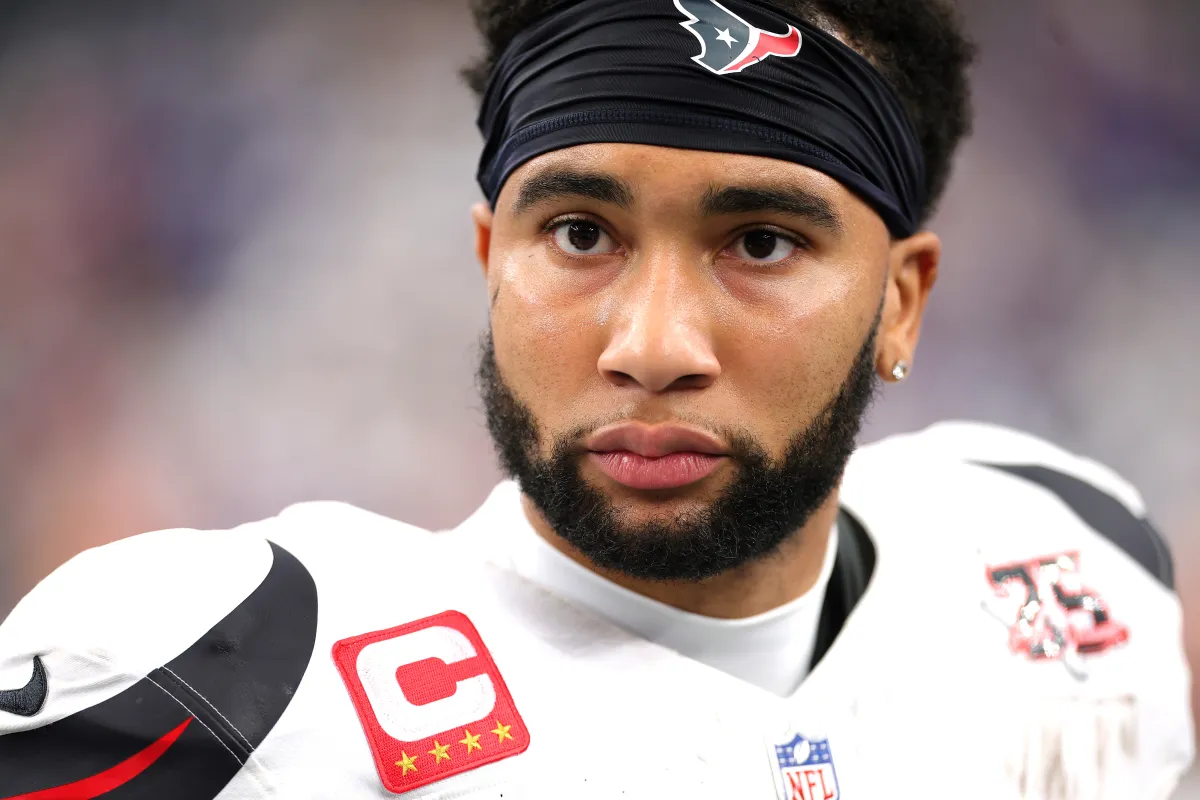
Football has a way of reducing a season to one single number. When a team is 0-4, the quarterback is usually the first name on the chopping block, blamed for everything from missed throws to untimely sacks to the simple crime of not winning enough games. That is the familiar rhythm of the sport, and it’s the rhythm that should be surrounding the Houston Texans right now. But something strange is happening instead. Rather than piling on C.J. Stroud, some of the sharpest eyes in football are looking at his tape and coming away more impressed than ever. ESPN analyst Dan Orlovsky, a former NFL quarterback himself, went on NFL Live and made a statement that sounds almost like a dare: “C.J. Stroud has no business being 0-4.” Orlovsky didn’t leave it there. He argued that Stroud has played so well through the first four games that he deserves the kind of contract extension normally reserved for the highest-paid quarterbacks in the league, a deal worth $50 million to $55 million per season. On the surface, that sounds absurd. How can a quarterback on an 0-4 team justify top-of-market money? But Orlovsky’s point is that we have to look beyond the standings, and the more you watch Stroud play, the more you understand what he means. In Sunday’s 34-30 loss to Dallas, Stroud completed 21 of 31 passes for 347 yards, threw two touchdowns, and didn’t throw a single interception. He gave the Texans a lead late in the game. He gave them a chance to win. The defense simply couldn’t finish the job. This isn’t a one-game fluke. It’s been the pattern all season, and it’s why Orlovsky’s defense of Stroud is so important. The scoreboard says 0-4. The tape says something completely different. And the tension between those two things is shaping up to be one of the most interesting conversations of the year. But the tape doesn’t lie, and neither do the advanced numbers. The more people dig into Stroud’s game, the more the record feels like an illusion. He is producing at a level that would be celebrated if a few poor bounces had gone the other way.
Look deeper at the numbers and the case for Stroud gets even stronger. Through four games, he has thrown for 1,141 yards, five touchdowns and zero interceptions. He has dropped back 151 times and never once been picked off, an uncommon achievement for a young quarterback playing from behind in nearly every game. His passer rating stands at 95.9, and his 7.6 yards per attempt is the best he has posted since his rookie season, when he averaged 8.2. Those are the kinds of numbers that usually spark a wave of MVP headlines, not a conversation about whether a quarterback deserves to be paid. But Orlovsky sees even more than the stats. He pointed to specific elements of Stroud’s game: the keeper game, the tucked-tight throws into the red zone’s narrowest seams, the broken plays where Stroud uses his legs to buy time and then fires a strike downfield, the play-action fakes that look as sharp as they did during his rookie year. These are the little things that can’t be captured in a box score, but they’re the things that make a quarterback truly valuable. They are what allow an offense to sustain drives, flip field position, and steal points in moments when nothing else is working. Stroud has been doing all of that, and he’s been doing it while absorbing punishment, managing pressure, and keeping his composure. The Texans have trailed early in games, fallen behind in the second half, and found themselves in obvious passing situations for nearly four full quarters, and Stroud has never become reckless. He hasn’t forced a bad throw just to make something happen. He hasn’t hidden from the moment. He has stood in the pocket, extended plays, and protected the ball. That’s not just a talented quarterback playing well. That’s a mature, franchise-level quarterback playing at his peak, even if nobody outside Houston seems to have noticed. And that should terrify the rest of the AFC South, because if Houston ever gets its act together, Stroud is the type of player who can beat you single-handedly.
That’s what makes the contract question so fascinating. Orlovsky acknowledged the awkwardness of the situation: no one traditionally pays a quarterback with an 0-4 record the kind of money Stroud’s camp is reportedly seeking. There’s no established path to that kind of deal when the team hasn’t won a game. But Orlovsky also made the central point clear: if you judge the play itself, the $50 million to $55 million number is warranted. That creates a dilemma that the Texans are going to have to wrestle with for months. Quarterbacks are judged by wins and losses more than any other position in football. The record matters, especially when contracts are on the table. But Stroud is the rare case that proves why the record can be a lie. He has done everything possible to win games, and the team around him has kept finding ways to lose. Houston has scored 30 points or more twice this season and lost both games. In their opener, the Texans put up 31 points and still fell to Buffalo 36-31. Against Dallas, they scored 30 and lost on a late defensive collapse. That’s not a quarterback problem. That’s a team problem. Yet the quarterback will inevitably be the one to carry the weight of the record in contract talks. Orlovsky is trying to shift the conversation. He’s saying that when you look at Stroud’s work on the field, you don’t see a losing player. You see a winning quarterback trapped inside a losing team. Paying him isn’t a gamble on potential. It’s a recognition of reality. The only risk is whether the Texans can surround him with the kind of defense and support that matches his level before the season gets entirely away from them. The NFL is a quarterback-driven league, but it’s not a one-man league. Stroud is learning that lesson the hard way.
Orlovsky knows exactly where the problem lies. He points to Houston’s defense as the biggest difference between this team and the one that won the AFC South and looked like a rising power. Last season, the Texans allowed opponents to score 30 or more points only once during the entire regular season. Through four games this year, it has already happened twice. That’s not a small downturn; it’s a full-scale collapse on that side of the ball. In the most painful moments, the defense has been at its worst. Against Dallas, Houston’s defense allowed 24 second-half points, including a 74-yard, game-winning drive in the final minutes. Stroud had just led the offense downfield for a go-ahead score. The defense was handed the game with a chance to close it out. And it couldn’t get a stop. That has been the story in almost every loss. The offense gives Houston a lead, and the defense gives it right back. The same thing happened against Buffalo, where the Texans scored 31 points and still lost. Stroud is not perfect, and the offense has had its own low moments. The Texans managed just six points in a Week 2 loss to Cincinnati and only 17 the following week against Indianapolis. Those are ugly numbers, and the offense deserves criticism for them. But even in those games, Stroud wasn’t the primary reason Houston lost. The problems are broader: pass protection that breaks down at bad times, a running game that never seems to find a rhythm, penalties at crucial moments, and a defense that used to be the team’s identity and has become its biggest weakness. The scoreboard doesn’t make any of those distinctions. It simply says 0-4. Orlovsky is making the case that we should be smart enough to look closer.
To understand Orlovsky’s enthusiasm, it’s worth remembering the arc of Stroud’s career. He came into the NFL as the No. 2 overall pick, burdened with the hopes of a franchise that had been searching for a quarterback for what felt like forever. In his rookie season, he was everything the Texans could have dreamed of. He threw for 4,108 yards, 23 touchdowns and only five interceptions. He led Houston from the bottom of the standings to an AFC South championship, was named Offensive Rookie of the Year, and made the future look limitless. The two seasons that followed were less clean. In 2024, Stroud threw for 3,727 yards with 20 touchdowns and 12 interceptions. Last season, he finished with 3,041 passing yards, 19 touchdowns and eight interceptions. Those are still respectable numbers, but they tell a story of a young quarterback under more pressure, taking more risks, and making more mistakes. The efficiency he showed as a rookie seemed to fade as the team around him changed. That’s what makes this season so striking. Four games in, Stroud looks like the best version of himself again. He has yet to throw an interception on 151 attempts. His yards-per-attempt average is the best it has been since that magical rookie year. Orlovsky said the keeper game, the red-zone seams, the broken plays with his legs, the play-action stuff, it’s all as good as it’s been since his rookie season. That’s high praise, and it’s backed by real production. Stroud is not just making highlight plays; he’s playing with control. He’s not forcing throws into coverage. He’s taking what the defense gives him, moving the chains, and keeping the offense alive. If the Texans can ever get their defense back to an average level, Stroud is playing well enough to carry them somewhere dangerous. The individual talent has never been the question. The question is whether anyone around him can match it.
So what does this all mean for the Texans? If Orlovsky is right, and the evidence suggests he is, the biggest concern in Houston should not be the quarterback position. It should be the rest of the roster. Stroud cannot play defense. He cannot cover a receiver, sack an opposing passer, or stop a late-game drive. All he can do is put the offense in a position to win, and he has done that time and time again. The contract conversation will eventually force Houston to make a choice. They can look at the 0-4 record and decide Stroud hasn’t earned a huge deal, or they can watch the tape and see a quarterback playing at a level that deserves to be paid. This is the kind of moment that defines franchises. Great teams don’t let a good quarterback’s prime slip away because the rest of the roster couldn’t figure itself out. Great teams pay the quarterback and then fix the problems around him. The Texans are about to find out which side of that equation they fall on. Stroud has proven he’s capable of being a championship-caliber quarterback. The defense, the coaching, the talent around him, all of that still needs to catch up. The next month will be decisive. If the defense starts to play the way it did a year ago, Houston could turn this 0-4 start into the kind of story everyone was wrong about. If the defense continues to collapse, the Texans will have to answer a painful question: what’s the point of having a great quarterback if you can’t give him enough help? Orlovsky’s message is a warning, but it’s also a hope. C.J. Stroud has no business being 0-4. The only way for the Texans to make sense of this season is to make sure the rest of the team starts playing at his level. He’s done his part. Now the burden is on everyone else. He has earned that much, and the Texans owe him that much.