





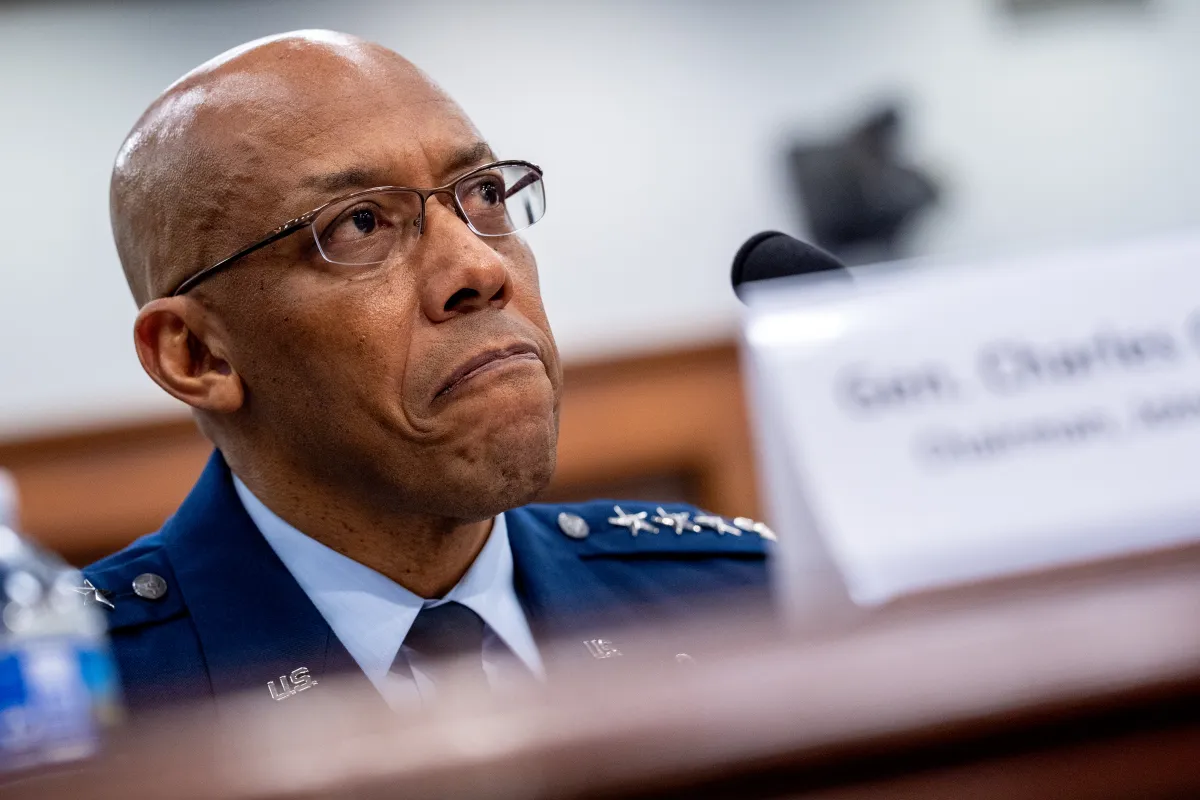
As the United States commemorates its landmark 250th anniversary, a profound debate over the soul and purpose of its military has taken center stage, ignited by a rare public intervention from retired General Charles Q. Brown Jr. The former chairman of the Joint Chiefs of Staff, who was dismissed by President Donald Trump last year, co-authored a deeply reflective essay in Foreign Affairs alongside Duke University political scientist Peter Feaver and attorney Andrew Kragie. Striking a tone of urgent civic responsibility, the authors warned that the increasing temptation to deploy the armed forces to solve inherently civilian crises—such as urban crime—places an unsustainable burden on the military. While acknowledging the armed forces’ vital ceremonial presence in American life through parades, flyovers, and honor guards, they cautioned that pushing troops into highly polarized domestic policy arenas risks fracturing the entire democratic enterprise. They firmly argued that complex societal issues must remain within the purview of civilian institutions.
Framing their argument through a historical lens, Brown and his co-authors recalled that America’s founders were deeply suspicious of military overreach. They pointed to General George Washington’s unwavering deference to the Continental Congress, even when frustrated by legislative gridlock, as the foundational model for domestic civil-military relations. They also invoked President Dwight D. Eisenhower’s historic warning against the military-industrial complex, reiterating that a healthy democracy requires everyday citizens and civilian agencies to resolve political disputes rather than outsourcing those responsibilities to the armed forces. For Brown, preserving this delicate balance is not just a matter of policy, but a constitutional necessity.
The response from the Pentagon was swift and uncompromising, laying bare the deep partisan divide currently gripping the nation’s defense apparatus. Chief Pentagon spokesman Sean Parnell publicly criticized Brown’s record under the previous administration, accusing him of championing divisive COVID-19 vaccine mandates, promoting diversity, equity, and inclusion (DEI) initiatives, and allowing political witch hunts against conservatives under the guise of combating extremism. According to the Defense Department, these actions eroded military readiness and morale. Under Defense Secretary Pete Hegseth, the Pentagon asserts it has restored an apolitical, combat-focused warrior ethos by dismantling DEI programs and refocusing commanders on lethality rather than social engineering, rendering Brown’swarnings of politicization hollow in their eyes.
This war of words unfolds against a backdrop of sweeping leadership changes within the Pentagon during Trump’s second term, which have raised serious concerns among lawmakers and defense analysts alike. Secretary Hegseth’s aggressive restructuring has led to the sudden departure of highly respected senior officers, most notably General Chris Donahue, the head of U.S. Army Europe and Africa, who unexpectedly resigned. While the Department of Defense maintains that generals serve entirely at the pleasure of the civilian executive branch, critics worry that these abrupt removals create a culture of fear, discouraging top officers from offering candid, objective advice to political leaders.
Democratic Senator Tim Kaine questioned whether the administration is systematically purging independent truth-tellers in favor of compliant subordinates, while Republican Representative Don Bacon, a retired Air Force brigadier general, openly criticized the administration for unnecessarily politicizing the command structure. Senator Thom Tillis has similarly criticized Hegseth’s impulsive leadership decisions, warning that alienating experienced military professionals damages relationships with key international allies. This mounting bipartisan anxiety has sparked discussions in Congress regarding the potential implementation of new oversight and reporting requirements whenever senior military commanders are abruptly removed from their posts.
The tension surrounding military neutrality was further highlighted by the recent arrest of Major Jason Watson, a decorated Air Force logistics officer who staged a uniform-clad protest demanding Trump’s impeachment on the U.S. Capitol steps. The incident triggered a formal military investigation and a stern reminder from Air Force Secretary Dr. Troy E. Meink that personal political activism in uniform compromises the critical public trust placed in the institution. Ultimately, General Brown’s essay suggests that the path forward relies not on the armed forces stepping in to fix broken civilian systems, but on ordinary citizens actively participating in and defending the democratic process. As the nation reflects on its 250-year history, the message remains clear: the survival of the republic depends on the strength of its civilian institutions.