





Behind the sanitized statistics of urban violence lie real, shattered lives, a harsh truth that the city of Chicago was forced to confront once again over a devastating weekend. Between the fading light of Friday evening and the quiet of Sunday night, the city’s streets echoed with the crackle of gunfire in dozens of separate incidents, leaving at least seven families grieving and many others wounded. The victims were far more than mere numbers: an 18-year-old youth with his entire life ahead of him was struck down Saturday, a 21-year-old whose future was stolen on Sunday, and a 50-year-old man who lost his life on Friday. In one of the most harrowing moments of the weekend, a Friday evening gathering was instantly shattered when an SUV rolled up and occupants opened fire, leaving twelve terrified people bleeding on the pavement. This recurring nightmare of sudden, unpredictable violence continues to grip the heart of Chicago, leaving its residents trapped in a painful cycle of grief and anxiety.
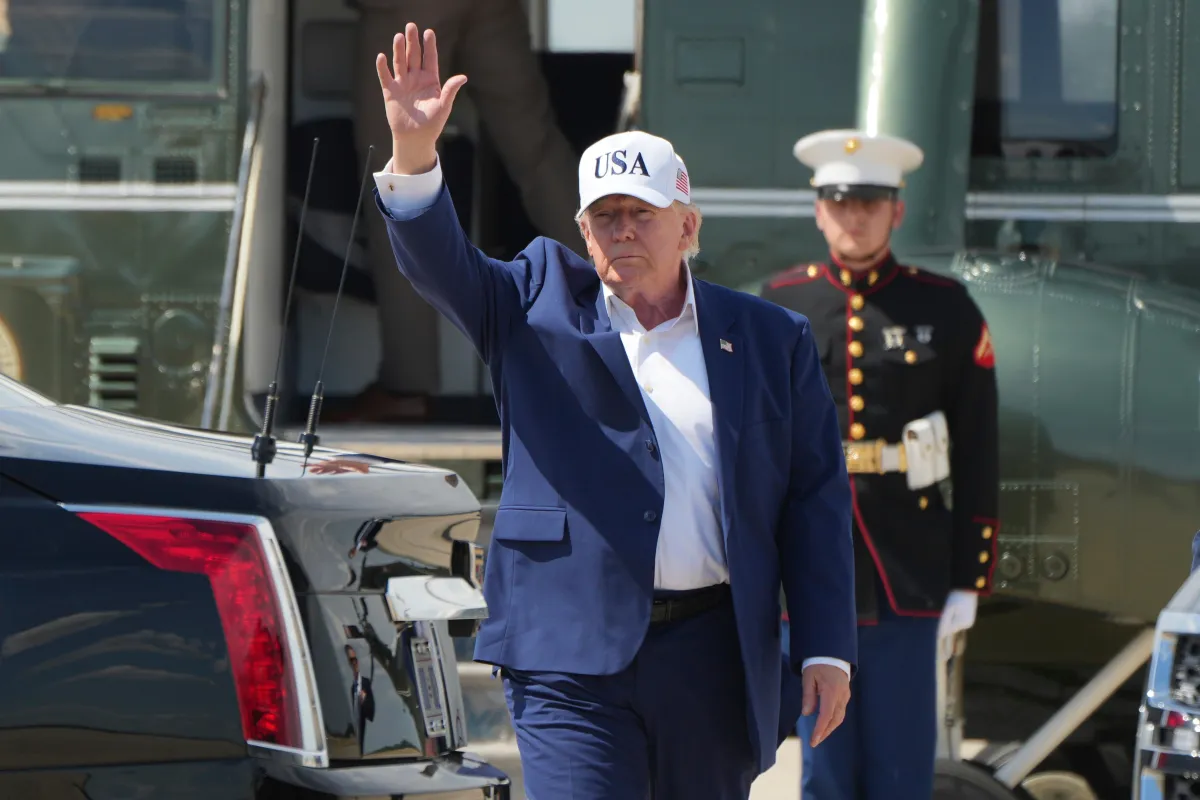
From his digital platform on Truth Social, President Donald Trump seized upon the tragic weekend to reignite a highly polarized national debate over law, order, and federal power. Expressing open frustration with local leadership, Trump publicly questioned why Illinois Governor J.B. Pritzker had not yet reached out to him for federal assistance. The president confidently claimed that he could transform Chicago into one of the safest cities in America in a matter of months, writing, “I could make Chicago a safe City in ONE MONTH, in ONE YEAR, it would be one of the safest!!!” To back up his claims, he pointed to Washington, D.C., as a shining success story of his administration’s heavy-handed federal intervention, arguing that the nation’s capital had been transformed under his watch. For Trump, the tragedy in Chicago serves as both a political talking point and a platform to advocate for a dramatic expansion of executive authority over local policing.
However, the president’s boast about Washington, D.C., invites a closer, more complicated look at the actual impact of militarized policing in civilian spaces. Last year, Trump enacted a sweeping federal intervention in the capital, deploying roughly 1,000 National Guard troops and utilizing emergency powers to bring the metropolitan police department under federal control. While the administration touted this as a monumental victory, critics pointed out that the city’s crime rates had already reached a 30-year low prior to the intervention. Furthermore, a rigorous analysis released in May by the non-partisan think tank, the Niskanen Center, revealed a sobering truth: the highly visible presence of armed, uniformed federal troops patrolling city streets did very little to actually affect or reduce crime rates, casting doubt on the efficacy of using the military as a quick fix for deeply rooted municipal challenges.
Despite these mixed results, Chicago is far from the only target in Trump’s broader, aggressive campaign to reshape law enforcement in America’s major urban areas. The administration has consistently used the National Guard to launch crime-fighting operations within several other major, Democrat-led hubs, including New Orleans, Louisiana, and Memphis, Tennessee. This recurring strategy highlights a stark ideological divide in how public safety is conceptualized and managed across the country. While federal authorities project an image of decisive action and overwhelming force to restore order, municipal leaders and civil rights advocates argue that deploying soldiers to patrol residential neighborhoods does little to address the systemic poverty, lack of educational opportunities, and mental health crises that fundamentally drive crime.
In Illinois, Governor J.B. Pritzker has emerged as one of the most vocal opponents of this federal overreach, viewing Trump’s offers not as genuine help, but as an invasive political maneuver. Pritzker, who is widely considered a key player in the future of the Democratic Party and a potential 2028 presidential contender, has repeatedly rejected Washington’s attempts to send troops into his state. The friction escalated into a legal battle last year when Pritzker sued the federal government to block the forced deployment of 300 military personnel following intense clashes between residents and law enforcement over immigration activity. For Pritzker and his supporters, safeguarding the state’s sovereignty and protecting local communities from unwanted federal intervention is a matter of constitutional duty, setting the stage for an intense executive showdown over who truly governs the streets of Illinois.
As the political chess match between the White House and the Illinois statehouse intensifies, the actual residents of Chicago remain caught in the middle of a high-stakes ideological war. While politicians trade verbal blows, draft lawsuits, and issue statements on social media, the families of those lost over the weekend are left to plan funerals, and the injured face long, painful roads to physical and psychological recovery. Outreach to both Governor Pritzker’s office and the White House has yielded little immediate response outside of regular working hours, leaving a quiet void where solutions and unity should be. Ultimately, the ongoing tragedy in Chicago serves as a stark reminder that behind the grandstanding and federal directives are real human beings yearning for safety, peace, and a government that prioritizes their lived reality over political theater.