





The Buzz Around Offensive Tackles in the 2026 NFL Draft
Picture this: It’s April 2026, the NFL draft stage is buzzing with anticipation, lights glaring, cameras rolling, and fans at home glued to their screens. The offensive tackle position, often the unsung hero on the football field—those hulking guardians who protect quarterbacks from bone-crushing sacks and pave the way for running backs—is taking center stage. Scouts, coaches, and analysts like Blake Brockermeyer from CBS Sports are poring over their notes, debating which giants of college football could slide like chess pieces into the pros. This year’s class is unprecedented, with whispers that as many as six offensive tackles might hear their names called in the first round. Imagine the adrenaline: a rookie step into an NFL huddle, his heart pounding, ready to prove he belongs among legendary linemen like Andrew Whitworth or Joe Staley. These players aren’t just names on a list; they’re young men who’ve endured grueling practices, bone-deep bruises, and the relentless grind of college football to dream of Super Bowl glory. Francis Mauigoa from Miami, often likened to a solid redwood tree with his sturdy build and technique, towers as a front-runner. Then there’s Utah’s dynamic duo, Spencer Fano, whose ball-handling skills recall a magician—wait, tacklers shouldn’t juggle, but Fano’s versatility is magic—and Caleb Lomu, an athletic marvel who could redefine speed on the line of scrimmage. From Alabama comes Kadyn Proctor, a powerhouse built like a fortress, straight out of Nick Saban’s tough-love world. Georgia’s Monroe Freeling brings that modern edge, a blend of brute force and sneaky footwork. And rounding out the potential top-32 picks is Clemson’s Blake Miller, a guy who’s been the steady anchor for his team, but as we’ll see, not without his doubters. These six could instantly morph from college stars to NFL starters, stepping into roles once held by giants, facing off against elite pass-rushers who move like shadows. It’s a group that could solidify tackles as the position to watch, turning the draft into a linemen’s showcase, where coaches gamble on who’ll thrive in the high-stakes battleground of professional football. The excitement builds as teams eye these prospects, each one a story of perseverance—late-night film sessions, grueling weight rooms, family sacrifices—for a shot at the big leagues. With the NFL’s offensive schemes evolving, these tackles could be the key to unlocking explosive playbooks, preventing costly turnovers, and keeping franchises afloat. But in the world of drafts, hype and reality often clash, and for Miller, that rift might be particularly wide.
These players come from storied programs, each carrying the weight of expectations. Take Francis Mauigoa, the Miami bruiser who’s spent countless hours in South Florida’s heat, battling against top competition in the ACC. He’s got that Polynesian heritage fueling his tenacity, like a warrior guarding sacred grounds, which scouts say translates to NFL readiness on either side of the line. At Utah, Spencer Fano and Caleb Lomu have been inseparable, almost like brothers in arms, refining their craft under Kyle Whittingham’s disciplined regime. Fano, with his UCLA transfer roots, brings a jack-of-all-trades vibe, capable of sliding inside if needed, while Lomu, the more explosive one, has that rare blend of size and agility that makes defensive ends tremble. Kadyn Proctor, shaped by Alabama’s notoriously competitive environment, has been in the trenches since his freshman year, absorbing Saban’s wisdom like a sponge, emerging as a dominant force who wins with intellect over just raw power. Monroe Freeling, from Georgia, embodies the Dawg’s gritty pride, a product of Kirby Smart’s high-energy camp, where he’s learned to anticipate rushes with a chess grandmaster’s foresight. Then there’s Blake Miller, Clemson’s model of consistency, starting every game over four grueling seasons, embodying the Tiger spirit—a relentless competitor who’s turned his physical gifts into a standout career. Each of these linemen has stories etched in sweat: Mauigoa’s family immigrating to America for a better life, Proctor’s journey from small-town Alabama dreams, Freeling’s Georgia farming roots grounding his ferocity. They’ve faced injuries, doubts, and the pressure to perform in primetime college games, building resilience that’s hard to quantify but crucial for NFL survival. As rookies, they could earn significant playing time, stepping into rotations depleted by retirements or trades, transforming teams overnight. For fans, this draft class promises generations of dominance, yet the real test comes in adapting to NFL speed, where every rep in practice is a chance to shine or get exposed. It’s a human tale of ambition, where these young men, barely out of college, could become the pillars of future championships.
Offensive tackle remains a premium position in the NFL draft for good reason—it’s the gateway to protecting your quarterback and the lifeline for a balanced offense. In an era where pass-happy schemes dominate, like those run by Patrick Mahomes in Kansas City or Lamar Jackson’s Ravens, tackles are kings. They engage in mano-a-mano battles with elite rushers like Nick Bosa or Khalil Mack, who can decapitate offenses with one swift move. The position’s depth this year is remarkable, with a wave of talent that could flood the first round, making it one of the deepest classes ever. This abundance stems from college programs pumping out liners with unprecedented size, speed, and technique, thanks to better training, nutrition, and scouting. Imagine the excitement for general managers: not just one or two anchors, but a roster of options to build dynasties. This depth contrasts with leaner years, where defenses ruled and tackles were scarcer than rain in a drought. For players, it’s a blessing—more eyes mean less overhype, allowing them to settle into roles without the crushing weight of unrealistic expectations. Yet, it also heightens competition; a wrong step, and you slide down boards. Fans love this richness because it ensures NFL lines are populated with stars, leading to more dramatic pass blocks and powerful runs. Coaches appreciate it too, as it allows for strategic drafts, pairing tackles with wonder kids at other positions. In the grand scheme, a strong OT class signals the NFL’s health, attracting top recruits who see a path to stardom. But remember, depth breeds scrutiny—every lineman must prove they’re not just big bodies, but smart operators who can handle the mental chess game of football.
There’s an expected frenzy for tackles before the second round, a full-blown stampede where teams hoard them like gold. This rush harks back to historical drafts, like 2018 when Mike McGlinchey and Orlando Brown Jr. vaulted to the Browns, or 2020’s tackles including Tristan Wirfs, who became Buccaneer royalty. For 2026, the anticipation is palpable: with franchises desperate for elite protection, the first round could snap up these six like hotcakes at a county fair. It’s a strategic play—lock in young talent early to avoid bidding wars later. Picture the war rooms at teams like the Bears or Packers, GM sifting through tape, debating reunions with college coaches or leveraging trades. This run on tackles underscores their value in today’s game, where a single sack can swing a playoff drive. For rookies, it means instant pressure: step up or rust on the bench. Fans buzz with theories—who goes to which team, how they’ll fit with superstars like Josh Allen in Buffalo. Yet, amid the hype, voices of caution emerge, reminding us that draft pedigree doesn’t guarantee podcast, as some fall flat. It’s a thrilling, nerve-wracking chapter, where the draft’s unpredictable nature could crown heroes or unveil pretenders.
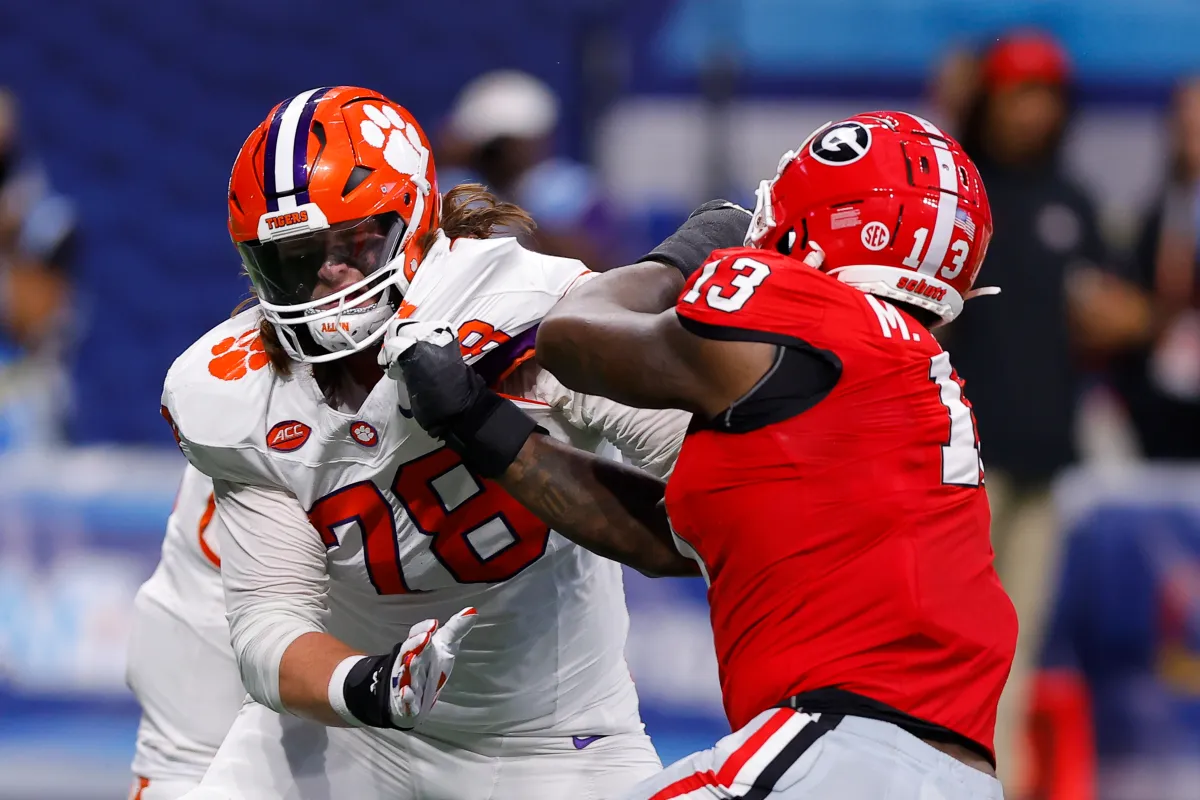
But not every tackle prospect is getting the glowing reviews he might crave, and Blake Brockermeyer of CBS Sports isn’t shy about popping the bubble for one of them. In a world of hyperbolic scouting reports, Brockermeyer stands as the reality check, a seasoned analyst with a knack for peeling back layers of hype to reveal the core. For Blake Miller, the Clemson lineman, Brockermeyer calls out what he sees as excessive adoration, painting a picture of a player who’s solid but far from sensational. Miller, at 6-foot-7 and 315 pounds, has been the ironman of the Tigers, starting 54 games over four years—a testament to his durability and grinder mentality. Veterans speak highly of players like him: reliable, professional in their approach, always showing up for reps, film study, and team meetings. He’s improved annually, turning raw potential into a consistent contributor, the kind of guy coaches dream of for building team chemistry. Yet, Brockermeyer points to athletic flaws that could derail him in the pros, like inconsistent hand timing against speedy edge rushers—imagine a bullfighter fumbling his cape as the bull charges. Miller gets rocked too easily, losing balance in run-blocking duels, his vertical sets failing to anchor against powerful deflections. It’s concerning for a prospect with so much experience, suggesting deeper issues in technique or coachability. Despite Clemson’s success, Miller’s NFL projection feels underwhelming, like a great supporting actor in a college film who struggles in a blockbuster role. This skepticism humanizes the draft: behind the headlines are real athletes grappling with their limits, not invincible titans.
Diving deeper into Miller’s background reveals a more nuanced story, one of triumphs and trials that make him relatable. With only 101 snaps at left tackle—mostly playing right side for Clemson—he’s the least experienced among the top OT contenders, the proverbial greenhorn in a sea of veterans. Most college tackles face a left-side learning curve, where the quicker, more specialized footwork demands mastery, akin to a soccer player switching from right to left foot. Miller might not plug-and-play like Mauigoa or Proctor, who have polished reps on the blind side. His struggles stem from habits formed on the right, where power over finesse suffices, but pros demand more—awareness, foot speed, hip synchronization for explosive drives. Critics worry he’ll be exposed in the NFL, where defenders like Von Miller or Micah Parsons dissect weaknesses instantly. Yet, Miller’s journey inspires: starting every game despite physical tolls, embodying grit that fans cheer. If he lands with patient coaches, he could cultivate the needed skills, transforming skepticism into stardom. Compared to the others—Mauigoa swatting passes like a fly, Fano adapting fluidly, Lomu darting elusively—Miller seems grounded, human in his imperfections. Scouts debate: too much baggage or untapped potential? In the end, the NFL favors versatility, and Miller’s road highlights the draft’s gamble—bet on raw athleticism or proven reliability. As round one unfolds, fans will watch these tackles emerge, praying their team drafts wisely, turning linemen lore into legend. With depth abundant, 2026 could redefine tackle history, but Miller’s arc reminds us: football’s about overcoming odds, one block at a time. This draft isn’t just picks; it’s lives unfolding, from college fields to stadium lights, where heroes are forged in fire. And who knows, Miller might surprise us all, rising like a phoenix from the critiques. The future holds endless possibilities, a testament to the unpredictable beauty of the game. In five years, we might reminisce about this class as the golden era of OTs, but for now, the excitement builds, human stories weaving into the fabric of NFL destiny. Families watching, friends celebrating, the thrill of possibility lingering like a perfect spiral. Football unites us, and these linemen, with their flaws and strengths, represent that human spirit—relentless, humble, eternally striving. As the draft approaches, eyes on the tackles, hearts on the line.